Have you ever wondered what it feels like to glide across the sea on the longest bridge in the Philippines while the wind whispers stories of the ancient mountains nearby?
The air changes the moment you leave the coastal highway and begin the ascent toward the misty peaks of Mount Malindang. It is a transition that feels less like a simple road trip and more like a gentle release from the noise of the lowlands.
I can finally breathe in the crisp highland air.
The road toward Barangay Namot in Tudela is a technical challenge that requires a steady hand and a bit of patience. You will find yourself navigating sections of deep, chocolate colored mud that clings to your tires before reaching a sudden stretch of smooth, gray concrete. It is a mosaic of different terrains that reminds you who is actually in charge of the mountain expedition.
I sat on my motorcycle at the edge of a crystal clear stream and watched the water dance over smooth river stones. This hidden paradise is home to resorts like Crystal Blue Waters where the river is so transparent it looks like liquid glass. You realize how much you missed the unfiltered beauty of nature once the city intersections are far behind you.
The Highland Sanctuary of Tudela
Mount Malindang serves as a towering green shoulder that protects the quiet life of the upland barangays.
The water here is exceptionally cold and pure, flowing directly from the mountain springs into the natural pools of the local resorts. I noticed a hanging bridge that sways gently over the rushing river, connecting the busy cottages to the more secluded parts of the forest. It is a picturesque coordinate where the only notification you receive is the rhythmic sound of the water hitting the rocks.
I stopped at a small roadside stall where the scent of fresh fruit was heavy in the humid breeze.
The vendor offered me a bunch of lanzones that were pulled straight from the tree just minutes ago. You can still see the tiny black ants crawling over the skin, a biological sign that the fruit is fresh and free from heavy chemicals. I paid a few pesos and enjoyed the sweet, tangy flavor while looking at the jagged mountain silhouette in the distance.
There is a unique kind of hospitality in these highlands that luxury hotels can rarely replicate.
A local man smiled and gave me a timbre, which is a friendly signal to alert other riders that the road ahead is clear of oncoming trucks. The small winding road is so narrow that you have to troubleshoot your movements to ensure everyone stays safe on the steep descents. This sense of community is the true lifeline of the mountain, making every traveler feel like a welcomed guest.
We often travel to find something new, but in Tudela, you find something old and incredibly precious.
The Giant of Panguil Bay
Leaving the misty mountains takes you back to the coast where a massive engineering marvel has recently redrawn the map of Mindanao.
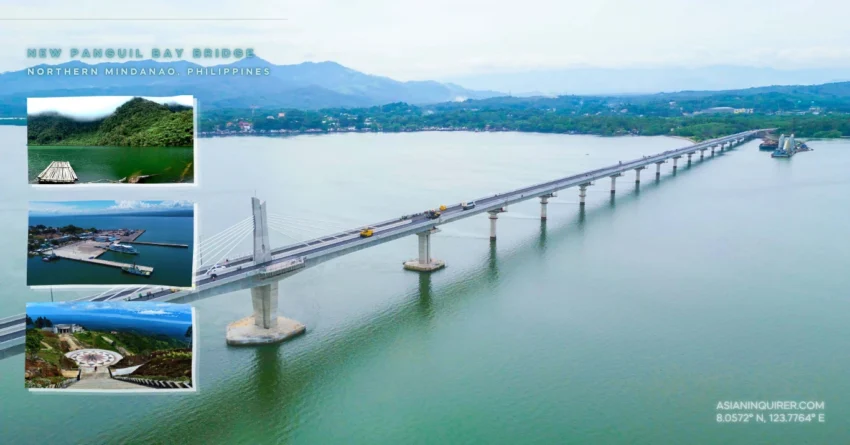
The Panguil Bay Bridge stretches across the horizon for 3.7 kilometers, making it a spectacular white needle stitching two provinces together. It connects the town of Tubod in Lanao del Norte to the bustling city of Tangub in Misamis Occidental. This structure has officially taken the title of the longest bridge in the country, a crown that was held by the San Juanico for nearly fifty years.
The ride across the bridge is an experience in itself.
I kept my speed at a steady pace to soak in the panoramic view of the wide bay and the distant mountain ranges. The wind can be quite strong here, so the engineers built high concrete railings to protect motorcycles and smaller vehicles from being pushed by the gusts. It is a technical troubleshoot that ensures safety without obstructing the magnificent view of the Visayan Sea.
I saw dozens of motorists pulling over near the massive white pylons to capture a selfie with the bridge as their background.
The local social media feeds are currently flooded with images of people standing in the middle of the road, despite the rules against stopping. It is a bizarre and beautiful paradox where a piece of functional infrastructure becomes a primary tourist attraction overnight. The bridge has turned a long and unpredictable sea crossing into a smooth seven minute journey.
Reaching the other side feels like you have successfully completed a major milestone in your travel chronicles.
The Changing Tides of Osamiz Port
I decided to motor down to the Osamiz City Port to see how the traditional sea coordinates have shifted since the bridge opened.
The pier was once the only reliable bridge for travelers and vehicles moving between the two provinces. You could smell the salt air and the diesel fumes as the large RORO vessels came and went throughout the day. Now, the atmosphere at the port is remarkably quiet and the hustle of the vendors has noticeably slowed down.
A local staff member told me that the number of daily trips has been reduced by half.
Most motorists now prefer the speed of the bridge, leaving the ferries to handle the heavy cargo and the nostalgic passengers. It is a bittersweet transition as the old maritime way of life gives way to the efficiency of modern asphalt. You realize that every new bridge we build eventually leaves a bit of the past behind on the empty shore.
I watched the sunset paint the sky in shades of deep violet while the last ferry of the day prepared to set sail.
The Secret Perspective of El Bambu
If you are looking for the best view of the new bridge, you must troubleshoot your route and head toward the hidden ridges of Tubod.
El Bambu is a small resort and view deck that offers a 360 degree panorama of the entire Panguil Bay. It is not yet a popular coordinate for the mainstream crowds, making it a perfect sanctuary for those who seek silence. The three level wooden tower sits on a hill that is almost level with the peaks of the surrounding mountains.
I stood at the top and watched the lights of Tangub City beginning to flicker in the early evening.
From this height, the bridge looks like a glowing white thread connecting the dark landmasses. You can see the old ferry routes and the new path of progress in a single, breathless frame. The air is cool and the noise of the highway is far enough away to be entirely forgotten.
The local mall in Tubod is also seeing a surge in visitors as the bridge makes it easier for people from Misamis to shop.
Small businesses in Lanao del Norte are finally feeling the positive ripple effect of being connected to a larger economic grid. It is inspiring to see how a single piece of concrete can improve the quality of life for thousands of families. We are witnessing a historic reset of the region’s potential.
The ridge at El Bambu is a reminder that the best perspective is often found a few kilometers away from the crowd.
Practical Travel Tips for DIY Travelers
- Panguil Bay Bridge: The bridge is currently free to cross, but always check for the latest toll updates. Avoid stopping mid bridge during peak hours to stay safe and follow traffic rules.
- Tudela Resorts: To reach Namot, ensure your vehicle has good tires for the muddy sections. Arrive at Crystal Blue Waters early in the morning to secure a cottage near the river.
- Osamiz Port: If you prefer the ferry for the experience, check the updated schedule as trips are less frequent than before. The fare for a motorcycle is around 160 to 200 pesos.
- Food: Don’t miss the chance to buy fresh lanzones or rambutan along the mountain roads of Tudela. They are much cheaper and fresher than the ones in the city markets.
- View Decks: Visit El Bambu in Tubod for the best sunset photography of the bridge. Bring a light jacket as the wind from the bay can be sharp in the late afternoon.
- Logistics: The road from Tangub to the bridge is well paved and easy to navigate for all types of motorcycles and cars.
We often spend our lives looking for the fastest way to get from one point to another. We build bridges to save time and roads to erase distances, yet the most beautiful moments happen when we finally decide to stop and look around. The Panguil Bay Bridge is a testament to our ambition, but the hidden rivers of Tudela are a reminder of our roots.
I hope your next journey leads you to a place that makes you appreciate both the speed of the future and the stillness of the past.
Frequently Asked Questions (FAQ)
1. How long is the Panguil Bay Bridge?
The bridge is approximately 3.7 kilometers long, officially making it the longest bridge in the Philippines.
2. Which cities does the bridge connect?
It connects Tangub City in Misamis Occidental and Tubod in Lanao del Norte.
3. Is there a toll fee for crossing the bridge?
As of late 2024 and early 2025, there is no toll fee, but this may change as management policies are finalized.
4. Can I walk across the Panguil Bay Bridge?
Currently, the bridge is designed for vehicular traffic, and walking across is generally discouraged for safety reasons due to high winds.
5. How do I get to the hidden rivers in Tudela?
From the Tudela town center, follow the mountain road toward Barangay Namot. It is roughly a 30 to 45 minute ride.
6. Are the roads to the Tudela resorts paved?
The roads are a mix of concrete and rough, muddy patches. High clearance vehicles or motorcycles are recommended.
7. Is it safe to ride a motorcycle on the bridge during a storm?
No, it can be dangerous due to extremely strong crosswinds. It is best to wait for the weather to clear.
8. What is “El Bambu”?
It is a privately owned view deck and resort in Tubod that provides a panoramic view of Panguil Bay.
9. Are there still ferries operating between Osamiz and Mucas?
Yes, but the frequency has decreased significantly. It is best to check the port for the current daily schedule.
10. What can I buy as a souvenir in this area?
Aside from fresh highland fruits, the region is known for its local handicrafts and processed seafood like dried fish from the Osamiz market.