
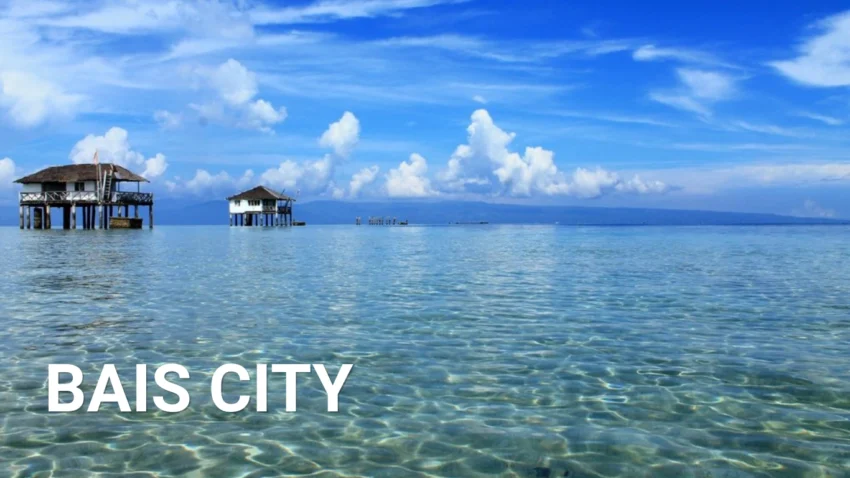
Most people hear “Bais City” and immediately think of dolphins and Manjuyod Sandbar.
That’s understandable.
An early morning boat trip into Tañon Strait is the experience that puts Bais on most travel itineraries.
But don’t treat the city as nothing more than a boat terminal.
Bais has another side built around sugarcane, old houses, a historic sugar industry, mangroves, local seafood, and a compact city center that still feels more like a working provincial city than a tourism district.
And there’s an important detail worth knowing before you arrive.
Manjuyod Sandbar isn’t actually inside Bais City. It’s in neighboring Manjuyod. Bais remains one of the most practical jumping-off points for trips that combine dolphin watching with the sandbar.
That distinction matters.
Once you understand it, planning your trip becomes much easier.
Understand Bais City
Bais is a component city in Negros Oriental, now part of the Negros Island Region.
It’s around 45 kilometers north of Dumaguete City.
Tanjay City lies immediately to the south, while Manjuyod is north of Bais.
The coast opens toward Tañon Strait, one of the Philippines’ most important marine environments. Inland, the landscape shifts into wide agricultural areas where sugarcane remains hard to miss.
That sugar connection isn’t recent.
Central Azucarera de Bais was established in the early 1900s and became an important part of Negros Oriental’s sugar industry. Old locomotives, plantation houses, and traces of the former rail system still give parts of Bais a character you won’t see in the province’s beach and diving towns.
Then there are the bays.
Mangroves, fish cages, coastal communities, and marine life make the eastern side of the city just as important to the Bais experience as its sugar fields.
Best for: dolphin watching, boat trips, marine nature, families, photographers, history, seafood, and road trips through northern Negros Oriental.
Skip it if: you’re expecting a resort town with nightlife, shopping, or a long strip of tourist restaurants.
Best Time to Visit Bais City
December to May
These months are generally easier for travelers planning outdoor and marine activities.
Boat trips are much more enjoyable when the sea is calm.
That doesn’t mean every morning will be perfect.
Weather still changes, and dolphin watching depends on sea conditions as well as wildlife.
Never treat a dolphin sighting as guaranteed.
June to November
You can still visit Bais during the wetter part of the year, but marine plans become more weather-dependent.
Heavy rain and stronger winds can affect boat trips.
If dolphin watching is the main reason you’re traveling, leave some flexibility in your schedule instead of building your entire trip around one fixed morning.
September
September is one of the livelier times to visit the city.
Hudyaka sa Bais is associated with the city’s September fiesta season, with festivities traditionally centered around early September.
The feast of St. Nicholas of Tolentino is celebrated on September 10.
Expect more activity around the city center during festival season.
If you’re coming specifically for Hudyaka, check the current year’s official program before booking because event dates can shift around the main celebrations.
Bais City Traveler Essential Information
Province: Negros Oriental
Region: Negros Island Region
Nearest major city: Dumaguete City
Distance from Dumaguete: About 45 kilometers
Nearest airport: Dumaguete-Sibulan Airport
Main language: Cebuano
English: Widely understood
Currency: Philippine peso
Ideal stay: One to two days
Best trip style: Marine adventure, road trip, food trip, or overnight stop
If you’re only doing dolphin watching and Manjuyod Sandbar, Bais can work as a day trip from Dumaguete.
Staying overnight makes more sense when you want an early boat departure without waking before dawn in Dumaguete.
It’s also better when you want enough time to see the city instead of immediately leaving after the boat trip.
Bring cash.
Smaller businesses, tricycles, pedicabs, boat arrangements, markets, and coastal communities are easier when you’re not relying entirely on cards.
How to Get to Bais City
Dumaguete to Bais City
Bais is easy to reach from Dumaguete by road.
Northbound buses travel through Tanjay and continue toward Bais, Manjuyod, and other destinations in northern Negros Oriental.
Allow roughly one to one and a half hours depending on traffic and stops.
Vans may also be available.
If you’re planning to explore beyond the city center, driving your own vehicle is much more convenient.
Dumaguete Airport to Bais City
Dumaguete-Sibulan Airport sits north of central Dumaguete, so you’re already headed in the right direction.
The easiest public transport option is to connect with a northbound bus.
Traveling with several bags or arriving late makes a private transfer more comfortable.
If your dolphin-watching boat leaves early the next morning, staying in Bais the night before removes a lot of unnecessary stress.
Tanjay to Bais City
Bais is directly north of Tanjay.
The cities are close enough that combining them on the same northern Negros Oriental trip is easy.
Any northbound transport continuing through Bais can usually get you there.
How to Get Around Bais City
Pedicab
Pedicabs remain useful around central Bais.
They’re ideal for short trips to the market, plaza, accommodation, restaurants, and nearby streets.
Tricycle
Use a tricycle when you’re traveling farther or heading toward the coastal side of the city.
For an early boat trip, arrange your ride the night before rather than hoping you’ll immediately find transportation before sunrise.
Private Car or Motorcycle
A private vehicle gives you more freedom if you want to see the sugar district, old locomotive, coastal areas, and neighboring destinations.
It’s also helpful if your accommodation isn’t in the center.
Boat
For many travelers, the boat is the most important transportation in Bais.
Book through a legitimate local operator and confirm what the trip actually includes.
Ask about departure point.
Ask about life jackets.
Ask about the expected return time.
Ask whether food is included.
And ask what happens if sea conditions force a cancellation.
Things to Do in Bais City
1. Go Dolphin Watching in Tañon Strait
This is the reason many travelers come to Bais.
Boats leave early because morning conditions are often better for searching for dolphins in Tañon Strait.
Don’t expect a theme-park experience where animals appear on schedule.
These are wild dolphins.
Some trips produce excellent sightings.
Some require a long search.
And some days simply won’t cooperate.
That’s part of wildlife travel.
Go because you want to be out on the water, not because someone promised you a guaranteed photograph.
If dolphins appear, enjoy the moment without expecting the boat crew to aggressively pursue them.
2. Combine the Trip With Manjuyod Sandbar
Manjuyod Sandbar is commonly paired with dolphin-watching trips from Bais.
But remember where you are.
The sandbar belongs to neighboring Manjuyod, not Bais City.
Its appearance changes dramatically with the tide.
At lower tide, more sand becomes exposed.
At higher tide, much of the sandbar can disappear beneath the water.
That’s why checking the tide matters just as much as checking the weather.
Don’t book the trip expecting the exact same sandbar you saw in someone’s photograph. The sea decides what you get that day.
3. Explore Talabong Mangrove Park
Bais isn’t only about open water.
Talabong Mangrove Park gives you a closer look at the ecosystem supporting the city’s coastal environment.
Mangroves matter here because they provide habitat, shelter young marine life, and help protect the shoreline.
Access and visitor conditions can depend on tide and local arrangements.
Ask the tourism office or your boat operator about current access before going.
This is a better stop for travelers interested in nature than for someone simply looking for another swimming spot.
4. Try Kayaking Around Capinahan
Capinahan gives you a quieter way to experience the coastal side of Bais.
Kayaking takes you closer to mangroves and calmer waterways instead of sending you straight into open sea.
It’s particularly good when you want a marine activity without spending the whole time on a motorized boat.
Go slowly.
This is one of those activities where racing through it defeats the point.
5. See the Fish Cages
Fish-cage activities offer a different look at Bais.
Instead of treating the coast only as scenery, you see how local communities use the water for food and livelihood.
Some tourism activities include fish feeding or catch-and-cook experiences.
Confirm what’s currently offered when booking because these activities can change depending on the operator and conditions.
6. See the Old Baldwin Locomotive
Bais has one of the more unusual reminders of Negros Oriental’s sugar history.
The old Baldwin locomotive recalls the period when narrow-gauge railway lines helped move sugarcane through plantation areas toward the mills.
Don’t expect a large railway museum.
Think of it as a quick heritage stop that makes much more sense once you understand how important sugar was to Bais.
If you’re interested in industrial history, it’s worth the stop.
7. Look Around the Central Azucarera de Bais Area
The sugar mill helped shape modern Bais.
You can still see traces of that history around the area, including old houses and infrastructure connected to the sugar industry.
Be careful about wandering into private property.
Some heritage-looking buildings remain within privately controlled areas, and being interesting to photograph doesn’t automatically make them open to visitors.
Enjoy what you can see from public areas and follow any access restrictions.
8. Visit St. Nicholas of Tolentino Parish
St. Nicholas of Tolentino Parish is part of the city’s religious identity.
The parish celebrates its feast on September 10.
You don’t need to be traveling during the fiesta to stop here.
Visit while exploring central Bais, but remember that it remains an active place of worship.
Keep your visit quiet when services are happening.
9. Walk Around Central Bais
Leave a little time for the city itself.
The market, plaza, church, old streets, pedicabs, food stalls, and everyday businesses tell you more about Bais than rushing straight back to Dumaguete after a boat tour.
Bais isn’t polished for tourists.
That’s what makes walking around worthwhile.
Where To Go In Bais City
Port and Coastal Area for Marine Activities
Go here for:
Dolphin-watching departures
Mangrove experiences
Kayaking
Fish cages
Boat trips
This is where most visitors spend the most important part of their Bais trip.
City Center for Food and Local Life
Go here for:
Public market
St. Nicholas of Tolentino Parish
Restaurants
Local shops
Pedicab rides
An evening walk
Stay around the center if you don’t have your own vehicle.
Sugar District for Heritage
Go here for:
Old locomotive
Central Azucarera de Bais area
Sugarcane landscapes
Old houses
This is the side of Bais that often gets overlooked by visitors focused entirely on the sea.
Choose Bais by Trip Style
For wildlife: Dolphin watching
For families: Dolphin watching and a sandbar trip
For nature: Talabong Mangrove Park and Capinahan
For history: Sugar district and old locomotive
For photography: Morning boat trip and sugarcane countryside
For food: Public market and local restaurants
For a short visit: Dolphin watching followed by lunch in town
Where to Stay in Bais City
Bais has fewer accommodation choices than Dumaguete.
But staying here has one major advantage.
You’re already close to the starting point for an early morning marine trip.
That can be worth much more than having fifty hotels to choose from.
The properties below are accommodation options located within Bais City based on current and recent listings.
Campuyo Aroma Beach Resort is often grouped with Bais accommodation online, but its verified address is in Barangay Campuyo, Manjuyod. For that reason, it is not included as a Bais City hotel here.
La Planta Hotel and Restaurant
Address: Mabini Street, Bais City, Negros Oriental
Phone: 0917 164 5292
Phone: (035) 402 3890
La Planta is the strongest all-around option for many visitors who want a proper hotel in Bais.
It has a central location, restaurant, swimming pool, and established accommodation setup.
This works particularly well when you’re staying overnight before an early marine trip but still want easy access to town.
Its central location also means you won’t feel stranded once the boat trip is over.
Casa Sandoval Pension and Restaurant
Address: National Highway, Villanueva Subdivision, Barangay Talungon, Bais City, Negros Oriental
Phone: 0936 042 2287
Phone: (035) 402 8216
Email: casasandovalpension@gmail.com
Casa Sandoval is a practical option when you want something simpler than a full hotel.
Its position near the highway is useful for travelers arriving by bus.
This is the kind of place to consider when your priorities are a room, convenient transport, and an overnight base rather than resort facilities.
Casa Don Julian Guesthouse
Address: 581 Mabini Street, Bais City, Negros Oriental
Phone: (035) 402 9547
Email: info.casadonjulian@yahoo.com
Casa Don Julian has more character than a standard roadside pension house.
The property occupies an ancestral-style home and offers a smaller guesthouse experience.
Choose it if you’d rather stay somewhere with a residential feel while remaining close to central Bais.
Velez Pensionne House
Address: Mabini corner Roxas Street, Bais City, Negros Oriental
Phone: 0927 459 2262
Email: velezpensionnehouse@yahoo.com
Velez Pensionne House is another central option.
Its location is one of the main reasons to consider it, especially if you don’t have your own vehicle.
The public market, transport, and central streets are easier to reach from here than from accommodation farther outside town.
Sand Bar View Hotel
Address: Bahia, Bais City, Negros Oriental
Phone: 0953 388 2188
Sand Bar View Hotel sits away from the busier center.
The elevated setting and views are a bigger part of the appeal here.
Choose it when you have your own transportation and prefer somewhere quieter.
Getting around is less convenient if you intend to depend completely on pedicabs or tricycles.
Bais Backyard Bed and Breakfast
Address: Tambis Road, Talungon, Bais City, Negros Oriental
Phone: 0920 294 7989
Bais Backyard Bed and Breakfast is a smaller accommodation choice.
It suits travelers who prefer a home-style stay rather than a conventional hotel.
Public information about the property is more limited than it is for the larger hotels, so confirm availability directly before arriving.
Seaside Homestay
Address: Sanlagan, Okiot, Bais City, Negros Oriental
Seaside Homestay is another small lodging option within the city.
It’s better suited to travelers comfortable with homestay-style accommodation.
Because current contact and booking information is limited, confirm that it is accepting guests before planning your trip around it.
Bahia de Bais Hotel
Address: Dewey Island Hilltop, Capinahan Port, Bais City, Negros Oriental
Phone: (035) 402 8850
Phone: (035) 402 8851
Bahia de Bais has a useful location for travelers interested in the coastal side of the city.
However, much of the easily available guest feedback is old, and current information about the property’s condition is limited.
Confirm room availability and present facilities directly before booking.
Quick Accommodation Picks
For the strongest overall hotel: La Planta Hotel and Restaurant
For central convenience: Velez Pensionne House
For a simple highway stop: Casa Sandoval Pension and Restaurant
For more character: Casa Don Julian Guesthouse
For a quieter setting: Sand Bar View Hotel
For a small homestay feel: Bais Backyard Bed and Breakfast
Booking Tip
Stay in Bais if you have an early dolphin-watching trip.
That is the strongest reason to sleep here instead of Dumaguete.
Stay near central Bais if you depend on public transportation.
Choose accommodation farther toward the coast only when you have transport arranged.
Where to Eat in Bais City
Bais doesn’t have Dumaguete’s restaurant variety.
That’s not a problem if you know what to expect.
Eat local.
Look for seafood, grilled food, simple Filipino dishes, coffee, and the restaurants people in town actually use.
Buglas Isla Cafe Bais
Address: Mabini Street, Bais City, Negros Oriental
Phone: 0917 164 5292
Buglas Isla Cafe operates at La Planta and is one of the easiest recommendations when you want a polished sit-down meal.
The menu covers Filipino and international dishes, making it useful for groups where everyone wants something different.
Breakfast is another advantage if you’re staying nearby.
Hide Out Restobar
Address: JMPV Glad Subdivision, Barangay Talungon, Bais City, Negros Oriental
Phone: 0961 577 8410
Hide Out Restobar works better later in the day.
Expect casual Filipino food and a more relaxed neighborhood atmosphere rather than hotel dining.
It’s a good option when you want chicken wings, drinks, and an uncomplicated evening meal.
La Planta Hotel Restaurant
Address: Mabini Street, Bais City, Negros Oriental
Phone: (035) 402 3890
If you’re already staying at La Planta, eating at the property is the easiest option.
It also saves you from searching for transportation after an early morning boat trip when all you really want is food and a shower.
Casa Sandoval Restaurant
Address: National Highway, Villanueva Subdivision, Barangay Talungon, Bais City, Negros Oriental
Phone: 0936 042 2287
Casa Sandoval’s restaurant is convenient for guests and travelers passing along the highway.
Think straightforward local food rather than destination dining.
Bais Public Market and Local Eateries
Don’t overlook the market area.
This is where Bais makes more sense as a food destination.
Look for fresh seafood, grilled meat, native snacks, fruit, and inexpensive meals.
You don’t need every good meal to come from a restaurant with a large sign outside.
Dining Tip
Eat after the boat trip instead of relying entirely on food being available on the water.
Some tour packages include lunch.
Some don’t.
Ask before leaving.
If food is included, find out whether it’s served on the boat, at the sandbar, or after returning to Bais.
What to Eat in Bais City
Fresh Seafood
Bais is connected to two bays and the wider Tañon Strait, so seafood makes sense here.
Look for whatever is fresh rather than chasing one specific famous dish.
Fish, shellfish, squid, and other catch can vary with availability.
Ask what came in that day.
That’s usually a better strategy than ordering from memory.
Grilled Food
Chicken and pork barbecue are easy to find around the city.
They’re especially useful after spending several hours at sea.
Hot rice, grilled meat, and something cold to drink can feel much better than an elaborate lunch after an early morning start.
Budbud and Native Rice Cakes
Budbud is strongly associated with this part of Negros Oriental, even though neighboring Tanjay is particularly famous for it.
You’ll still encounter sticky-rice snacks and other native delicacies around Bais and nearby towns.
Try them with coffee or hot chocolate.
Sugar-Based Local Products
You can’t separate Bais from sugarcane.
Even if you don’t find one specific dessert that belongs exclusively to the city, sugar is part of the landscape and history here.
Look for locally made sweets and snacks rather than assuming every sugar-related product was invented in Bais.
Bais City Map
Map Tip
Confirm your boat departure point before the morning of your trip.
Different operators may use different meeting places around the coastal area.
Don’t assume the first “dolphin watching” pin you see is where your boat will actually leave.
Bais City Travel Budget
Your biggest expense is usually the boat.
That’s what makes Bais different from an ordinary city day trip.
Budget Day Trip
Transportation from Dumaguete
Local pedicab or tricycle rides
Simple meals
Shared or group marine tour when available
This works best if several people can split the boat cost.
Comfortable Overnight Trip
Round-trip transportation
One night in Bais
Restaurant meals
Private or small-group boat trip
Local transportation
A few additional city stops
Staying overnight costs more, but it makes an early boat departure much easier.
Budget Notes
Boat prices can change according to group size, operator, route, fuel costs, and what is included.
Don’t rely on an old blog price.
Ask for the full amount before booking.
Check whether the quoted rate includes:
Boat
Crew
Life jackets
Dolphin watching
Sandbar stop
Food
Environmental or entrance fees
Extra activities
Return transportation
Knowing the total before departure saves arguments later.
Nearby Side Trips From Bais City
Manjuyod
Manjuyod is the obvious side trip.
It’s immediately north and is the municipality that includes Manjuyod Sandbar.
If your trip focuses heavily on the sandbar, it makes sense to understand Bais and Manjuyod as neighboring destinations rather than pretending they’re the same place.
Tanjay City
Tanjay lies immediately south of Bais.
Stop here for Budbud sa Tanjay, the city center, local restaurants, and countryside attractions.
It works particularly well when you’re driving back toward Dumaguete.
Mabinay
Head inland if caves, freshwater attractions, and countryside travel appeal to you more than the coast.
Mabinay deserves its own day rather than being squeezed into the afternoon after a long dolphin trip.
Amlan
Amlan is farther south beyond Tanjay.
It’s another easy stop on a slow road trip toward Dumaguete.
Is Bais City Worth Visiting?
Yes, especially if you’ve never done a wildlife boat trip in Negros Oriental.
But Bais works best when you come with realistic expectations.
Dolphins are wild.
The sandbar changes with the tide.
The sea changes with the weather.
And Bais itself isn’t a beach-resort city.
That’s exactly why the trip can be memorable.
You’re not visiting a manufactured attraction.
You’re heading onto a real strait, passing working coastal communities, looking for wild animals, then returning to a city shaped by fishing and sugar rather than tourism alone.
One full day is enough if marine activities are your main priority.
Stay one night if you want an easier morning departure.
Stay two nights only if you plan to explore the mangroves, sugar heritage, city center, and surrounding countryside at a slower pace.
Final Bais City Travel Tips
Stay overnight before dolphin watching if you hate very early departures from Dumaguete.
Confirm the boat meeting point the day before.
Check both weather and tide conditions.
Never assume dolphins will appear.
Bring sun protection even when the morning starts cloudy.
Use a dry bag for your phone, wallet, and camera.
Bring cash.
Wear clothes that can get wet.
Don’t confuse Manjuyod Sandbar with an attraction physically located inside Bais City.
Arrange transportation back to your hotel if your accommodation is outside the center.
Don’t enter old sugar-estate buildings without permission.
Spend a little time in Bais itself instead of treating the city only as somewhere to board a boat.
Frequently Asked Questions About Bais City
Where is Bais City?
Bais City is in Negros Oriental in the Negros Island Region. It sits north of Tanjay City and south of Manjuyod.
How far is Bais City from Dumaguete?
Bais is roughly 45 kilometers north of Dumaguete. Allow around one to one and a half hours by public transportation depending on traffic and stops.
Is Manjuyod Sandbar in Bais City?
No. Manjuyod Sandbar belongs to neighboring Manjuyod, although many dolphin and sandbar tours depart from or are organized through Bais.
Are dolphins guaranteed in Bais?
No. The dolphins are wild animals, so sightings can never be guaranteed. Weather, sea conditions, and natural animal movement all affect what you’ll see.
Is Bais City good for a day trip?
Yes. You can leave early for dolphin watching, visit the sandbar, return for lunch, and explore part of the city before heading back to Dumaguete.
Should you stay overnight in Bais?
Staying overnight is worthwhile if your boat leaves early. It saves you from starting the journey from Dumaguete before dawn.
How many days do you need in Bais City?
One day works for the main marine experience. One night gives you a more comfortable trip, while two days make sense if you also want mangroves, heritage, food, and the sugar district.
Sources
- Bais City Travel and Tour
- Negros Oriental Provincial Government Festival Information
- Department of Tourism Philippines Accommodation Information
- Bais City Tourist Spots and Local Travel Information
- Bais City Hotels and Accommodation Information
- St. Nicholas of Tolentino Parish Information
- Buglas Isla Cafe Official Information