
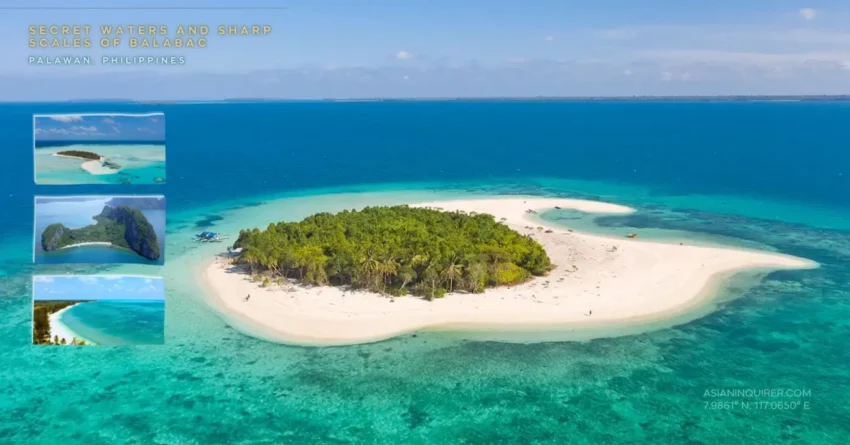
There is a place at the edge of the Philippines where the water is clear as glass but the shadows beneath are alive.
Most travelers stop at El Nido or Coron thinking they have reached the end of the world. They have no idea that the real frontier is further south in the mysterious islands of Balabac.
Here, the sandbars stretch for kilometers and the saltwater crocodiles rule the mangroves.
I recently took a five-hour overland journey from Puerto Princesa to see these coordinates for myself. The air feels different when you reach the Buliluyan Port after a long drive through the mountains. You realize you are no longer in a manicured tourist hub but in a land of raw nature.
Reaching the southernmost tip of Palawan requires a level of grit that most vacationers are not ready for. The road is a mosaic of paved asphalt and rugged dirt paths that test your vehicle’s suspension every step of the way.
Buliluyan Port serves as the final threshold before you trade wheels for waves.
The Gateway to the Last Frontier of Balabac
I arrived at the pier at 8:30 in the morning to meet my local guide. The trip across the strait to Bancalaan Island takes roughly an hour on a sturdy outrigger boat.
The cost to bring a vehicle across this region can reach nearly five thousand pesos per trip.
It is a high-stakes crossing where the weather can flip from calm sunshine to a cold rainy squall in minutes. The locals are the only ones who truly understand the shifting mood of the Sulu Sea. I sat on the wooden deck and watched the mainland disappear behind a curtain of gray clouds.
Once you leave the port, the ocean floor rises up to greet you with colors that seem digitally altered.
We headed toward Mansalangan, which is considered the longest sandbar in all of Palawan. You can see the white line of the shore from miles away while the water transitions from deep indigo to bright turquoise.
Walking on this sandbar feels like walking on the edge of the sky during low tide.
The Longest Sandbar and Pure Ivory Shores
Underneath the clear surface, colorful starfish dot the sea grass like fallen constellations. It is a stunning display of natural engineering that stays pristine because of its extreme isolation.
Not far away lies Patongong Island, a place that redefined my definition of “fine sand.”
There are no stones or broken corals mixed in with the shore here.
It is just pure, powdery ivory that stretches from one side of the island to the other. Those who make it to these coordinates find a silence that is impossible to find in the north.
Behind the beauty of the blue lagoons lies a technical reality that every traveler must respect.
Balabac is home to twenty barangays where the human footprint overlaps heavily with the territory of saltwater crocodiles. You will see warning signs scattered along the coastal roads telling you exactly where swimming is prohibited.
In some communities, residents see these prehistoric reptiles swimming just under their floorboards at night.
I traveled twelve kilometers from the center of town to reach the remote village of Catagupan.
What Makes the Crocodiles of Balabac So Prevalent?
This area is surrounded by hectares of dense mangroves and shallow river channels.
We boarded a small boat and navigated through the brown water of the river while holding our breath.
The chance of spotting a crocodile here during low tide is nearly eighty percent.
Residents in Sitio Sigumay have seen crocodiles up to twenty feet long swimming right across from the barangay hall. It is a normal part of life that would terrify a city dweller but seems ordinary here.
We reached a community called Purina where the houses sit directly on stilts above the West Philippine Sea.
The homes are made of light materials and connected by narrow wooden bridges that creak with every step. I met a local fisherman who told me that every river in Balabac has its own resident crocodile. Sometimes they see three or four giants in a row hunting for a dog or a goat on the shore.
The crocodiles here are opportunistic hunters that watch the high tide levels closely.
Living above the Predator’s Den in Purina
One resident shared a story about a crocodile that tried to eat a Lapu-lapu trapped in a fish cage. The reptile’s teeth got caught in the net and it was found hanging there the next morning.
People are especially cautious during the breeding season when the males become extremely aggressive.
At nine o’clock at night, the crocodiles often lie on the sun-warmed stones near the houses to bask.
They are looking for an easy meal while the village dogs hang out on the wooden docks. The locals don’t interrupt the predators and the predators generally leave them alone. It is a fragile peace dictated by mutual respect for the food chain.
The economy of this southern frontier is tied more closely to Malaysia than it is to Manila.
Because Sabah is only six hours away by boat, the local stores are filled with Malaysian snacks and mineral water.
You will see brands like Sasa that are entirely unfamiliar to those living in Luzon or Visayas.
The Malaysian Influence and Exotic Trade
These imports are cheaper and more abundant in these remote coordinates.
Aside from trade, the primary livelihood here is the harvesting of premium seafood. I saw Bimbo lobsters and the even more expensive Tiger lobsters kept in submerged ocean cages. These creatures are destined for export markets and can weigh up to five kilos each.
It is a fascinating look at a world where the borders of countries blur into one maritime culture.
We stayed overnight in a Tipi house at the Isla Malaya base camp to rest for the next day’s exploration. The camp offers snorkeling right in front where you can see giant clams and vibrant coral gardens.
It is a place where you can find both danger and incredible beauty in a single afternoon.
The road back to the town proper is a winding trail of shadows and sea spray.
I spent the evening watching the sunset over the pier while thinking about the ancient reptiles in the water. They are the guardians of the last frontier and their presence ensures that Balabac stays wild. Tomorrow we will move to another unique coordinate on the map.
Practical Travel Tips for DIY Travelers
- Transportation: Fly to Puerto Princesa and take a shared van to Buliluyan Port. The van ride takes about 5 to 6 hours and costs around ₱600.
- Boat Transfers: Standard passenger boats leave for Balabac mainland around noon. Private boat rentals for island hopping can range from ₱15,000 to ₱20,000 for a multi-day trip.
- Crocodile Safety: Never swim in rivers or near mangroves. Always follow the local guides and pay attention to the “No Swimming” signs.
- Livelihood: Visit the fish cages in Purina to see the massive Tiger Lobsters. It is a great way to understand the local economy.
- Malaysian Goods: Stock up on unique Malaysian snacks at the Balabac town proper. They make for great souvenirs that you won’t find anywhere else.
- Accommodations: Isla Malaya offers great base camps. Expect rustic conditions with limited electricity and common bathrooms.
- Connectivity: Mobile signal is very poor. Use offline maps and tell your family your itinerary before you leave Buliluyan.
- Cash: There are no ATMs in Balabac. Bring enough cash to cover all your meals, fees, and tips.
- Best Time to Visit: Aim for the summer months (March to May) when the seas are calm. The rainy season makes the boat crossings dangerous and the roads muddy.
- Notable Landmark: Don’t miss the Melville Lighthouse on the southern tip of the mainland. It is a historic Spanish-era structure with an incredible view.
Frequently Asked Questions (FAQ)
1. Is Balabac safe for tourists?
Yes, as long as you stick to designated tourist areas and follow crocodile safety protocols provided by your guides.
2. How do I get to the Mansalangan Sandbar?
You must hire a boat from Bancalaan or Balabac proper. It is best visited during low tide to see the full length of the sand.
3. Are the crocodiles a threat to boats?
Usually, no. They are shy and tend to stay away from the noise of the engines.
4. Can I see Malaysia from Balabac?
On a very clear day, you might see the faint silhouette of mountains, but generally, it is just beyond the horizon.
5. What is the “Tiger Lobster”?
It is a large, colorful species of lobster highly prized for export. Some can grow as large as a human forearm.
6. Do I need a permit to visit Balabac?
You need to register at the tourism office in Buliluyan or Balabac town proper and pay the environmental fee.
7. Is there a hospital in Balabac?
There are rural health units, but for major medical emergencies, you would need to be transported back to Puerto Princesa.
8. What should I pack?
Sunscreen, insect repellent (for “niknik” or sandflies), a power bank, and a dry bag for your electronics.
9. Can I go solo?
It is possible, but joining a tour group is much more cost-effective due to the high price of boat rentals.
10. How large is the longest sandbar?
Mansalangan is roughly 1 kilometer long during the lowest tides, making it one of the largest in the country.
We often travel to find a new version of ourselves, but sometimes we just need to find a place that hasn’t been changed by the rest of the world. Balabac is a reminder that the best coordinates are often the ones that require the most effort to reach.
Let the wildness of the south remind you that nature doesn’t need our permission to be magnificent.