
The air in the deep south of Palawan feels like it belongs to a world that the maps haven’t quite finished drawing yet.
While the rest of the world crowds the limestone lagoons of El Nido, a quiet and rugged expedition is unfolding at the absolute tip of the archipelago. You won’t find luxury malls or high-speed interstates down here where the pavement ends.
Instead, you find a landscape where the borders between countries blur and the water takes on a neon-blue glow.
It is a place where Malaysian imports fill the shelves and the rhythm of life is dictated by the monsoon and the tides. As someone who has spent years troubleshooting the digital paths of the world, I find that the most honest data is found in the dirt of a remote mountain road.
If you are looking for an escape that demands a bit of grit and rewards you with unfiltered beauty, these coordinates are calling your name.
The journey to the southernmost rim of the Philippines is a passage into the unknown.
The Long Road South to Rizal
The journey begins long before you ever touch the salt water of the Sulu Sea.
You have to conquer the Puerto Princesa South Road first, which is a mosaic of contrasts and surprises. It is a long stretch of asphalt that demands your full attention.
Leaving the city center, you trade the stoplights for winding mountain passes and switchbacks that test your focus.
The mountain air turns crisp as you climb higher toward the edge of the world, and the trees seem to lean in to watch you pass. I found a quiet base in the municipality of Rizal at NGD Inns where the rooms are cold and the Wi-Fi is surprisingly strong for such a remote spot.
It is the perfect place to check your gear and map out the landslides that often block the path ahead.
The local gas stations close strictly at 6:00 PM in this part of the province.
Safety is a literal lifesaver when the rogue chickens decide to cross the road on a blind curve without warning.
You need to wear full riding gear because the road can abruptly surrender to thick sand and loose gravel at any moment.
One minute you are gliding on smooth concrete, and the next, you are wrestling with the handlebars as the bike dances over the red mud. It is a slow and deliberate dance with the terrain that reminds you who is actually in charge of the expedition.
The mountain road is a beautiful but unforgiving teacher for every rider.
The Crossing at Buliluyan Port
Buliluyan Port is the threshold where the land finally ends and the true power of the sea takes over.
The salt air hits you with a sharp intensity the moment you step off your motorcycle or climb out of your 4×4 truck. It is a remote maritime outpost where the local tourism office keeps a watchful eye on every traveler weaving through their islands.
You must perform the log-in ritual here to ensure the community can monitor your coordinates in the vast blue.
I stayed at Sanis Beach Resort to wait for the morning tide because the boats leave at the crack of dawn.
There is a unique luxury in sleeping under a traditional mosquito net while the waves hit the sand just feet from your door. The sunrise over the Sulu Sea is the only alarm clock you will ever need to prepare for the open water.
Reaching this port is the final technical troubleshoot before you leave the mainland behind.
The Dolphin of Candaraman
A speedboat can cut the grueling four-hour sea crossing down to just forty-five minutes of adrenaline and sea spray.
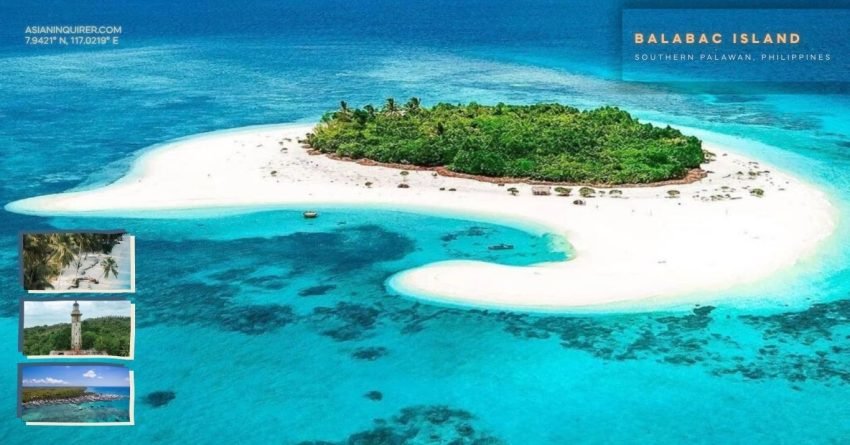
The ocean floor rises up to greet you as you approach Candaraman Island, and the colors change from deep indigo to a bright electric blue. The sand is blindingly white and feels like soft powder under your bare feet as you jump off the boat.
From above, this island is shaped uniquely like a dolphin leaping through the waves toward the Malaysian border.
The water is so hyper-clear that the boats look like they are floating in mid-air, casting shadows on the pristine white sand below. It is an idyllic slice of untouched paradise where you can completely detach from the digital noise of the city.
The silence here is heavy but comforting for those who have traveled so far.
You find that the most profound beauty is often found in the places that are the hardest to reach.
The island is a masterclass in natural engineering.
A Cultural Crossroads in Balabac Mainland
Stepping onto the mainland of Balabac feels like you have accidentally crossed an invisible border into a different country.
Malaysian goods replace the familiar Philippine staples in every small store you visit. The island sits a mere six hours away from Malaysia by boat, and the shelves reflect this ancient and vital economic connection.
You can buy Coco Jelly and Pampeng cookies for just a few pesos while chatting with the local shopkeepers.
The air smells like rich curry spices and drying fish, creating a heady mix that defines the local atmosphere.
You realize that borders are often just lines on a piece of paper that have nothing to do with the heart of a community.
The local dialect is a melodic blend of Tagalog and regional tongues that is easy to understand but unique to the frontier.
Every tricycle ride into the town center is a lesson in how people adapt to living at the edge of the world.
The shelves tell a story of resilience and trade that has outlasted any modern political shift.
You leave the town with a backpack full of unique snacks and a mind full of new perspectives.
The frontier is a place where the unexpected is the only thing you can truly rely on.
The Spicy Flavors of Marabon
A short sprint across the waves brings you to the vibrant and welcoming community of Marabon Island.
This is a place where Tagalog, Ilonggo, and Muslim dialects blend into a single melodic language that echoes through the narrow alleyways. The misok eateries serve Malaysian noodle delicacies that are infused with aromatic and bold spices that you won’t find in the north.
You won’t find standard fast food in these remote coordinates, and that is the greatest gift the island can offer you.
The heat of the chili is balanced by the genuine warmth of the islanders who treat every traveler like a long-lost neighbor.
They share stories of the tides and the history of the Melville Lighthouse, which has guided sailors through these straits for over a century. It is a sensory reminder that you are standing at the absolute rim of the country.
The culture here is as deep and clear as the water surrounding the wooden stilts of the houses.
We often travel to find something new, but in Marabon, you find something old and incredibly precious.
The connection to the land and the sea is the only coordinate that truly matters.
Travel Tips for the DIY Frontier Explorer
If you are planning to follow this untamed trail, you need to troubleshoot your logistics before the first mile. Start by bringing plenty of cash, as there are no commercial banks or ATMs once you leave the busy centers of Palawan.
Fill your fuel tank completely in Rizal or Bataraza to ensure you don’t run dry in the middle of a mountain pass.
Download your maps for offline use because the cellular signal is non-existent once you enter the shadows of the southern ridges.
Make sure to visit the Barangay Ransang Health Center if you experience any mishaps, as the community spirit there is incredibly helpful to strangers.
You should also check the boat schedules at Buliluyan Port a day in advance because the tides can change your plans without notice.
Notable landmarks within the vicinity include the historic Melville Lighthouse and the sandbars of Onuk Island.
Always pack high-quality rain gear for both yourself and your luggage to stay dry during the sudden tropical downpours.
Respect the local customs and always ask for permission before taking photos of people or their homes in the remote barangays.
The road to the south is a reminder that the best things in life require a bit of sweat and a lot of heart.
Sometimes you have to ride to the very edge of the map just to realize that the journey was the home you were seeking.
We often spend our lives looking for the perfect destination on the front of a brochure, but the real magic is found in the grit.
The untamed frontier of Southern Palawan and Balabac is a reminder that the best stories are written in the dirt and the spray of the sea.
Maybe the real treasure isn’t the destination, but the internal reset that happens when you finally reach the end of the road.
I hope your next adventure leads you to a coordinate that challenges your expectations and makes you feel truly free.
The horizon is open and the neon-blue waters are waiting for your story.
Let the wind carry your worries away and let the silence of the southern islands ground you in the present moment.
There is always another path to explore if you have the courage to keep going.
The edge of the world is just the beginning of a much larger journey.
May you always find your way home, even when the map ends.
Safe travels on your next expedition!
Each mile you travel is a brushstroke on the portrait of the traveler you are becoming.
We often travel to escape the noise, but we stay because we found a silence that actually speaks to us.