
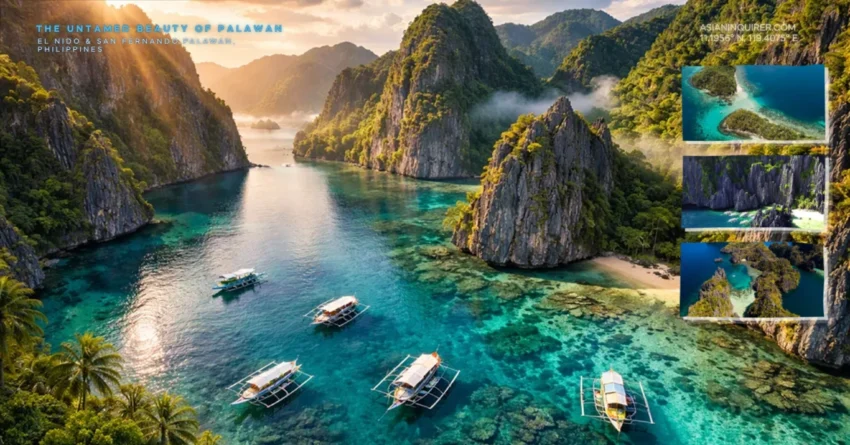
Have you ever looked at a map of the Philippines and wondered if it was actually possible to ride your own motorcycle across the sea to reach the very edge of the last frontier?
The journey to Palawan is a pilgrimage that every Filipino rider dreams of because it requires a rare blend of logistical troubleshooting and pure physical grit.
You have to leave the familiar comfort of the city behind and enter a world where the roads are narrow and the ocean is your only companion for days.
The Complex Logistics of Crossing from Manila
The adventure doesn’t begin on a dirt road in the mountains but in the middle of the heavy industrial traffic of the Manila ports.
You have to navigate a maze of trailer trucks and government offices before you can even see the blue water of the open sea. It is a transition that requires a great deal of patience and a thick stack of paperwork to ensure your vehicle is cleared for transport.
Everything starts at the iconic Kilometer Zero in Luneta Park.
This famous marker in the heart of Manila is the spiritual ground zero for every long expedition in the country.
Most people just pass by without realizing they are standing at the absolute center of the nation’s vast road system. It is a busy coordinate where the noise of the city is almost deafening to the soul before you head toward the peace of the islands.
We checked our fuel levels and headed straight for the Manila Pier at Gate 3 to find our ship. It is a place where you are surrounded by massive containers and the sharp smell of industrial exhaust while you wait for the loaders.
Measuring the motorcycle is the first technical step because the shipping fees depend entirely on the dimensions of your specific bike.
You will need a bill of lading and a towing fee clearance before the loaders will even touch your handlebars. It is highly recommended to book your tickets online to avoid the massive and confusing lines at the port terminal.
I wore my reflectorized jacket and a hard hat to enter the high stakes loading zone.
The loaders are incredibly fast and they will have your bike tied down to the deck before you even finish your morning coffee. It feels like a high stakes puzzle where every inch of space on the vessel is valuable for the long voyage ahead.
We watched the skyline of Manila disappear as the ship slowly moved toward the hazy horizon of the Sulu Sea. I sat on the upper deck and listened to the rhythmic hum of the engine while the wind grew significantly colder. This was the moment I realized there was no turning back from the adventure of a lifetime on two wheels.
The road ahead is a mystery that only the ocean can unlock.
Surviving the 43-Hour Endurance Test at Sea
The trip from Manila to the Port of El Nido is not a simple ferry ride but a true endurance test for any traveler.
We spent over forty hours on a small vessel that felt like a toy compared to the massive cargo ships in the distance. I found my bunk in the air conditioned cabin and prepared for the long haul across the water toward the south.
The waves grew larger as we left the protection of the Cavite coastline and entered the open sea.
You realize how small your motorcycle is when it is wrapped in plastic and tied to a metal deck in the middle of a storm. We could feel the vibration of every heavy swell as the hull hit the water with a loud and terrifying thud.
Meals are included in the ticket price to ensure everyone stays fueled for the crossing.
We ate a simple bowl of chicken adobo while the floor tilted under our feet in the galley.
It was proof that the simplest food tastes better when you are in the middle of a great expanse of blue. The gray clouds hung low over the water for most of the second afternoon while the rain hit the windows. We shared stories with other cowboy travelers who were also bringing their vehicles to the frontier to find a new perspective.
The horizon was a blur of mist and white sea spray as we finally approached the northern tip of Palawan.
I felt a surge of adrenaline when the ramp finally touched the wet concrete of the pier. It was finally time to see if the legends of the island were as real as the photos I had seen on my screen.
The salt air is the first thing that welcomes you to the last frontier.
Rising Above the Storm at the Canopy Walk
The weather in El Nido can be a brutal master even when you are standing on dry land.
We arrived just as a super typhoon was churning the waters of the northern Philippines and causing massive swells. All the famous island hopping tours from Tour A to Tour D were strictly canceled by the local coast guard to protect the lives of the tourists.
This is exactly when you have to troubleshoot your itinerary and look for inland alternatives.
The Canopy Walk in Barangay Maligaya is the perfect way to experience the majesty of the limestone cliffs without getting on a boat. You wear a safety harness and a hard hat to trek across a shaky hanging bridge that is suspended high above the forest floor. It is a dizzying perspective that makes you appreciate the raw and ancient architecture of the Palawan landscape.
The wind at the summit was strong enough to make my riding gear rattle against my chest. I looked down at the main town and saw the dozens of boats parked in the harbor waiting for the storm to pass.
Nature has a way of showing its beauty even when you are grounded by the clouds.
These limestone formations are like stone swords reaching for the sky in a dramatic display of geological power. You can stand on the dreamcatcher platform and feel like a bird overlooking the turquoise bay while the mist swirls around you.
The descent is a slow and careful walk through narrow passages carved into the ancient rock.
I found myself touching the cold stone and wondering about the millions of years it took to shape these jagged peaks. The air here is remarkably fresh and carries the heavy scent of wild ferns and recent mountain rain.
We didn’t get to swim in the lagoons but we certainly found a new level of clarity on the ridge. It was a reminder that travel is about adapting to the situation you are handed by mother nature. The trail teaches you that even a canceled plan can lead to a spectacular view if you are willing to climb.
We headed back to the lodge to dry our gear and plan for the ride south toward San Vicente.
The road was calling and the next coordinate on our map was the quiet municipality of the south.
Navigating the Off-Road Shortcuts to San Vicente
The highway from El Nido to Taytay is a motorcyclist’s dream with its long stretches of perfectly paved asphalt.
It is a long ribbon of road that cuts through dense greenery and fresh mountain air. You feel the power of the engine as you maintain a steady speed under the bright and heavy afternoon sun.
I decided to take a shortcut toward the coastal municipality of San Vicente.
This route involves a transition from smooth cement to the raw and messy reality of an off road trail through the woods. We had to navigate through thick mud and loose gravel that tested the suspension of our bikes at every turn. You have to turn off the ABS and stand on the pegs to handle the steep and slippery descents safely.
The smell of the salty sea began to fill my lungs as we neared the coast. I passed through a quiet sitio where the coconut trees towered over the narrow path and the houses were simple.
Everything felt more authentic away from the main highway coordinates where the tourists usually stay.
The mud was a difficult challenge but the reward was getting closer to the absolute peace of the south. I saw local children waving from their bamboo houses as we splashed through the deep puddles on the trail.
The road eventually turned back into solid concrete as we entered the jurisdiction of Barangay Santo Niño.
We reached the Sanvic Viewpoint just as the clouds were starting to clear and the sun was coming out. It is a stunning spot that offers a view of the shoreline that few people ever bother to find on their own.
The air was remarkably fresh and cool at the top of the ridge. I stood there for a long time watching the waves hit the jagged rocks below the cliff. It is a place that reminds you why you chose the motorcycle over the comfort of a bus for this trip.
The journey through the off road shortcut was a lesson in grit and determination.
We were tired but our spirits were high as we rolled toward the famous sands of Long Beach.
Finding Serenity on the Longest Beach in the Philippines
San Vicente is the home of the longest white sand beach in the entire country.
It stretches for fourteen kilometers from the town proper all the way to the distant barangay of Alimungan. Most travelers only see the busy lagoons of El Nido and miss the chance to walk on this golden brown treasure of the south.
I rode my bike to the iconic Ningning’s Rock to see the panoramic view.
This spot gained fame as a filming location for a popular television series many years ago. The limestone rock sits on a hill that overlooks a perfectly curved cove where the water is bright turquoise. You can still see the small offerings of flowers left by the locals to ensure a safe return for the fishermen at sea.
It is a sentimental coordinate that carries a heavy sense of history and local folklore. We stayed at the Peak View Resort to catch the sunrise over the ocean.
The rooms are right across the beach and offer a peaceful rest after a long ride through the mountains.
The internet connectivity is surprisingly good because of the modern satellite links available at the lodge. It is the best place to offload your footage and troubleshoot your plans for the next leg of the adventure.
We found that the sand in San Vicente has a unique texture that feels like soft powder under your bare feet.
The horizon seems to go on forever at Long Beach. I sat in a hammock and watched the local fishermen bringing in their catch of the day under the coconut trees.
We often travel to find something new but we ended up finding a peace that we had forgotten in the noise of the city. The wind in the palms was the only sound I needed to hear for a while. It was the perfect conclusion to a trip across the last frontier.
The motorcycle journey to Palawan is a milestone for every rider.
I am already looking forward to the next time I can trade the city gray for the island blue.
Travel Tips for DIY Travelers in Palawan
Reaching Palawan with your own vehicle requires careful planning to ensure a smooth transition from the mainland to the islands.
If you are starting from Manila, you need to coordinate with shipping lines like Atienza or other local cargo vessels that operate out of the Manila Pier.
Always ensure you have a hard hat and a reflectorized jacket, as you will not be allowed to enter the loading zones without them.
- Check the Weather: Palawan is prone to sudden typhoons. If island hopping is your goal, check the coast guard advisories daily, as tours are frequently canceled during rough seas.
- Drone Permits: If you plan to fly a drone in El Nido, be prepared to pay environmental fees and obtain a permit from the local authorities.
- Fuel Strategy: Gas prices in El Nido and San Vicente are significantly higher than in Manila. Fill up your tank in Puerto Princesa or Taytay if you are on a long ride to save on costs.
- Cash is King: While some high end resorts accept cards, most local eateries and ports in San Vicente are cash only.
- Offline Maps: Mobile signals can be non existent in the mountain passes between El Nido and San Vicente. Download your maps for offline use before you leave the town centers.
Each mile you travel is a brushstroke on the portrait of the traveler you are becoming. We often travel to escape the noise, but we stay because we found a silence that actually speaks to us.
Frequently Asked Questions
1. How long does the boat trip from Manila to El Nido take?
The voyage typically takes between 40 to 45 hours, depending on sea conditions and the type of vessel used.
2. Is it safe to ship a motorcycle on a cargo boat?
Yes, but you must ensure it is properly tied down and wrapped in plastic to protect it from the salt spray and movement of the ship.
3. What are the fees for bringing a motorcycle to Palawan?
Fees include the freight cost (approx. ₱4,000 to ₱6,000), towage (approx. ₱1,600), and terminal fees (approx. ₱200).
4. Can I go island hopping in El Nido during the rainy season?
It is possible, but the local coast guard often cancels tours if the waves are too high or a typhoon is near.
5. How much is the entrance fee for the Canopy Walk?
The entrance fee is around ₱400 to ₱700 depending on whether you choose the standard walk or the dreamcatcher package.
6. Is the road to San Vicente paved?
The main highway is well paved, but the shortcuts and inland routes often involve significant off road sections with mud and gravel.
7. Where is the longest beach in the Philippines located?
Long Beach is located in San Vicente, Palawan, stretching for 14 kilometers across several barangays.
8. Is there a mobile signal at Long Beach?
Signal is generally stable in the town proper and at resorts with Starlink, but it can be spotty along the remote stretches of the shore.
9. What is “Lunis” in Palawan?
Lunis is a traditional pork dish preserved in its own fat and salt, a common staple among Ilonggo communities in the province.
10. Do I need a tour guide for San Vicente?
While not strictly required, having a local guide helps in finding hidden spots like Ningning’s Rock and navigating the off road trails.