
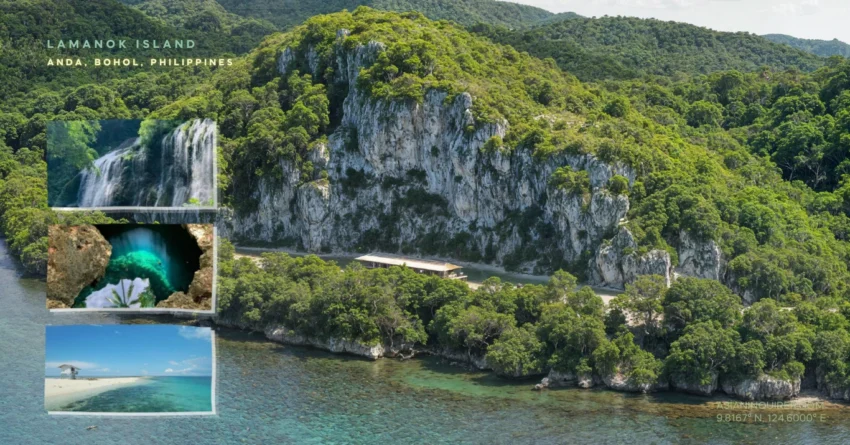
Bohol is often defined by the perfectly symmetrical Chocolate Hills, but the eastern edge of the island holds a prehistoric mystery that most travelers completely overlook.
I recently left my sweet abode to explore the rugged coastlines of Anda and the hidden rivers of Katigbian. It was a journey into the mystic side of the province where the lines between history and legend begin to blur.
You will realize that the most profound stories of our ancestors are etched into the stone walls of hidden islands.
Reaching Lamanok Island requires you to leave the paved road and walk along a quiet wooden boardwalk. This path winds through a massive sanctuary of 19 different species of mangroves that look like they are guarding the shore. You can feel the temperature drop as the salty sea breeze hits the dense green canopy.
I boarded a small wooden boat to cross the calm turquoise waters of the bay. The seagrass beneath the keel was so clear it looked like a submerged forest of emerald needles.
The first stop on this mystic tour revealed a secret written in blood and sap.
High on the rock walls of Lamanok are the ancient red hematite paintings. These hands and lines were created thousands of years ago using a mixture of animal blood, iron oxide, and the sap of the bakawan tree.
It is a powerful biological signature that says we were here to anyone who visits these cliffs today.
I climbed into the shadowed crevices of the limestone to see the ancient burial sites. There are weathered wooden coffins tucked into the rocks that have survived the humidity and the centuries.
Inside these small boxes are the remains of the early Malay people who first settled these coordinates. The bones are remarkably preserved, showing hips, jaws, and smaller skulls that tell a story of a different era. You can see the light reflecting off the white calcium of the ancestors as the guide explains the tradition of facing the rising sun.
The spirit of these bones is said to rise to heaven with the first light of the morning.
The Shaman Cave and the Rituals of Lamanok
Beyond the graves lies the Shaman cave where local healers still gather every Good Friday.
These shamans bring offerings of chicken to renew their powers in the presence of the nature spirits. This ritual is exactly why the island is called Lamanok, a name rooted in the tradition of the sacred bird.
I continued my motorcycle ride toward the quiet municipality of Mabini to find a different kind of peace.
The Pearl of the Ocean view deck offers a stunning 360-degree panorama of the mangroves and the distant mountain ridges. It is a simple wooden structure that rewards the climber with a perspective of Bohol that few postcards ever capture.
The silence here is only broken by the sound of the wind moving through the thick forest.
My curiosity then led me inland to the town of Katigbian where a hidden waterfall was waiting.
I used my drone to troubleshoot the location of a powerful roar I heard from the roadside. What I discovered was Inambakan Falls, a magnificent curtain of water hidden deep within a prehistoric wilderness. The trail down is not yet established, so I had to follow local residents through the dense vines and slippery rocks to reach the basin.
The water is not deep, only reaching the knees, but the force of the falls is enough to reset your entire spirit.
I ended my day crossing the incredible causeway of Pangangan Island in Calape. It is a long ribbon of asphalt that cuts directly through the ocean, surrounded by a maze of mangrove roots and the setting sun.
Finding the Hidden Inambakan Falls in Katigbian Bohol
The journey to Inambakan is a lesson in following your instincts when the map ends.
I saw the water flowing from a high ridge and knew that something spectacular was hidden beneath the trees. The locals call this a buried paradise because it remains largely untouched by the heavy footprints of mainstream tourism.
Walking through the darkness of the thick forest feels like entering a different geological era.
The air is heavy with the scent of damp earth and wild ferns that cling to the limestone walls. You can hear the roar of the water getting louder as you navigate the narrow dirt path. It is a sensory experience that grounds you to the raw power of the Bohol interior.
When you finally step into the clearing, the sight of the falls will take your breath away.
The water crashes into a turquoise pool that is perfectly clear and incredibly refreshing.
I spent an hour just sitting on the sun-warmed rocks and watching the way the mist creates tiny rainbows in the air. This is the ultimate technical troubleshoot for a stressed mind.
Exploring the Island Causeway of Pangangan Calape
The road to Pangangan Island is unlike any other highway in the Visayas.
It is a long causeway built directly over the sea, connecting the main island of Bohol to a quiet fishing community. You are surrounded by water on both sides as you ride your motorcycle across this narrow strip of land.
The mangroves here form a dense and protective barrier that keeps the tides calm.
I stopped my bike to watch a group of local fishermen returning with their afternoon catch. The colors of the sky were beginning to shift into a palette of warm orange and soft violet. It is a moment of pure clarity that makes you realize how beautiful the simple life can be.
You will find several small beach resorts tucked away along the shoreline of the island.
Rosales Lure Beach Resort is a great spot to feel the soft golden sand between your toes.
The water here is so transparent that you can see the small crabs dancing across the sea grass from the boardwalk. It is a peaceful coordinate where the only schedule you have to follow is the movement of the tides. You leave the island with a sense of gratitude for the hidden wonders that still exist in our world.
Reaching the end of the road is often just the beginning of a much deeper journey.
Practical Travel Tips for the Bohol DIY Traveler
If you are planning to explore these underrated spots in Bohol, here are some practical tips to help you troubleshoot your itinerary. Lamanok Island is located in Anda and the tour usually costs around 330 pesos for locals and 400 for foreigners.
I highly recommend wearing sturdy slippers or trekking sandals because the paths inside the caves can be slippery and wet.
- Lamanok Mystic Tour: Arrive before 10:00 AM to avoid the afternoon heat and ensure you get a boatman guide.
- Inambakan Falls: This spot is in Katigbian. Ask the locals near the Barangay Hall for directions as the trail is not well-marked on digital maps.
- Pangangan Island: The causeway is in Calape. It is a perfect spot for sunset photography, so time your arrival for around 5:00 PM.
- Transport: Renting a motorcycle for 500 pesos a day is the most efficient way to reach these far-flung coordinates at your own pace.
- Food: Try the local delicacies in Anda like the fresh seafood and traditional rice cakes sold near the market.
We often travel to find new sights, but we end up finding parts of our own history that we never knew existed. The ancient paintings and the hidden waterfalls are reminders that our world is much older and more mysterious than our modern lives allow us to see.
I hope your next journey leads you to a coordinate that challenges your perspective and fills your soul with wonder.
FAQ: Common Questions About Eastern Bohol Travel
1. Is it safe to visit Lamanok Island?
Yes, it is very safe as the tours are led by trained local guides who ensure you stay on the proper paths and wear safety gear.
2. How long does the Lamanok Mystic Tour take?
The entire experience, including the boat ride and the cave exploration, usually takes about 1.5 to 2 hours.
3. Can I swim in the waters around Lamanok?
Yes, snorkeling is an option, but you must coordinate with the tour operators for the specific snorkeling package.
4. Where exactly is Inambakan Falls located?
It is tucked away in the town of Katigbian, roughly an hour’s drive from the Tagbilaran City center.
5. Are there entrance fees for the beach resorts in Pangangan?
Some resorts like Rosales Lure charge a small fee for cottage rentals (around 500 pesos), but some public areas are free to access.
6. Do I need a professional camera for the ancient paintings?
A standard smartphone can capture the red hematite paintings, but avoid using a flash to protect the integrity of the ancient pigments.
7. What is the best month to visit Anda Bohol?
The dry season from January to May offers the calmest seas and the clearest skies for coastal exploration.
8. Is there a mobile signal on Lamanok Island?
The signal is very spotty once you enter the caves or move deep into the mangrove forest, so enjoy the digital detox.
9. Can I bring children to Inambakan Falls?
The trail is a bit rugged and slippery, so it is better suited for older children and adults who are comfortable with light trekking.
10. What are the burial jars made of in Lamanok?
While many artifacts are wooden coffins, some historical jar burials in the region used local clay and stone materials.