
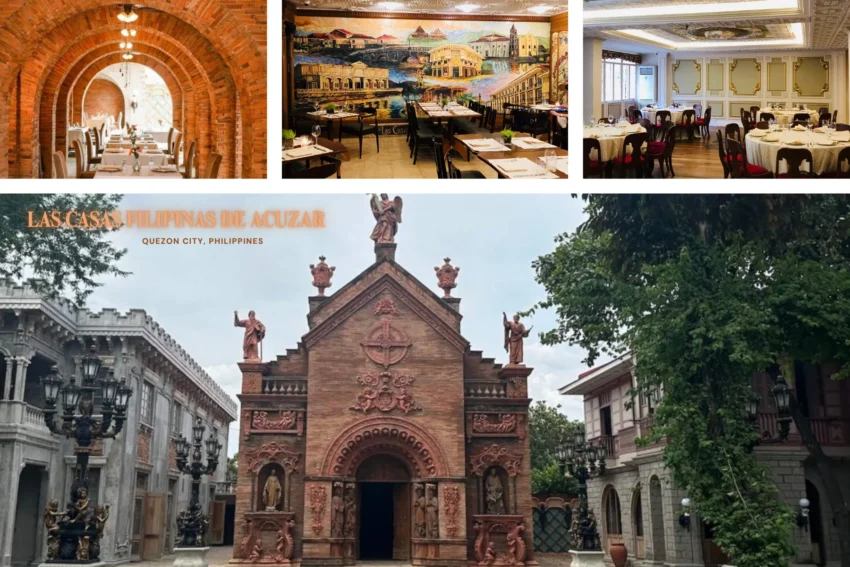
Fernando Poe Jr. Avenue feels unmistakably urban, with traffic, commercial buildings and the usual rush of Quezon City life. But behind one entrance in San Francisco del Monte, the scenery changes surprisingly fast.
Cobblestones replace the pavement. Old-style façades rise around a quiet courtyard. Wooden windows, brick walls and a chapel make the busy streets outside feel much farther away than they really are.
This is Las Casas Filipinas de Acuzar Quezon City, a smaller and more accessible heritage destination connected to the famous Las Casas experience in Bagac, Bataan.
It is not simply a miniature version of the Bataan resort, though.
At the centre of the property is Casa Juico, a house with its own history. Around it are spaces that bring together different periods and influences in Philippine architecture.
That contrast is part of what makes a visit interesting. You can be travelling along one of Quezon City’s busiest roads and, minutes later, find yourself walking through a place that feels detached from modern Metro Manila.
What Is Las Casas Filipinas de Acuzar Quezon City?
Las Casas Quezon City is part of the Las Casas Heritage Collection. It operates as a heritage destination, museum, restaurant and events venue.
For travellers who are curious about Las Casas but cannot make the longer trip to Bagac, Bataan, the Quezon City property offers a much easier introduction.
Just do not expect the same scale.
The Bataan resort spreads across a much larger area filled with historic structures, streets and waterways. The Quezon City property is more intimate, and its story largely revolves around Casa Juico.
The mansion was built in the 1960s for Felipe Sangil Juico and his family. It was designed by National Artist for Architecture Pablo S. Antonio.
When the Acuzar family acquired the property in 2016, much of the original house was retained.
Its marble flooring, wooden boards on the second floor and winding staircase were preserved. Artisans associated with Las Casas later worked on other areas of the estate, where heritage-style buildings, landscaped spaces and a church inspired by older Philippine churches were added.
Knowing that history gives the property more depth.
Some of the details you see are not simply decorative pieces created to make the place look old. They belong to the story of the original house.
What Can You See Inside Las Casas Quezon City?
The architecture is likely to catch your attention first.
Brick walls stand beside wooden windows and heavy doors. Stone textures, balconies and narrow passages create small visual details everywhere you look.
Then the courtyard opens up.
With heritage-inspired buildings surrounding it and old-fashioned lamps lining the space, the area feels a little like a plaza from another period.
One of the most striking sights is the chapel.
Its reddish façade, arched entrance and religious figures draw the eye across the cobblestone space. From the opposite side of the courtyard, it becomes one of the property’s strongest photographic subjects.
But some of the more interesting details are smaller.
Carved railings appear along stairways. Patterned floors lead into shaded rooms. Antique-looking furniture, thick wooden doors and quiet corners beneath mature trees give the property a softer atmosphere.
Casa Juico creates a noticeable contrast.
Its architecture comes from a different period than the Spanish-inspired structures surrounding it. Walking through the property lets you see those influences sitting side by side rather than following a single architectural style.
This is not really a place to rush through.
The chapel and courtyard may be the obvious attractions, but much of the charm is found in the staircases, doors, windows and small architectural details between them.
How Much Is the Las Casas Quezon City Entrance Fee in 2026?
As of August 2026, Las Casas Quezon City was promoting two heritage-tour options.
The Day Tour Package was listed at ₱350 per person. It included admission, a vicinity map, welcome drinks and plated street food.
The Guided Heritage Tour was listed at ₱700 per person and included a souvenir, vicinity map, welcome drinks and a plated meal. Guided tours were scheduled at 1:00 PM, 2:00 PM, 3:00 PM and 4:00 PM.
Those prices are useful when estimating your budget, but do not assume they will always be available.
Las Casas also offers dining packages, buffets and events that may come with different rates.
One visitor who went on 5 September 2026, for example, reported paying ₱1,099 for a weekend buffet package. That should be treated as a recent traveller-reported price rather than a standard entrance fee.
Operating hours can also vary between online listings.
Some sources show restaurant operations ending at 9:00 PM, while map information lists opening hours of 11:00 AM to 10:00 PM daily.
The safest approach is simple: contact Las Casas Quezon City before leaving home.
That is especially important if you are travelling for a guided tour, buffet, cultural presentation or special event.
What Is It Like to Eat at Las Casas Quezon City?
Dining here feels connected to the setting rather than separate from it.
The official Las Casas Quezon City website highlights both Filipino and Italian food through Kusina ni Nanay Maria and La Bella.
Kusina ni Nanay Maria serves Filipino home-style dishes presented with a more contemporary approach.
La Bella offers Italian food, which can be useful for groups that want something different from traditional Filipino dishes.
The surroundings are a big part of the experience.
Instead of sitting inside a typical Quezon City restaurant, you are eating among old-style walls, courtyards and heritage-inspired architecture.
Late afternoon can be particularly atmospheric.
As the daylight softens and lamps begin illuminating the property, the same courtyard and façades take on a warmer character.
Recent visitor listings also mention buffets, outdoor dining and live music. These can depend on the date and package, so it is worth asking what will actually be available during your visit.
If food is one of the main reasons you are going, reserve ahead when possible.
It is better to confirm the current menu or buffet package than arrive expecting something you saw in an older social media post.
How Do You Get to Las Casas Filipinas de Acuzar Quezon City?
Las Casas Quezon City is located at 134 Fernando Poe Jr. Avenue, San Francisco del Monte, Quezon City.
Do not be confused if an older article or map refers to Roosevelt Avenue.
It is the same road.
Roosevelt Avenue was officially renamed Fernando Poe Jr. Avenue under Republic Act No. 11608. The former Roosevelt LRT-1 station was also renamed Fernando Poe Jr. Station.
For commuters, LRT-1 Fernando Poe Jr. Station is one of the most useful rail connections.
From the station area, you can continue along FPJ Avenue by jeepney or take a taxi or ride-hailing vehicle to the property.
Jeepneys serving parts of Fernando Poe Jr. Avenue include routes connecting areas such as Muñoz, Pantranco, Quiapo and Pier.
Metro Manila routes do change, however. Checking a navigation or public transport app on the day of your trip is more reliable than following an old commuting guide step by step.
Driving or using a ride-hailing service is easier if you are unfamiliar with San Francisco del Monte.
Parking is also listed among the property’s available amenities.
For a place that can feel surprisingly removed from the surrounding city once you enter, Las Casas is relatively easy to reach.
What Else Can You Visit Near Las Casas Quezon City?
You can turn a Las Casas visit into a small heritage-themed day around Quezon City.
One of the most fitting nearby stops is the Minor Basilica of San Pedro Bautista in San Francisco del Monte.
Franciscan missionaries founded the church in 1590, and the Quezon City government regards it as the city’s oldest church. The National Museum declared it an Important Cultural Property in 2017.
That history makes it a natural companion to Las Casas, particularly if old churches and Philippine architecture are among the reasons you travel.
Another option is Santo Domingo Church, officially the National Shrine of Our Lady of the Most Holy Rosary, along Quezon Avenue.
Its scale and architecture make it another worthwhile stop for visitors interested in religious and cultural landmarks.
For something more practical, Fisher Mall is near the Quezon Avenue and FPJ Avenue area.
It can be a convenient stop for food, shopping or simply taking a break before continuing your trip.
A few hours at Las Casas can therefore become a fuller day of old churches, neighbourhood streets and unexpected pieces of Quezon City history.
Practical Travel Tips for Visiting Las Casas Quezon City
Give yourself time.
Las Casas is the kind of place where an old staircase or carved wooden door can be just as interesting as the larger attractions. Walking slowly also gives you time to notice details you might otherwise miss.
Wear comfortable shoes.
Some areas have cobblestones and uneven surfaces. A visitor who went in 2026 specifically recommended flat shoes for walking around the property.
If photography matters to you, the time of day can change the look of the place.
Daylight makes architectural details easier to see, while late afternoon brings softer light across the façades and courtyard. Stay a little longer and the atmosphere changes again when the lamps come on.
Sun protection is useful if you expect to spend a lot of time outside.
A small umbrella is also worth carrying, particularly during Metro Manila’s rainy season.
Most importantly, confirm the schedule before visiting.
Las Casas is also used for weddings, private functions and other events. Access to some areas may therefore depend on what is happening on the property that day.
Sorting out those details beforehand leaves you free to enjoy what makes the place memorable: finding an older-looking world tucked behind a very modern Quezon City street.
Frequently Asked Questions About Las Casas Filipinas de Acuzar Quezon City
1. Where is Las Casas Filipinas de Acuzar Quezon City?
Las Casas Quezon City is at 134 Fernando Poe Jr. Avenue, San Francisco del Monte, Quezon City, Metro Manila.
Older references may still use Roosevelt Avenue, which was the road’s former name.
2. Is Las Casas Quezon City the same as Las Casas Filipinas de Acuzar in Bataan?
No.
The Quezon City property belongs to the same heritage collection but is much smaller. The original Las Casas Filipinas de Acuzar in Bagac, Bataan is a far larger heritage destination with many more historic structures and attractions.
3. How much is the entrance fee at Las Casas Quezon City?
As of the heritage-tour promotion published in August 2026, the Day Tour Package cost ₱350 per person and the Guided Heritage Tour cost ₱700 per person.
Rates and packages can change, so confirm the current price before visiting.
4. Are guided tours available?
Yes.
The August 2026 schedule listed guided tours at 1:00 PM, 2:00 PM, 3:00 PM and 4:00 PM. Advance confirmation is recommended.
5. Can you eat inside Las Casas Quezon City?
Yes.
Dining is a major part of the property, with Filipino food offered through Kusina ni Nanay Maria and Italian dishes available at La Bella.
6. Is Las Casas Quezon City good for photography?
Yes.
The courtyard, chapel, heritage-inspired façades, cobblestones, Casa Juico and architectural details provide plenty of subjects to photograph.
Professional or formal photoshoots may have separate rules or fees, so contact the property beforehand if you are planning one.
7. Is there parking at Las Casas Quezon City?
Yes.
Current visitor information lists parking, including free off-street parking, among the available amenities.
8. What is the nearest train station?
LRT-1 Fernando Poe Jr. Station, formerly Roosevelt Station, is one of the most useful nearby rail connections for commuters.
The station was officially renamed in 2023.
9. What nearby attraction should heritage lovers visit?
The Minor Basilica of San Pedro Bautista is one of the best additions to a Las Casas itinerary.
Founded in 1590, it is regarded as Quezon City’s oldest church and has been declared an Important Cultural Property.
10. Is Las Casas Quezon City worth visiting?
It can be particularly worthwhile if you enjoy Philippine architecture, photography, old churches, history and atmospheric places.
Just go with the right expectation.
Las Casas Quezon City is not a substitute for the much larger heritage resort in Bagac. It is a smaller experience with its own character and history.
And perhaps that is part of its appeal.
Travel does not always require leaving the city behind. Sometimes you only need to turn off a familiar road, walk through an unexpected gate and find old staircases, quiet courtyards and fragments of history waiting on the other side.