
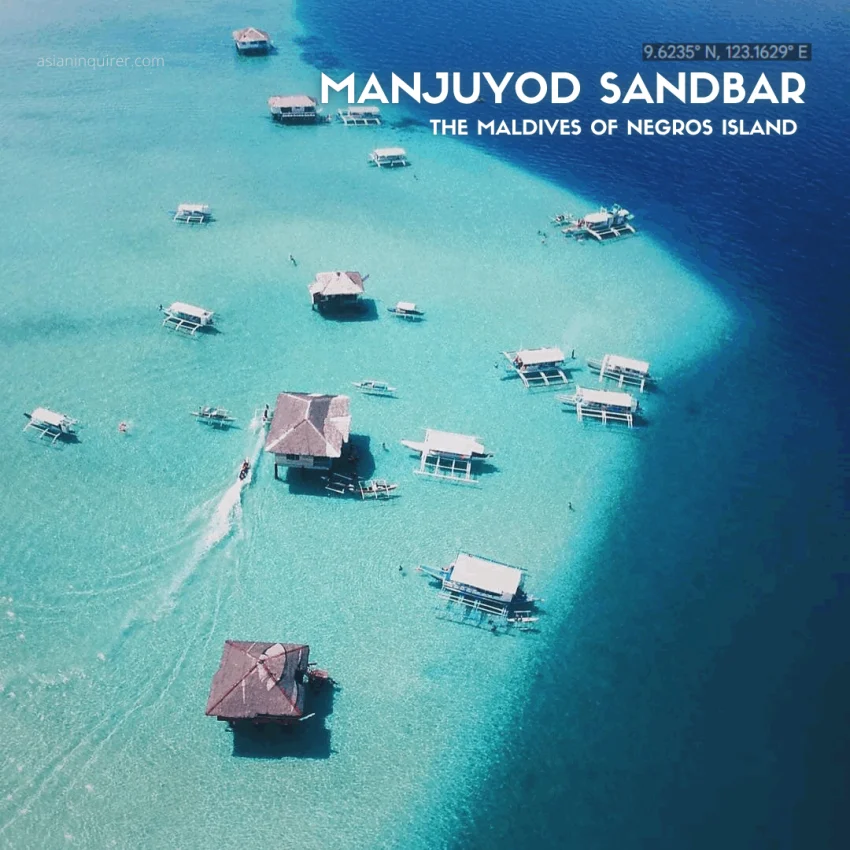
The Manjuyod Sandbar is a 7-kilometer stretch of pristine white carbonate sand located in the North Bais Bay of Negros Oriental. Unlike traditional islands, it is a shifting shoal that only fully emerges during low tide.
When the tide is high, the sandbar “disappears,” leaving only a cluster of iconic wooden stilt cottages appearing to float on the turquoise sea.
It is world-renowned for its crystal-clear waters, diverse marine life, and its close proximity to the dolphin-rich waters of the Tañon Strait.
The Manjuyod Sandbar Timeline
The history of the Manjuyod Sandbar is rooted in local folklore and its natural surroundings.
The name is tied to the municipality of Manjuyod, with local legends attributing it to “Mang Guyod,” a beloved settler known for his immense strength and kind disposition.
Alternatively, some believe the name refers to the “Manjuy” vine that was once found in abundance across the region.
For decades, this hidden gem remained a well-kept secret, known only to the local fisherfolk who navigated its shifting tides.
The transition from a secluded fishing ground to a world-class destination began in the early 2010s when viral social media photos of its iconic “floating cottages” captured global attention.
By 2026, the area has entered a new phase of sustainable tourism, characterized by stricter environmental regulations designed to safeguard the Tañon Strait Protected Seascape.
To preserve its “desolate paradise” charm, local authorities have strictly limited development to the existing stilt houses, ensuring that the sandbar remains a pristine natural wonder for future travelers.
Major Landmarks
The landscape of the Manjuyod Sandbar is defined by several key landmarks, starting with the Sandbar Apex that marks the most expansive stretch of its white sand beach.
The only structures permitted on this shifting shoal are the iconic Floating Cottages, a cluster of native wooden houses built on high stilts that provide a unique base for travelers in the middle of the sea.
Most journeys to this “disappearing” paradise begin at the Capiñahan or Canibol Wharfs in Bais City, which serve as the primary jump-off points for boat rentals.
Beyond the sandbar itself, visitors often take a side-trip to the Talabong Mangrove Park, a massive 400-hectare sanctuary dedicated to preserving local bird species and lush mangrove forests.
Things to Know Before & During Your Visit
To ensure a successful visit to the Manjuyod Sandbar, the most critical factor is the “Tide Rule”; you must check a local tide chart for Bais or Dumaguete and aim for a level of 0.3m or lower to see the sand fully emerged.
Although geographically located in Manjuyod, most boat rentals are coordinated through the Bais City Tourism Office, and it is highly recommended to book your vessel 1-2 days in advance, especially during the peak months of March to May.
Because there are no stores or restaurants on the sandbar, you must bring all your own food and water from the mainland.
On the day of your trip, an early 6:00 AM start is essential to catch sight of Spinner and Bottlenose dolphins in the Tañon Strait before the sun gets too high.
Since there is zero natural shade, visitors should pack reef-safe sunscreen and hats, adhere to a strict Leave No Trace policy by bringing their own trash bags, and carry small cash (PHP) to buy fresh sea urchins or coconuts from local boat vendors.
DIY Travel TIPS
For a seamless DIY day trip to the Manjuyod Sandbar, start your journey at 5:00 AM by catching a Ceres bus from Dumaguete City toward Bais City (₱70-₱90).
Upon arrival, head to the Bais Public Market to stock up on food and water, as there are no stores on the sandbar, before taking a short tricycle ride (₱20-₱30) to either Capiñahan or Canibol Wharf.
It is essential to depart by 7:00 AM to maximize your chances of spotting dolphins in the Tañon Strait before reaching the 7-kilometer sandbar during low tide (typically 9:00 AM).
While there, you can explore the iconic floating cottages and enjoy a boat-side lunch before a final stop at the Talabong Mangrove Forest at 1:30 PM.
With a total estimated budget of ₱850 to ₱1,000 per person for a group of eight, covering transportation, a ₱20 tourism fee, and a shared boat rental (ranging from ₱3,500 to ₱5,500 depending on vessel size), this itinerary ensures you return to the mainland by 3:00 PM for your bus back to Dumaguete.
Have fun and enjoy your next trip!