
There is a specific point along the northern highway of Cebu where the air begins to smell less like diesel and more like the salt from a hidden sea.
Most people flock to the south for the high-adrenaline rush of the mountain waterfalls. However, if you keep heading north, you find a world where the clock seems to have run out of batteries.
You reach the end of the road and realize that the real adventure is just beginning across the water.
Bantayan Island has long been the sanctuary for those who are tired of the constant noise. It is a place where the sand stays white and the water stays shallow enough to walk in for hours. You don’t come here to check items off a list; you come here to forget that the list even exists.
The journey begins with a four-hour ride that takes you through the quiet towns and rolling hills of Northern Cebu. I always prefer taking the early morning bus because the light hitting the rice paddies is nothing short of cinematic.
Hagnaya Port serves as the final gateway before you leave the mainland behind.
The ferry ride is a brief one-hour crossing where you can watch the blue Visayan Sea transition into a bright turquoise hue. You feel the vibration of the engine beneath your boots as the silhouette of Santa Fe starts to sharpen on the horizon.
Stepping off the boat feels like a physical release from the pressure of the modern world.
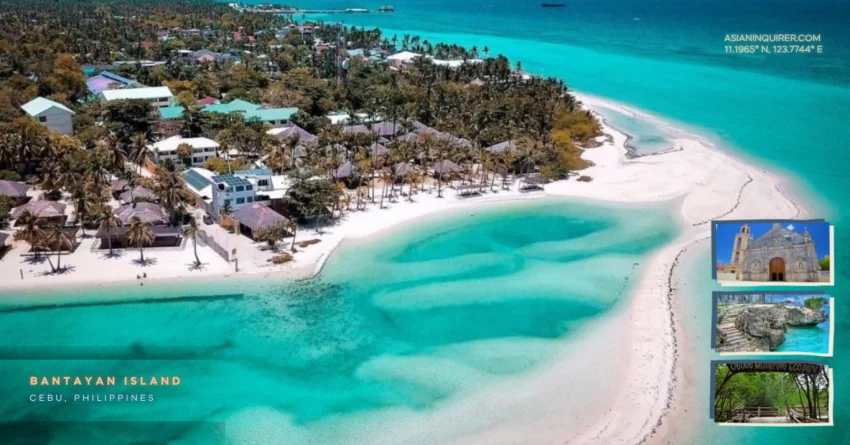
Santa Fe is the first coordinate you will touch and it immediately greets you with powdery white sand. It is the beating heart of the island where the small resorts and cozy cafes line the shore.
Kota Beach is perhaps the most iconic landmark on this part of the island. It features a sweeping sandbar that emerges during the low tide like a white velvet bridge into the sea. The water here is so clear that you can see the ripples in the sand beneath your feet without even trying.
This is the perfect spot for anyone who wants to spend a morning doing absolutely nothing.
You realize that the best way to troubleshoot your stress is to simply lie on the shore and listen to the tide.
The sand here is so remarkably fine that it feels like walking on warm sugar. Most travelers find themselves leaving their shoes at the resort and spending their entire stay with their toes in the sand.
You haven’t truly seen the beauty of the Visayas until you’ve watched the ferry wake disappear behind you.
The Transition to the North
The road from Cebu City to the northern tip of the province is a lesson in patient travel.
You pass through bustling municipalities like Danao and Bogo where the scenery is a mix of industrial energy and coastal charm. The sugarcane plantations start to appear as you move further north, their tall stalks waving in the breeze like green ocean waves.
I find that the best way to experience this leg of the trip is on a motorcycle.
You aren’t just observing the landscape through a window; you are a part of the atmosphere and you feel every change in the temperature. The wind hits your gear and you can smell the woodsmoke from the kitchens of small barangays along the highway. It is a sensory experience that prepares your mind for the slow rhythm of the island life that waits ahead.
The highway is well-paved and offers several opportunities to pull over and admire the view of the sea.
You should always stop for a quick snack at one of the roadside stalls to taste the local delicacies.
The bibingka from Catmon is a personal favorite that is still warm from the clay oven when you buy it. It is wrapped in a charred banana leaf that gives it a smoky aroma that stays with you for miles.
Getting to Hagnaya Port is the final coordinate before you trade the asphalt for the sea.
You realize that the long ride was necessary to shed the skin of the busy city dweller.
The port is a busy hub of travelers and vendors selling everything from fried fish to chilled coconut water. You see families carrying their luggage and excited explorers checking their watches for the next ferry departure.
There is a sense of anticipation in the air that you can almost taste.
The ferry ramp lowers and the metal deck echoes with the sound of wheels and footsteps.
The White Sands of Santa Fe
Once the ferry docks in Santa Fe, the transition to paradise is nearly instantaneous.
The town is small and walkable, with narrow roads that lead toward the most stunning beaches in the region. You won’t find towering skyscrapers or massive malls here, and that is exactly why people keep coming back.
The coastline is a long crescent of ivory sand that feels cool even under the midday sun.
The water at Santa Fe Beach is remarkably calm and shallow, making it ideal for families and long, languid swims. You can wade out for fifty meters and still find that the water only reaches your waist. It is like being in a giant, natural swimming pool where the only noise is the gentle lap of the waves against the shore.
I spent an hour just floating in the turquoise deep, watching the clouds roll past.
The resorts here are modest and unpretentious, often featuring open-air dining areas that catch the sea breeze.
You can order a plate of fresh scallops for a few hundred pesos and enjoy a meal with your feet in the sand. The locals are warm and welcoming, always ready with a smile and a tip on where to find the best sunset view.
There is a cozy island feel that makes you feel like a guest in someone’s home rather than a tourist.
The sandbar at Kota Beach is the masterpiece of this specific coordinate.
It is a shifting landscape of white sand that changes its shape with every single tide.
Walking to the very tip of the bar makes you feel like you are standing in the middle of the ocean. You are surrounded by different shades of blue and the horizon seems to stretch on for an eternity. It is a moment of pure clarity that only the sea can provide to a tired soul.
You realize that the most valuable things in life aren’t things at all, but moments like this.
The sunsets in Santa Fe are a daily ritual that brings everyone to the water’s edge.
The sky transforms into a palette of fiery orange and deep violet that reflects perfectly on the still water.
Hidden Sanctuaries and Secret Passages
If you want to find the true silence of Bantayan, you must head toward the western edge of the town.
Paradise Beach is a small cove that remains hidden from the main tourist strip and the busy resort rows. It is tucked between jagged limestone cliffs that protect the white sand from the wind and the noise.
Accessing this spot requires a short ride through a narrow dirt path lined with coconut trees and wild ferns.
It feels like you are entering a secret passage to a world that the rest of the island has forgotten. There are no large hotels or loud music here, only the sound of the wind through the palm leaves. You will often find that you have the entire stretch of beach to yourself for a few golden hours.
The water here is a bit deeper and offers a richer blue color than the shallows of the main town.
It is a raw and rugged coordinate that reminds you of how the Philippines looked decades ago.
You can sit on a sun-bleached log and watch the small crabs dance across the coral rubble on the shore. It is a place for reflection and for reconnecting with the natural world without any digital distractions.
The cliffs provide a natural shade where you can hide from the intense tropical heat.
You find that the most profound beauty is often found in the places that are the hardest to reach.
Renting a scooter is the ultimate technical troubleshoot for exploring these hidden corners of the island.
You have the freedom to follow every winding road and stop whenever a view takes your breath away.
You pass by small farms where carabaos graze in the shade and children wave at you from their front yards. The pace of life here is dictated by the sun and the seasons, not by a schedule or a clock. It is a humble and honest existence that makes you rethink your own priorities back in the city.
The road eventually leads you to the northern tip of the island where the landscape changes again.
Madridejos is home to the Kota Park, a historic fort that was built to protect the locals from pirates.
The stone walls are weathered and covered in moss, but they still hold the stories of the island’s ancestors. It is a beautiful and somber place to watch the final light of the day disappear.
The Green Lungs of Obo-ob
Exploring the island isn’t just about the sand and the sea, as the inland coordinates hold their own magic.
The Omagieca Obo-ob Mangrove Garden is a biological engineering masterpiece that serves as the green lungs of the island. It features a long wooden boardwalk that snakes through a dense and mysterious forest of mangrove trees.
This park gained national fame as a filming location, but its true value is in its environmental impact.
The mangroves act as a natural barrier against storm surges and provide a nursery for the local marine life. You can hear the rhythmic clicking of the mollusks and the calls of hidden birds as you walk through the canopy. The air here is noticeably cooler and carries the heavy, nourishing scent of damp earth and salt.
It is a vital sanctuary that reminds us of the delicate balance between the land and the ocean.
You can rent a small kayak to paddle through the narrow canals where the roots reach down into the dark water.
It is a quiet and meditative experience that allows you to see the forest from a different perspective.
The sunlight filters through the leaves in shafts of gold, illuminating the tiny fish darting between the gnarled roots. You feel like you are navigating a living cathedral where every branch and leaf has a specific purpose. It is a powerful reminder that nature is the most sophisticated architect we will ever know.
The boardwalk eventually leads to a viewing deck that overlooks the vast expanse of the mangrove forest.
From this height, you can see the sheer scale of the conservation efforts being made by the local community.
It is inspiring to see how people have come together to protect the land that provides for them. The spirit of the island is found in these quiet efforts to preserve the beauty of the natural world. You leave the garden with a deeper appreciation for the ecosystems that keep our islands vibrant and healthy.
The green architecture of Obo-ob is a highlight of any Bantayan itinerary for the conscious traveler.
Success in travel is not just about where you go, but what you leave behind for the next generation.
Heritage and Heart in Bantayan Town
Riding your scooter further south will lead you to the town proper of Bantayan, where the local heritage is most visible.
This is the oldest settlement on the island and it serves as the administrative and cultural center for the residents. You can see the influence of the Spanish era in the layout of the plaza and the design of the older buildings.
The Saints Peter and Paul Parish is a stunning structure that serves as the spiritual anchor of the island.
It was built centuries ago using massive blocks of coral stone and a mortar made from thousands of egg whites. The interior is a cool sanctuary of dark wood and stained glass that invites you to sit and reflect in the silence. You can feel the weight of countless prayers and stories as you walk through the ancient nave.
The church has survived typhoons and fires, standing as a testament to the resilience of the Bantayanon people.
The public market nearby is a sensory explosion of colors, smells, and local commerce.
This is the best place to troubleshoot your hunger and taste the authentic flavors of the Visayas.
You will find rows of dried fish, which is the island’s most famous export and a staple in every local kitchen. The smell is sharp and salty, a characteristic aroma that defines the market experience for every visitor. I watched as the vendors expertly packed the danggit and pusit for travelers heading back to the mainland.
You can also find stalls selling fresh fruits like the sweet mangoes of Cebu and the creamy avocados of the province.
The prices here are much lower than in the tourist areas, and the quality is second to none.
It is a place where you can interact with the people who make the island move and hear their stories. They will tell you about the best time to catch the fish or how the weather has changed over the years. This human connection is what turns a simple trip into a meaningful journey through the heart of a culture.
The town plaza is a beautiful spot to rest and watch the daily life of the locals unfold.
You see elders chatting on the benches and students heading home after a long day at school.
Practical Travel Tips for the Bantayan Island DIY Traveler
Catch the 5:00 AM bus from the North Bus Terminal in Cebu City to beat the heavy traffic and arrive at the port early.
This ensures you have enough time to secure your ferry ticket and grab a quick breakfast before the crossing. Make sure to bring enough cash for your entire stay because the local ATMs can be unreliable during the busy long weekends.
Renting a scooter for about five hundred pesos a day is the most efficient way to navigate the island roads at your own pace.
You should always check the tire pressure and the brakes before you leave the rental shop for your own safety.
The Obo-ob Mangrove Garden is best visited during the high tide so that the water levels are ideal for kayaking or viewing. You should also make it a point to visit the town of Madridejos to see the sunset at the historic Kota Park. For those who enjoy snorkeling, a trip to Virgin Island is an essential part of any Bantayan itinerary.
Make sure to pack a reliable raincoat and plenty of sunscreen to troubleshoot the unpredictable tropical weather patterns.
You can find affordable and clean accommodations in Santa Fe if you book a few weeks in advance.
Most resorts offer free pick-up services from the port if you coordinate with them before you arrive on the island. Always practice the leave no trace principle by carrying your trash back with you to keep the coves and forests pristine. This ensures that the beauty of the coordinates stays intact for the explorers who will follow in your footsteps.
The island is generally safe, but it is always wise to keep an eye on your belongings while you are swimming.
Traveling to Bantayan is about learning how to be present in the moment and enjoying the slow pace.
We often spend our lives rushing toward a finish line that doesn’t actually exist in the real world. Bantayan Island is a gentle reminder that the most beautiful moments in life happen when we finally decide to slow down and breathe. The real magic isn’t found at the end of the road, but in the silence and the stories we find along the way.
The rhythm of the island will stay with you long after you have returned to the noise of the city.
I hope your next journey leads you to a shore that makes you feel entirely at home.