
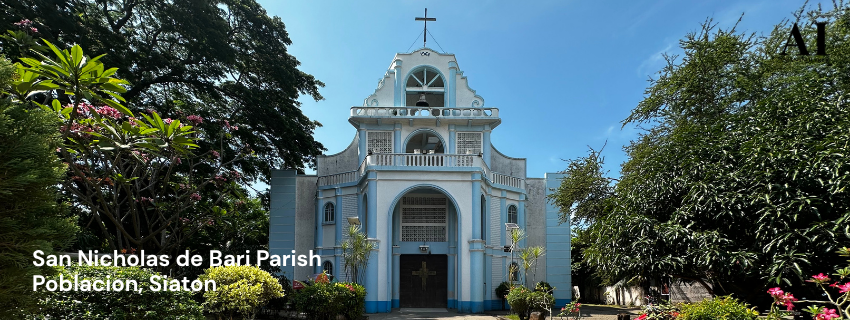
My wife and I were just doing our usual grocery run in town when I decided to take a detour toward the San Nicolas de Bari Parish.
We didn’t have a plan to spend the morning taking photos. However, the way the light was hitting the belfry made it impossible to just drive past and ignore the view.
There is a quiet magic in Siaton that you only notice when you finally slow down and look.
A Palette of Sky and Stone
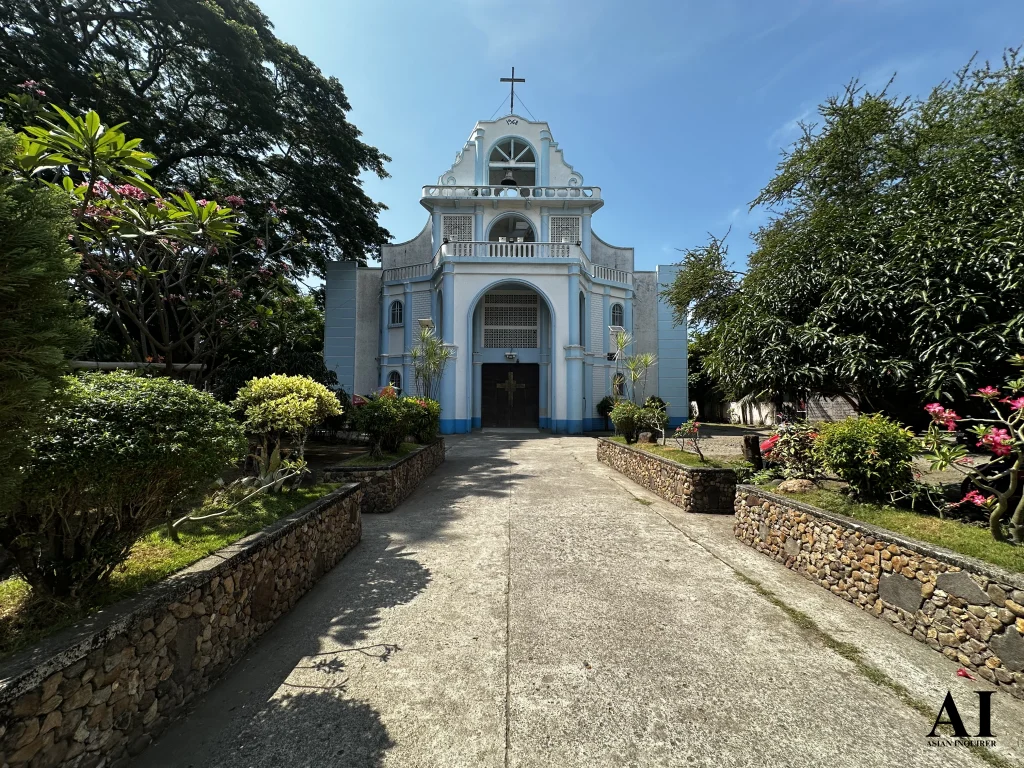
The first thing that really grabs your attention when you arrive is the color palette of the building. Most colonial-era churches around Negros are made of dark, heavy coral stone, but this one is painted in refreshing shades of white and sky blue. It makes the entire structure look like a natural extension of the horizon on a clear, sunny day.
The architecture has a modern-eclectic feel that balances tradition with contemporary lines. You can see the Spanish influence in the general shapes, but the finish feels very clean and 20th-century.
The belfry is particularly interesting because it is integrated directly into the center of the facade.
It rises in three distinct tiers that get narrower as they reach the top level. A single bronze bell sits under a simple cross with the year 1968 inscribed just below the peak.
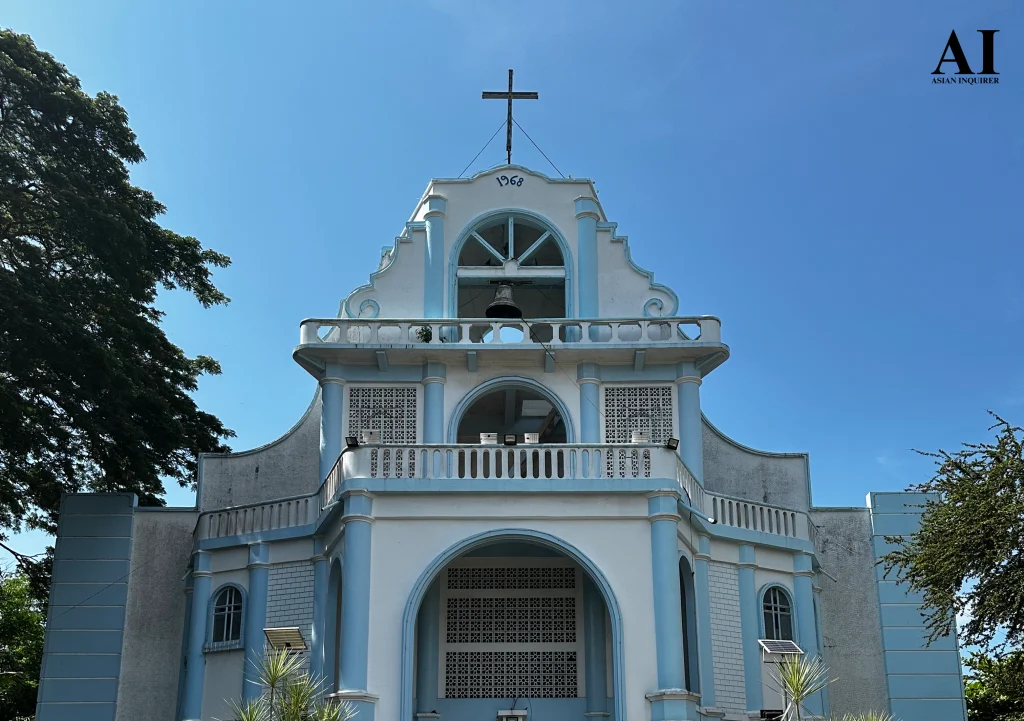
Below the tower, a massive high-vaulted arch defines the main entrance of the church.
This creates a deep, shadowed porch that frames the main wooden doors where a simple cross is prominently displayed. These doors are usually the first thing people photograph because of the depth the arch provides.
Above this entrance, a wide balcony with a white balustrade gives the building a light and welcoming appearance. This specific feature makes the church feel less like a fortress and more like a home for the community. It breaks up the verticality of the tower with a soft, horizontal line.
Between the structural columns, you will find intricate lattice-work or breeze blocks that serve a very practical purpose.
Stepping Into the Breezy Sanctuary
I really wanted to see what the interior looked like, so I found a side door to get inside.
During Saturdays, the main entrance is usually closed after the morning masses are finished. The interior is clearly designed for our tropical climate with a focus on vertical space and natural light.
It feels less like a heavy stone chamber and more like a spacious, airy hall.
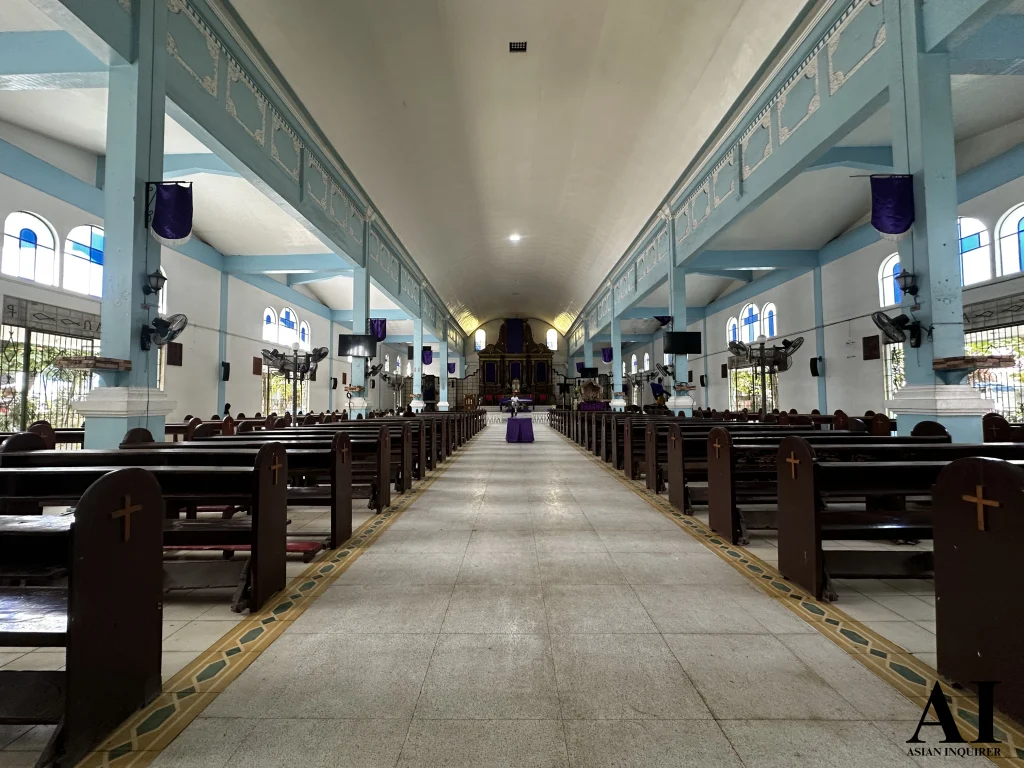
The ceiling is a long, smooth barrel vault painted in a soft cream color. It arches high over the central aisle and draws your eyes immediately toward the altar. Supporting the roof are two rows of tall, slender square pillars painted in that same signature pastel blue.
These pillars are connected by horizontal beams decorated with delicate white moldings. This creates a rhythmic frame as you look down the long nave toward the front.
Along the upper walls, you will see groups of three arched windows with blue and white stained glass.
During the day, these windows cast a cool sapphire glow onto the white walls. A long, speckled tile floor leads the way to the sanctuary at the end of the hall.
The aisle is bordered by an elegant yellow and green geometric pattern that acts like a permanent carpet.
Rows of heavy dark wooden pews provide a grounding contrast to the light-colored walls. Each pew end is carved with a simple Latin cross that looks very clean and modern.
At the very end of the hall sits the Retablo, which is a classic dark wood altar piece with gold accents. In my photos, it is draped in purple cloth because I visited during the Lenten season. This adds a layer of solemnity and quiet waiting to the otherwise bright and cheerful space.
Modern touches like flat-screen monitors and large electric fans ensure the community stays cool during warm afternoons.
Looking Back Toward the World
When I turned back toward the entrance, I noticed how the church maintains a sense of geometric balance.
Suspended above the main doors is a wide choir loft that looks very traditional. It features a dark wood railing with classic balusters that add a warm touch to the blue and white interior.
To the left of the doors, a sturdy wooden staircase climbs toward the loft.
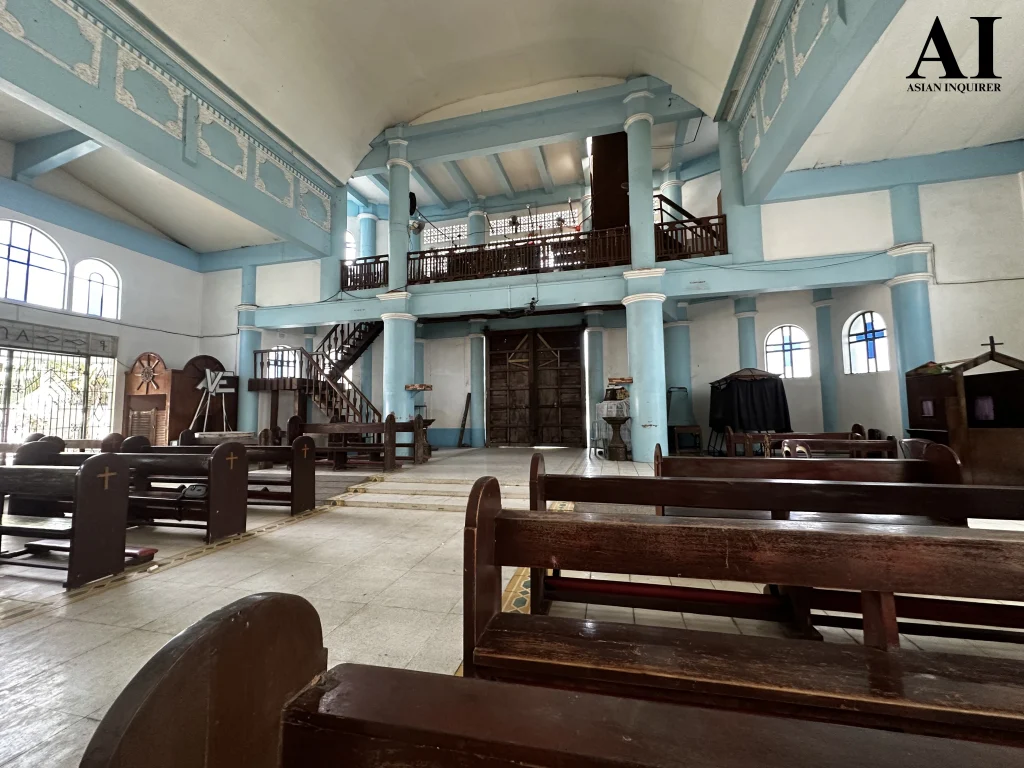
The design is simple and functional, reminding me of the old Filipino ancestral homes. Behind the loft, you can see light filtering through the breeze blocks I noticed from the outside. These cast small patterns of light across the upper beams and help the space feel alive.
The main entrance is sealed by two towering hardwood gates with a rugged cross-brace pattern. These doors look incredibly strong and durable against the elements of the coastal town.
Two wide steps lead down from the main floor to the entrance level.
The transition is marked by the continuation of the yellow and green tile border. From this angle, you can really appreciate the scale of the circular blue columns and their white rings.
You can also find quieter corners like a baptismal font and a confession box tucked away.
A Metallic Glow Under the Stars
I decided to return to the church at night to see how the atmosphere changed. The building sheds its colorful persona and takes on an almost ethereal, metallic glow.
The illuminated cross at the peak of the belfry is the first thing you see.
It glows with a brilliant white light that acts as a spiritual lighthouse for the town. Floodlights are positioned along the balconies to cast an upward glow that emphasizes the tiered shape of the tower. This light catches the white moldings and makes the architecture look crisp against the dark night sky.
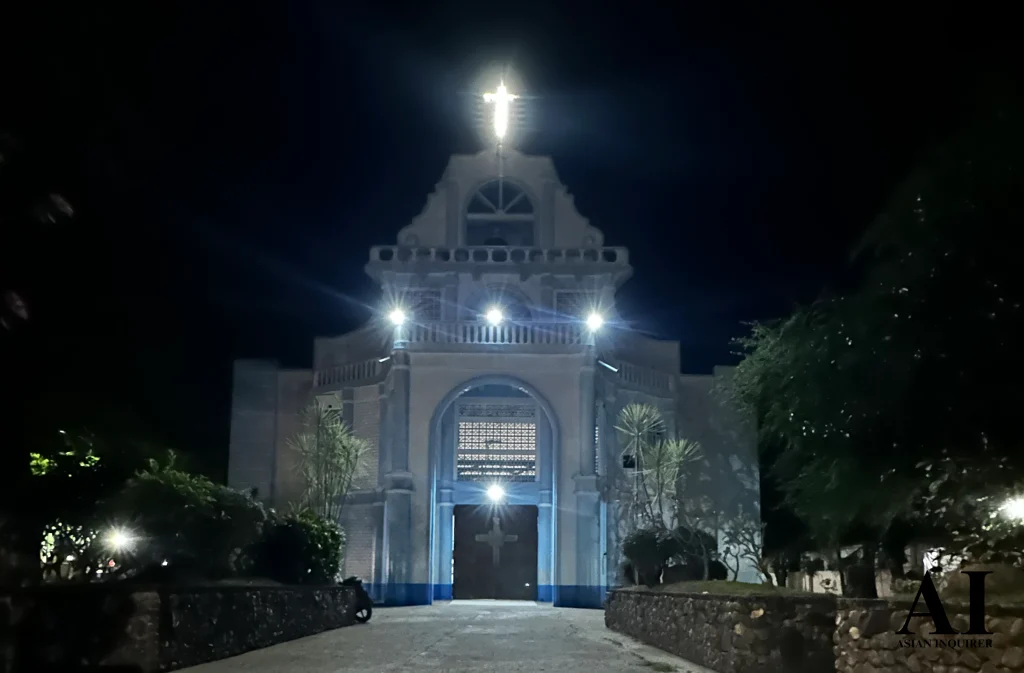
While the top is bright, the deep entrance arch remains in shadow to create a sense of mystery. A single warm light hangs over the main doors to create a quiet focal point.
The lush trees and shrubs that were so vibrant during the day now become dark silhouettes.
Tall palms catch the stray light and their fronds shimmer like silver feathers in the wind. The concrete path reflects the cool glow of the overhead lights like a pale ribbon leading the way.
The low stone walls are cast in deep shadow and their jagged textures are highlighted only where the light spills over.
After finishing the photos, we headed to the plaza just to the left of the church. We found some fresh saba and a bottle of tuba vinegar from the local vendors there.
It was a perfect ending to a day spent documenting one of the most unique churches in Negros. The San Nicolas de Bari Parish is a beautiful example of how architecture can reflect both faith and the local environment. I left feeling grateful for the spontaneous stop we made earlier that morning.
Negros never fails to surprise me with its quiet and beautiful corners.
FAQs
How far is Siaton Church from Dumaguete?
It is approximately 50 kilometers south of Dumaguete City. The drive typically takes 1 hour to 1 hour and 15 minutes depending on traffic.
Can I take a bus to the San Nicholas de Bari Parish?
Yes. Go to the Dumaguete Ceres Bus Terminal and board a bus bound for Bayawan or Siaton. Ask the conductor to drop you off at the Siaton town plaza.
Is there an entrance fee for the Siaton Church?
No, entrance is free as it is an active place of worship. However, donations for the church’s upkeep are greatly appreciated.
When is the best time to photograph the blue sanctuary?
Mid-morning (around 9:00 AM to 10:30 AM) is ideal. The sunlight filters through the windows, making the blue interior look most vibrant without being too dark.
What other spots are near Siaton Church?
You can easily combine this visit with a trip to Lake Balanan (about 20 minutes away) or a lunch stop at Tambobo Bay. But there are also less known beaches like the Sumaliring Beach, which is also breathtaking.
