
I remember the first time I rode my motorcycle south from Dumaguete toward the quiet town of Bacong.
The morning air carried a hint of sea salt and roasted corn from the roadside vendors. I kicked my bike into gear and felt the cool breeze against my face as the urban noise of the city started to fade.
My destination was a silhouette I had only seen in old heritage books.
The short ten-minute ride is a refresher for any weary soul looking for a bit of peace.
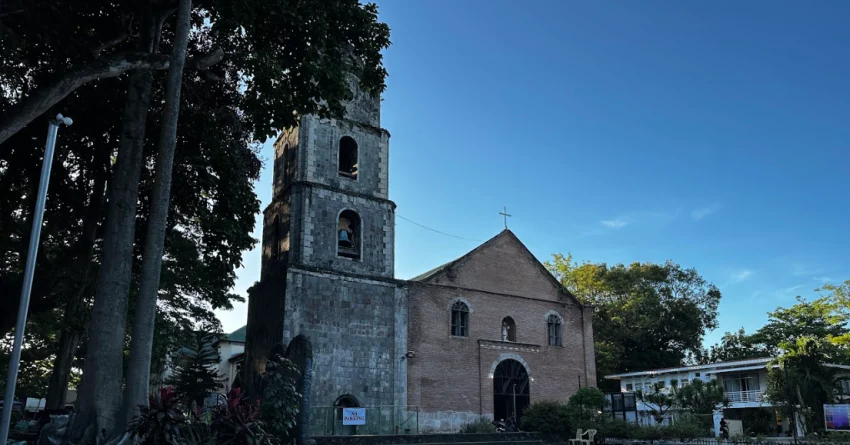
I pulled up to the town plaza and immediately felt the temperature drop under the shade of the massive acacia trees. The sight of the red bricks against the blue sky was exactly what I needed to see today.
A Unique Architectural Legacy in Negros
Most of the old colonial churches you see in the Visayas are made of white coral stone hauled from the seabed.
The San Agustin of Hippo Parish Church stands out because it is built primarily of deep red clay bricks. This choice of material gives the structure a warm and earthy glow that shifts in color as the sun moves across the horizon.
The Augustinian Recollect missionaries designed this sanctuary in the mid-1800s with a very specific vision in mind.
It features massive L-shaped masonry walls that provide incredible stability against the earthquakes that often visit our islands.
Walking along the side of the building, you can see the intricate patterns of the brickwork and the weathered mortar that has held them together for centuries. These bricks were fired in local kilns and arranged by hand with a precision that modern machines often fail to replicate.
The National Museum of the Philippines has recognized this site as a National Cultural Treasure for its historical significance.
This status puts it in the same league as the famous heritage churches of Bohol and the Ilocos region.
I felt a sense of pride as I touched the rough surface of the walls and realized how much history they have witnessed. The church has survived tropical storms and political revolutions while remaining a silent anchor for the people of Bacong.
It is a rare example of 19th-century Spanish colonial architecture that remains largely intact without losing its original soul.
Climbing the Tallest Belfry in the Province
Your eyes will naturally travel upward to the massive bell tower when you first arrive at the church grounds.
It is widely regarded as the tallest belfry in the whole province of Negros Oriental.
Historically, this tower functioned as a crucial lookout point to spot incoming pirate raids from the Mindanao Sea. The heights allowed the townspeople to prepare their defenses long before any hostile ships could reach the shore.
Inside the tower, there are caracol-type spiral stairs that are both beautiful and a bit intimidating to climb for the faint of heart.
The steps are narrow and wind tightly as you ascend into the darker parts of the ancient stone structure. I could feel the history in the cold masonry and the massive timber beams that support the heavy bronze bells.
Reaching the top rewards you with a breeze that smells of the nearby ocean and fresh coconut leaves.
You can see the blue horizon stretching out toward the mysterious island of Siquijor in the distance.
The view of the town below is a mixture of green palm groves and the red roofs of local ancestral houses. It is a peaceful sight that makes the steep and humid climb worth every drop of sweat. I stayed up there for a while just soaking in the quiet atmosphere of the province while listening to the wind whistle through the openings.
Every town in Negros has its own rhythm, but from this height, Bacong feels like a slow and steady heartbeat.
The bells themselves are thick with patina and carry the names of the donors and the years they were cast.
The Rare Music of the Zaragoza Pipe Organ
The true heart of the church for many locals and visitors is the historic pipe organ housed in the choir loft.
This instrument was built by the Roques Brothers in Zaragoza, Spain, and brought to Negros in the late 1800s. It is one of the few remaining functional Spanish-made pipe organs in the entire country today.
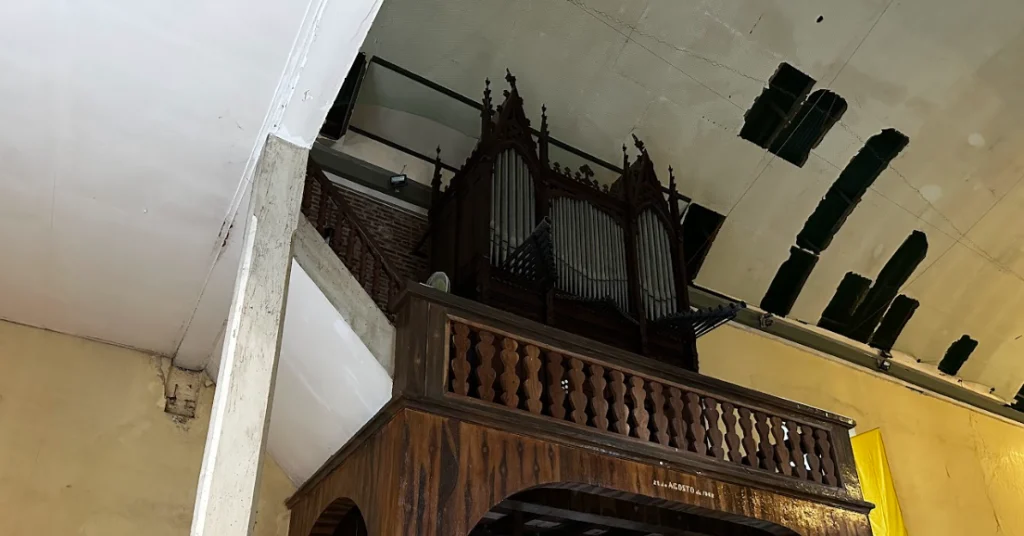
I had the chance to hear its deep and haunting tones during a Sunday morning visit a few months ago.
The sound fills every corner of the brick interior with a richness that modern electronic speakers simply cannot replicate.
A major restoration project between 2008 and 2009 brought this musical treasure back to life for the next generation of parishioners. Experts from across the country worked to clean the pipes and ensure that the bellows worked perfectly once again.
It is an amazing feeling to know that the same music played over a century ago still rings out during the mass.
The organist handles the wooden keys with a grace that shows deep respect for the age of the instrument.
There are audio recordings available for those who want to take the sound of Bacong home with them after their trip. These recordings capture the unique resonance of the pipes reflecting off the brick walls and the high wooden ceiling.
Seeing the metal pipes gleam in the dim light of the loft is a major highlight for any photography enthusiast visiting the area. I took several shots trying to capture the scale of the ornate wooden casing and the shining metal tubes that produce such heavenly music.
The craftsmanship involved in its creation is truly a marvel of 19th-century engineering and artistic devotion.
Life and Culture Around the Church Grounds
After spending some time inside the cool sanctuary, I usually walk around the plaza to experience the local vibe.
Bacong is the hometown of Leon Kilat, who is a famous figure in the Philippine revolution against Spanish rule.
You can find a large monument dedicated to him just a short distance from the main entrance of the church.
It adds a layer of heroic history to the religious significance of the town center.
The people here are very protective of their history and they often share stories about the brave men who fought for our freedom. I sat on a bench and watched the locals go about their day with a sense of calm that you don’t find in the big cities.
Just a few blocks away, you can visit the Negros Oriental Arts and Heritage, which is locally known as NOAH.
This facility is famous for stone craft where artisans create intricate mosaics using semi-precious stones found throughout the region.
I watched them work and was amazed by the patience required to turn raw stones into beautiful pieces of art.
The smell of wet stone and the sound of polishing machines provide a rhythmic backdrop to the quiet town life. It is a great place to stop if you want to see how modern Negros continues its artistic legacy using the materials of the earth.
When hunger finally kicked in, I found a small carinderia nearby that was serving fresh local favorites.
I ordered a hot bowl of fish tinola and some rice while listening to the locals chat in their melodic Cebuano dialect.
The warmth of the people here is as constant and welcoming as the tropical sun that shines over the plaza. You can really taste the freshness of the sea in every bite of the food they serve in these small roadside eateries.
Practical Tips for Your Bacong Adventure
Getting to Bacong is very easy and affordable if you are staying in Dumaguete City for the weekend.
You can hop on a southbound multicab or a tricycle, and the ride will take you about fifteen to twenty minutes along the coast.
The road offers some nice glimpses of the sea as you cruise along the highway under the canopy of trees.
If you are driving your own motorcycle, there is plenty of parking space right in front of the parish office.
There is no entrance fee to visit the church grounds, but I always suggest leaving a small donation for the restoration fund.
Please remember to dress modestly when entering the sanctuary to show respect for the local worshippers and the sacred space.
Mass is held daily, with special English services on Sundays for those who do not speak the local Visayan languages.
I find that mid-morning offers the best balance of light and shadow for those who want to take interior photos. The sunlight filters through the side windows and illuminates the dust motes dancing in the air above the wooden pews.
You should also look for the oldest main altar in the province located right at the front of the nave.
It is a masterpiece of colonial carving and looks spectacular when the gold leaf accents catch the flickering light of the candles.
Don’t forget to explore the old convent which sits adjacent to the main church building and houses several historical artifacts.
It gives you a sense of how the priests and missionaries lived during the peak of the Spanish era in Negros.
There is a small museum nearby that houses some of the town’s archaeological finds, including burial jars that predated the arrival of the Spaniards. Taking your time to walk through these spaces helps you appreciate the deep and ancient roots of this coastal community.
I always feel a bit more grounded and inspired after a day spent in the presence of such enduring history and quiet beauty.
A Final Look at the Brick Sentinel
As I prepared to ride back to the city, I took one last look at the massive brick belfry standing tall.
The red bricks seemed to glow with a deep orange hue under the late afternoon sun as it began to set.
It is a sight that stays in your mind long after you have left the town limits and returned to your daily routine.
I started my engine and felt the familiar vibration through my boots as I prepared for the ride back.
The trip was short in distance, but it felt like I had traveled through several centuries in just a few hours.
Negros Oriental has many hidden gems along its winding roads, but Bacong will always be one of my favorite stops.
Salamat kaayo for joining me on this virtual tour of such a special and historic place in my home province.
I hope to see you on the road someday with a camera in your hand and a sense of wonder in your heart. You will find that the best stories are often written in the bricks and stones of the places we call home.
The air felt even cooler on the ride back as the shadows of the coconut trees stretched across the highway.
I can still smell the salt in the air and feel the spirit of San Agustin watching over the coast of Negros.