
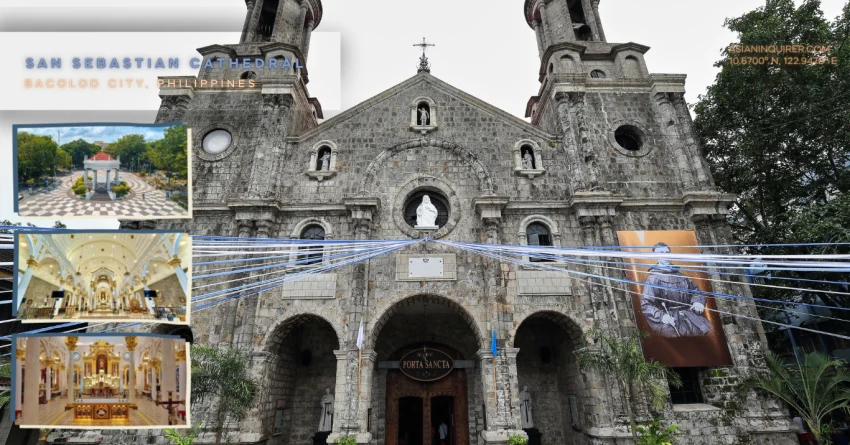
The air around the main plaza in Bacolod City often carries a heavy and sweet scent that reminds you of the nearby sugar refineries and the humid tropical coast.
Most travelers walk past the towering spires of the San Sebastian Cathedral without ever stopping to look closely at the material holding up the massive roof. If you run your fingers along the exterior, you will realize that you are touching a world that existed long before the city was ever built.
This is the quiet secret of a sanctuary constructed entirely from the heart of the sea.
The Coral Blueprint of the 19th Century
The construction of this massive structure began in the late 1800s during a time when the sugar industry was just starting to boom across Negros Island.
Workers hauled thousands of heavy blocks of coral stone from the shores of the Guimaras Strait to build these sturdy and thick walls. You can still see the intricate and fossilized patterns of ancient reef life etched into the ivory-grey surface of the stone.
Unlike the standard red clay bricks found in northern cathedrals, these coral blocks provide a unique organic texture that seems to breathe with the humidity. It is a masterclass in colonial engineering that used the gifts of the ocean to create a fortress of faith.
The facade demands your attention long before you even step through the heavy wooden doors.
Silent Sentinels of the Spired Skyline
The twin bell towers of San Sebastian rise above the city like two silent guardians watching over the daily rush of the Bacolod streets. They have survived more than a century of tropical typhoons and the shifting political winds of the Philippine archipelago.
Looking up at these spires gives you a dizzying sense of how much human history has unfolded beneath their steady gaze.
The neo-classical lines of the design are clean and powerful, reflecting the discipline of the Spanish artisans who blueprints this monument. Every block of stone was hand-polished to ensure that the cathedral would not just stand for a decade, but for multiple generations of families.
Stepping Into the Deep Coolness
The moment you cross the threshold into the nave, the sweltering heat of the Negros sun simply evaporates into the dark corners.
The incredible thickness of the coral stone walls creates a natural thermal barrier that keeps the interior air crisp and refreshing for every visitor. You can feel the sweat on your brow turn cold as you walk through the shadows toward the flickering light of the altar.
It is a physical relief that allows the mind to settle and focus on the quiet rhythm of the morning prayers.
The high ceilings allow every whispered word to drift upward toward the rafters like invisible incense.
The Golden Hour Transformation
There is a specific window of time in the late afternoon when the exterior of the cathedral undergoes a total visual reset. As the sun begins to dip toward the western horizon, the grey coral stone starts to absorb the orange and violet hues of the fading sky.
The entire building takes on an ethereal and warm glow that makes it look as though the stone itself is generating light from within.
This is the perfect coordinate for photographers who want to capture the soul of the city in a single frame. You will see local children playing in the park across the street while the cathedral provides a golden backdrop for their evening games.
Intricate Details of a Maritime Sanctuary
If you look closely at the interior alcoves, you will find a world of sacred art that has been carefully preserved for over a hundred years.
The woodwork is dark and heavy, offering a beautiful contrast to the light grey of the massive coral walls.
Stained glass windows cast colorful patterns across the checkered floor, painting the dust motes in shades of deep ruby and brilliant sapphire. Each detail was placed with a level of intention that is difficult to find in our modern era of fast and temporary construction.
You can feel the devotion of the people who spent their lives troubleshooting the engineering challenges of this massive stone vessel.
Practical Travel Tips for the Negros Explorer
Reaching the San Sebastian Cathedral is remarkably easy for any traveler staying within the Bacolod city limits.
You can take almost any local jeepney with a Plaza or Central Market sign to get dropped off right at the front gate. The fare is only a few pesos and the ride offers you an authentic look at the colorful commerce of the City of Smiles.
I highly recommend visiting during a weekday afternoon when the atmosphere is much more peaceful and the light is soft for taking photos.
Make sure to wear modest clothing that covers your shoulders and knees to show respect for the locals who are using the space for prayer.
You should also take the time to visit the nearby Negros Museum to understand how the sugar boom provided the wealth to build these stone wonders.
Bringing a small bottle of water is vital because the humidity in the plaza area can be quite intense during the midday hours.
There are several small eateries and stalls near the church where you can try local delicacies like piaya or grilled chicken. The area is generally safe for explorers, but you should always keep an eye on your camera bag while you are distracted by the architecture.
This site is a primary coordinate for anyone who wants to understand the deep heritage of the region.
The Resilience of the Living Stone
The cathedral has served as a steady anchor for the community through times of great sugar wealth and periods of severe economic struggle. It remained standing through the dark years of the world wars and the celebration of Philippine national independence.
The coral stone is a living symbol of a people who know how to build something permanent out of the gifts provided by the sea.
Maintaining such an ancient structure requires a constant effort to troubleshooting the damage caused by salt air and tropical rain. The local community and the church work tirelessly to ensure that the porous coral remains strong for the next century.
Functioning Heart of the City of Smiles
You can see the small patches of repair where modern artisans have applied new mortar to protect the old blocks from erosion. It is a functioning heart for the city that continues to host weddings, baptisms, and daily services for thousands of believers. The cathedral is not just a museum of the past, but a living part of the present day life in Bacolod.
Its survival is a testament to the patient endurance of the Negros people.
Standing in its shadow makes you realize that true strength often comes from being open to the environment around you.
A Reflection on Time and Faith
We often spend our lives searching for the next big adventure or the most famous tourist destination on the front of a brochure. However, the real stories are often found in the quiet corners of the places we already know and visit.
The San Sebastian Cathedral teaches us that there is a deep and lasting beauty in staying grounded while looking toward the heavens.
It is a place that invites you to put down your phone and listen to the silence of the ancient stones.
Maybe we should all try to be a bit more like these coral blocks as we navigate our own personal coordinates.
We should learn to provide a cool sanctuary for others when the world outside gets too loud or too hot.
Our lives are just short chapters in the much longer chronicles of the land that we call home. The cathedral is a reminder that we are all part of a larger and magnificent design that stretches far beyond our current horizon. By embracing the history of where we come from, we find the clarity we need to decide where we are going next.
The next time you find yourself in the City of Smiles, take a moment to sit on the plaza benches and watch the light hit the coral spires.
The road ahead will always bring new challenges and different landscapes to explore. But the memory of the sea in the stone will stay with me long after I have moved on to my next coordinate.