
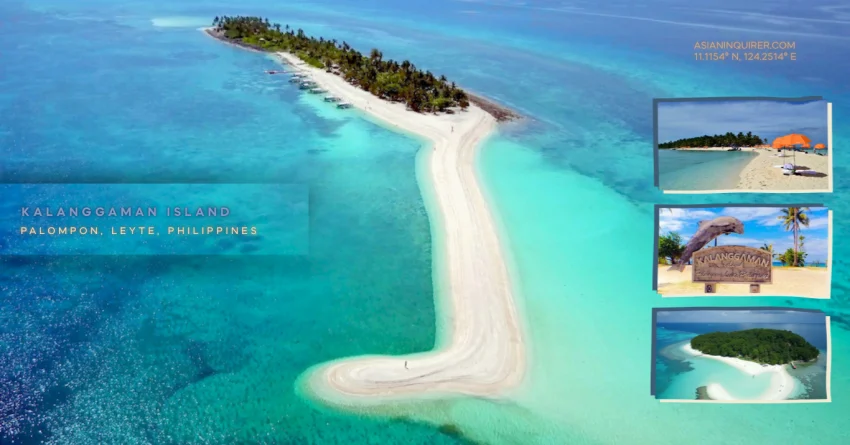
Imagine standing on a strip of sand so narrow that you can hear the waves crashing from both the left and the right at the exact same time.
This isn’t a scene from a high-budget movie or a computer-generated wallpaper. It is the reality of Kalanggaman Island, a tiny gem in the province of Leyte that just caught the world’s attention.
People are starting to ask why this specific coordinate is suddenly outranking famous shores in the Caribbean and the Mediterranean.
The answer lies in its raw, unfiltered silence and a sandbar that looks like it was drawn by a celestial architect.
Recently, international travel experts and real-world tourists officially named it one of the top 50 beaches on the entire planet for 2026. It is a moment of pride for Eastern Visayas and a signal for every DIY traveler to update their travel map immediately.
The Global Spotlight on Kalanggaman Island
Placing 25th in the world is no small feat for a destination that many used to consider a local secret. The judges who evaluated the island looked for more than just white sand; they focused on cleanliness, tranquility, and the health of the marine life.
It is fascinating to see our very own Palompon listed alongside heavyweight destinations like Entalula in Palawan.
This recognition validates the long-standing efforts of the local community to keep the island as pristine as possible. You can feel the shift in energy as more global explorers begin to map out their routes toward the Visayan Sea.
The world is finally seeing what the people of Leyte have known for generations: that nature sometimes saves its best work for the smallest canvases.
The Architecture of the Sandbar
The most iconic feature of the island is the long, curving sandbar that stretches out into the turquoise deep like a white velvet ribbon.
At low tide, the sand is so fine and white that it reflects the tropical sun with a brilliance that almost requires sunglasses even while swimming.
You can walk for hundreds of meters along this path with nothing but clear water on either side. It creates a “walk on water” sensation that is both grounding and exhilarating for anyone who loves the ocean. The water is so transparent that you can spot small hermit crabs and colorful shells without ever getting your hair wet.
This unique geological formation is the reason why the island is often called a paradise within a paradise.
The silence of the island is only broken by the soft lap of the tide and the occasional call of a passing sea bird.
Diving into the Blue Coordinates
Beneath the surface, the coordinates of Kalanggaman reveal a thriving and busy underwater city. The island is surrounded by a dramatic drop-off that is home to vibrant coral gardens and schools of tropical fish that aren’t shy around humans.
It is a sanctuary where the marine life is just as impressive as the landscape above.
I spent an hour just floating over the reef edge, watching the way the light filters through the blue to illuminate the gnarled coral structures. You realize that the health of the island is directly tied to the health of the water surrounding it.
It is the kind of place where your camera will run out of storage long before you run out of things to see.
Reaching this underwater world is a reminder that we are just visitors in a much larger biological system.
Quick DIY Trip Tips
If you are planning to visit this world-class destination on your own, your journey will likely begin at the Palompon Eco-Tourism Office.
Being a DIY traveler means you have to troubleshoot your timing to catch the best tide and avoid the heavy midday heat.
I highly suggest arriving at the tourism office by 6:00 AM to ensure you get a boat slot during the peak summer months. Bring all your own food and water, as there are no restaurants or convenience stores on this uninhabited island.
Also, remember to bring a heavy-duty power bank because there is no electricity for charging your gadgets.
The boat ride can be a bit choppy depending on the season, so prepare for a splash of salt water before you reach the ivory shore.
The transition from the mainland to the island is a transition from the noise of the world to the peace of the Pacific.
The Fragile Balance of Paradise
With the new global ranking comes the inevitable pressure of increased foot traffic and environmental stress on the land.
Local officials are currently navigating the delicate balance between welcoming tourists and protecting the island’s fragile ecosystem.
The goal is simple: grow the local economy without losing the very soul of the island.
Strict rules on waste management are already in place, and every traveler is given a trash bag to ensure they leave no trace. It is a collective responsibility to keep these coordinates as clean as we found them for the next generation of explorers.
We must treat this island not just as a destination, but as a living organism that needs our constant respect.
The beauty of the island is a gift that can be taken away if we are not careful with our footprints.
Practical Travel Tips for DIY Travelers
- Location: Palompon, Leyte (Accessible via Tacloban or Ormoc City).
- Boat Fees: Expect to pay around ₱3,500 to ₱4,000 for a private boat (good for up to 15 people), or join a group to share costs.
- Entrance Fees: Approximately ₱150 for locals and ₱500 for international tourists.
- Overnight Stay: Camping is allowed, but you must bring your own tent and supplies.
- Nearby Landmarks: Visit the Palompon Public Market for fresh seafood before you board your boat.
- Notable Events: The Lawig Festival in December is a great time to see the local culture of the town.
As I sat on the edge of the sandbar watching the sun dip toward the horizon, I realized that beauty is a very fragile thing.
We often chase the most famous places in the world only to find them crowded and loud, but Kalanggaman reminds us that true luxury is found in silence and simplicity.
Let this be a reminder that the best parts of our lives are often the ones we work the hardest to protect and preserve.