
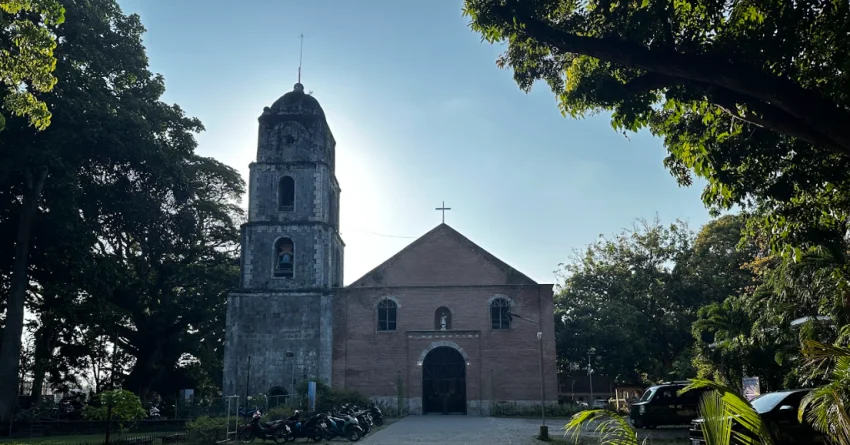
Bacong is easy to pass without realizing how much is hiding behind the national highway.
That’s partly because it sits so close to Dumaguete. A lot of travelers treat it as somewhere they drive through on the way south.
Slow down and the town starts making more sense.
You have one of Negros Oriental’s most important historic churches, the hometown of revolutionary hero Leon Kilat, a quiet coastline, small resorts, dive-oriented stays, local restaurants, and even a museum packed with antique clocks.
And you don’t need several days to figure it out.
Bacong works particularly well when you want a quieter base without feeling cut off from the conveniences of a larger city.
Best for: heritage travelers, families, couples, road trippers, divers, slow travelers, and anyone looking for a relaxed coastal stay.
Skip it if: you’re expecting a developed beach strip, nightlife district, large shopping centers, or a packed schedule of commercial tourist attractions.
Bacong doesn’t try to keep you busy every minute.
That’s part of the point.
Understand Bacong
Bacong is a coastal municipality in Negros Oriental and the first municipality immediately south of Dumaguete City.
The town faces the Bohol Sea and spreads inland from the coast into greener residential and agricultural areas.
It has 22 barangays and a population of 43,889 based on the 2024 population count.
But numbers don’t tell you much about how Bacong feels.
The town center is compact.
The historic church, plaza, waterfront, market, restaurants, and residential streets sit relatively close together. Head inland and the setting changes quickly, with quieter roads leading toward places such as Sulodpan, Combado, and the Bacong-Valencia corridor.
This gives you two different versions of Bacong.
There’s the old coastal town.
Then there’s the more spacious inland side where resorts, homes, cafés, and small accommodations are scattered between local communities.
Why Bacong’s History Is Worth Your Time
You don’t need to be obsessed with history to appreciate Bacong.
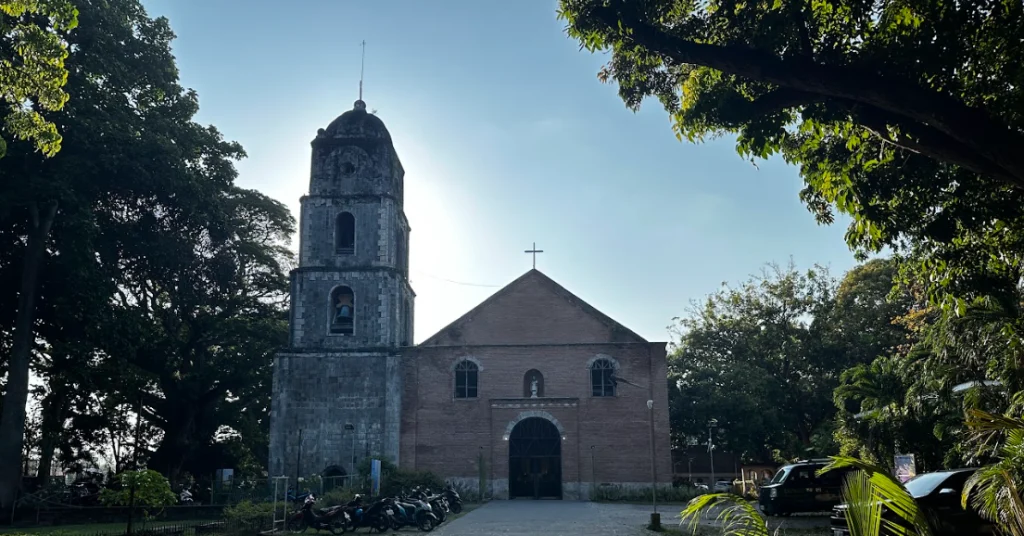
Just start at San Agustin Church.
The Parish Church of San Agustin is one of the strongest reasons to stop in town rather than simply drive through it.
The parish was founded in 1849. The cornerstone of the present church was laid in 1866, and its first Mass was celebrated on August 28, 1883.
One detail immediately stands out.
Much of the church complex was constructed in brick, which makes it different from many old churches in Negros Oriental that relied heavily on coral stone.
Inside, you’ll find old retablos, architectural details from the Spanish colonial period and a 19th-century pipe organ made in Zaragoza, Spain.
The National Museum declared Bacong Church a National Cultural Treasure in 2001.
This isn’t simply an old church that happens to photograph well.
It’s one of Bacong’s most important pieces of living history.
Then there’s Leon Kilat.
Pantaleon Villegas, better known as Leon Kilat, was born in Bacong and became an important revolutionary figure during the struggle against Spanish rule.
His presence still matters here.
Visit the town plaza and you’ll see why Bacong’s identity isn’t built only around beaches and resorts.
History sits right in the middle of town.
Best Time to Visit Bacong
Bacong can be visited throughout the year, but what you plan to do should influence when you come.
December to February
These are some of the easiest months for walking around town, visiting the church, exploring the waterfront and spending time outside.
Temperatures are generally more comfortable than during the hottest part of summer.
This is a good period if you want to combine sightseeing with a resort stay.
March to May
Expect hotter days.
If you’re swimming, staying at a resort or spending time by the coast, that heat may not bother you much.
For walking around the Poblacion, start earlier in the morning or wait until later in the afternoon.
Midday sun can drain the fun out of a walking trip quickly.
June to November
This falls within the country’s wetter season, so you’ll want more flexibility.
A cloudy morning doesn’t necessarily ruin the day, but heavy rain can affect road conditions, swimming plans and anything involving the sea.
July and August are interesting months culturally.
Bacong commemorates the birth anniversary of Leon Kilat on July 27, while the feast of Saint Augustine of Hippo is celebrated on August 28.
If you’re coming around those dates, check the local government’s current event schedule before planning the rest of your day.
Bacong Traveler Essential Information
Province: Negros Oriental
Region: Negros Island Region
Nearest city: Dumaguete City
Distance from Dumaguete: About 8 kilometers to the municipality
Nearest airport: Sibulan Airport
Main language: Cebuano
Other commonly understood languages: Filipino and English
Currency: Philippine peso
ZIP code: 6216
Number of barangays: 22
Ideal stay: Day trip to 2 nights
Best trip style: Heritage, food, coastal relaxation, resort stays and diving
Bacong is close enough to Dumaguete that you don’t need complicated travel planning.
Cash is still useful, especially for smaller establishments, local transport and neighborhood businesses.
If you’re heading away from the national highway, don’t assume transportation will be waiting whenever you need it.
That matters more when you’re staying at an inland guesthouse or resort.
How to Get to Bacong
Dumaguete to Bacong
This is the simplest route.
Head south from Dumaguete along the national highway and you’ll cross into Bacong.
The municipality itself starts only several kilometers from the city, although your actual travel time depends on where in Bacong you’re going.
If you’re heading to the Poblacion, the journey is short.
If your accommodation is inland or farther south, add more time.
By Multicab or Easyride
Public vehicles operate between Dumaguete and Bacong along the main road.
This works well when your destination is near the highway or Poblacion.
Tell the driver where you’re getting off rather than simply saying Bacong.
The municipality stretches farther than the town center.
By Bus
Southbound buses passing through Bacong are another option.
This works best if the place you’re visiting is close to the national highway.
Again, know your drop-off point.
“Bacong” is too broad when your hotel might be several kilometers from the center.
By Tricycle
A tricycle is useful for shorter local trips and for reaching places away from the main route.
Agree on the fare before leaving when you’re hiring one for a longer or less common route.
By Private Car or Motorcycle
This gives you the most freedom.
It becomes especially useful if you want to combine the church, museum, inland resorts and coastline in one day.
Those places aren’t all sitting on the same block.
How to Get Around Bacong
Bacong looks small on a map, but don’t assume you’ll walk everywhere.
The Poblacion is the easiest part to explore on foot.
Once you start visiting resorts, restaurants and attractions in other barangays, you’ll want transportation.
Tricycle
Best for short trips and places away from the national highway.
Multicab or Easyride
Best for moving along the main Dumaguete-Bacong corridor.
Motorcycle
Best if you’re comfortable riding and want to explore inland roads independently.
Private Car
The most practical choice for families, groups or anyone trying to visit several parts of Bacong in one day.
One simple rule helps here:
Choose your transport based on where you’re staying, not just how close Bacong looks to Dumaguete.
Where to Stay in Bacong
Bacong has more accommodation than you might expect.
You won’t find a concentrated hotel district.
Instead, resorts, dive stays, guesthouses, apartments and small inns are scattered between the coast, Poblacion and inland barangays.
Availability at smaller properties can change, so confirm directly before making the trip.
1. Orchard Vista Inn
Phone: +63 35 531 5665
This is one of the more convenient small stays if you want to be close to the highway.
It’s in Banilad, which puts you on the northern side of Bacong and makes getting in and out of the municipality relatively easy.
Choose it when convenience matters more than having a full resort experience.
2. Bambulo
Phone: +63 908 897 6096
Email: bambulobacong@gmail.com
Bambulo sits along the Bacong-Valencia Road in Sulodpan.
The setting feels different from staying along the highway or coast. There’s more greenery and space, with a resort atmosphere built around swimming and relaxation.
It works particularly well for families and travelers who want to spend part of the day at the property rather than simply use the room for sleeping.
3. 71% Diving Resort
Phone: +63 995 674 5266
This beachfront resort is on Marterese Street in South Poblacion.
It has a pool, beach access, restaurant and accommodation, with diving forming an important part of the experience.
Pick this if getting close to the water matters more than staying beside the highway.
4. Kakisa Dive Resort
Kakisa Dive Resort
Phone: +63 997 891 9901
Phone: +63 975 364 8107
Kakisa is another dive-oriented coastal stay in Bacong.
It suits travelers who want rooms, swimming and easy access to the sea without basing themselves farther south.
The location is also practical for reaching Bacong’s historic center.
5. Dumaguete Springs Beach Resort
Dumaguete Springs Beach Resort
Phone: +63 35 424 0093
Email: info@dumaguetesprings.com
Despite the name, the resort is in Bacong.
You’ll find it in the San Miguel area along Negros South Road.
This makes more sense for travelers who want an established small resort setting rather than a guesthouse in the town center.
6. C Bubble Diving Resort
C Bubble Diving Resort
Phone: +63 995 535 0072
C Bubble is on Bonifacio Street in North Poblacion.
As the name suggests, the property is aimed heavily at travelers interested in diving and water activities.
Its Poblacion location also keeps the historic center within easy reach.
7. Freedive Dumaguete
Freedive Dumaguete
Phone: +63 917 797 4131
Don’t let the name confuse you.
The property is in Bacong, along Marterese Street.
It’s the more obvious choice when freediving is a major reason for your stay rather than an activity you’re adding at the last minute.
8. Dumaguete Snowman Resort & Diving Center
Dumaguete Snowman Resort & Diving Center
Phone: +63 917 300 1784
This resort is in San Miguel, Bacong.
It’s another option for travelers looking for resort accommodation connected with swimming or diving rather than a conventional city-style hotel.
9. Zipper Guest House
Zipper Guest House
This is a smaller Bacong accommodation rather than a full-service resort.
It makes more sense when you want additional living space and a quieter base instead of resort facilities.
Confirm its current room setup and booking arrangements before arrival.
10. Villa Estela Guesthouse
Villa Estela Guesthouse
Phone: +63 35 523 4655
This is one of Bacong’s smaller inland accommodation choices.
Consider it when privacy and a residential setting are more important than being directly beside the beach.
11. Joy’s Garden Guesthouse
Joy’s Garden Guesthouse
Phone: +63 910 566 1895
Joy’s Garden Guesthouse is in Sulodpan.
The location works well if you prefer Bacong’s quieter inland side rather than staying in the Poblacion.
12. Luxe Vista Suites
Luxe Vista Suites
Phone: +63 945 569 0007
This is a serviced accommodation option in Richwood Homes.
It’s better suited to travelers who like a residential setup and don’t need the facilities of a beach resort.
13. Magnetic Apartment
Magnetic Apartment
Phone: +63 965 740 8345
Located in the San Miguel area, this is more of an apartment-style option.
Consider it for longer stays or when you prefer additional independence over traditional hotel service.
14. M&L Property
M&L Property
This is another smaller accommodation available in Bacong.
It’s worth comparing when you’re looking for a home-style or private stay rather than a resort.
15. Tropical Hideaway Dumaguete
Tropical Hideaway Dumaguete
This bed-and-breakfast style property is in Bacong despite carrying Dumaguete in its name.
The quieter residential setting is better suited to travelers who value privacy.
16. Bacongham Airbnb Beach Resort
Bacongham Airbnb Beach Resort
This is a smaller beachfront holiday-rental option in Bacong.
Because privately managed accommodation can change its booking arrangements more frequently than hotels, confirm availability before building your trip around it.
17. Southwoods Inn
Southwoods Inn
Southwoods has been offered as a small coastal lodging option in Bacong.
Current booking availability can be less consistent than at the larger properties, so contact or confirm the property before making plans around it.
Quick Accommodation Picks
For highway convenience: Orchard Vista Inn
For a family resort stay: Bambulo
For beachfront accommodation: 71% Diving Resort
For diving: Kakisa Dive Resort or C Bubble Diving Resort
For freediving: Freedive Dumaguete
For an inland guesthouse: Joy’s Garden Guesthouse
For an apartment-style stay: Magnetic Apartment or Luxe Vista Suites
Booking Tip
Look at the exact location before paying for a room.
A hotel can have “Dumaguete” in its name while physically sitting in Bacong.
The opposite problem happens too. Search results sometimes mix nearby properties with Bacong accommodation.
Check the barangay and physical location, not just the hotel name.
Where to Eat in Bacong
You don’t have to return to Dumaguete every time you’re hungry.
Bacong has a growing mix of waterfront restaurants, local eateries, cafés, bakeries and casual nighttime spots.
1. Oceana Bar and Restaurant
Oceana Bar and Restaurant
Phone: +63 954 456 2990
Oceana is in North Poblacion along De Lapaz Street.
Come here when you want a proper sit-down meal rather than a quick roadside stop.
Its location close to the coast also makes it an easy choice after exploring the town center.
2. South Beach Grill
South Beach Grill
Phone: +63 917 116 0429
This is one of Bacong’s better-known casual dining choices.
The setup suits lunch or an unhurried early dinner, especially if grilled food and a relaxed coastal atmosphere sound better than formal dining.
3. Kingaroo’s Seaview Resto Bar
Kingaroo’s Seaview Resto Bar
Phone: +63 915 994 6696
You’ll find Kingaroo’s along Larena Street in North Poblacion.
It’s an easy stop when you want casual food without going far from central Bacong.
The sea-facing setting gives it extra appeal later in the day.
4. Délices Bake House
Délices Bake House
Located along the South National Highway in Banilad, this is the place to keep in mind when bread, pastries or something quick sounds better than a full restaurant meal.
It also works well for picking up food before continuing farther into Bacong.
5. Native Resto Bar
Native Resto Bar
Phone: +63 975 763 5537
This is a good option when you’re looking for a more relaxed evening meal and don’t mind a resto-bar atmosphere.
It’s better suited to dinner and hanging around than grabbing food in a hurry.
6. Square Hub Bacong
Square Hub Bacong
Phone: +63 917 120 6536
Square Hub sits along Bacong-Valencia Road.
Its location makes it especially useful if you’re staying inland rather than near the coastline.
7. Kusina Sa Payag Mini Resto
Kusina Sa Payag Mini Resto
Phone: +63 956 045 4808
This is a smaller local restaurant along Inspection Street.
Come here for a casual meal rather than a resort-style dining experience.
8. Brew Cafe
Brew Cafe
Phone: +63 997 584 1031
Brew Cafe is in the Lutao area.
It’s worth keeping on your map when you want coffee and a slower break away from the highway.
9. Kape Ta Negros
Kape Ta Negros
This is another local coffee option.
It’s better suited to an afternoon or evening coffee stop than an early breakfast.
10. Nino’s Sweet Treats
Nino’s Sweet Treats
Phone: +63 977 022 1756
This South National Highway cake shop is useful when you’re after desserts, cakes or something to take home.
Dining Tip
Restaurant locations are spread across Bacong.
Don’t assume you’ll find your next meal by simply walking around your resort.
If you’re staying inland or in San Miguel, decide where you’re eating before it gets late.
What to Eat in Bacong
Bacong doesn’t need a made-up “signature dish” to make eating here interesting.
You’ll find familiar Negros Oriental and Filipino food instead.
Fresh Seafood
Being a coastal town means seafood naturally appears around local restaurants and family tables.
Ask what is fresh rather than ordering based only on what sounds good on a permanent menu.
Grilled Food
Grilled meat and seafood fit Bacong’s casual restaurant scene particularly well.
This is the sort of food that works after an afternoon swimming or sitting by the coast.
Local Bakery Food
Don’t overlook the bakeries.
Bread, pastries and simple sweets make useful road-trip food, especially if you’re heading inland or checking into accommodation where dining options are limited.
Market Breakfast
If you enjoy eating where locals eat, Bacong Public Market is worth checking in the morning.
You’ll find a much more everyday side of the town here than you will inside a resort.
Things to Do in Bacong
1. Visit the Parish Church of San Agustin
Start here.
Even if you only have half a day in Bacong, the church deserves part of it.
Walk around the exterior before going inside.
The brickwork, bell tower, churchyard and convent complex make more sense when you see them together rather than treating the church as a quick photo stop.
Remember that this is an active place of worship.
Dress appropriately and avoid treating Mass or private religious moments as tourist entertainment.
2. See the Leon Kilat Monument
Head to the municipal plaza and look for the monument dedicated to Pantaleon Villegas.
This gives you the historical connection that makes Bacong different from a generic coastal town.
Leon Kilat isn’t a character added for tourism.
He was born here.
Once you know that, the plaza becomes more than somewhere to sit.
3. Visit the Negros Oriental Antique Clock Museum
Negros Oriental Antique Clock Museum
Phone: +63 929 664 0744
You’ll find the museum in Purok 1, Sulodpan.
This is one of those places that makes Bacong more interesting than you expect.
Instead of another beach stop, you get a private collection centered on vintage and antique clocks.
Give yourself enough time to actually look.
Don’t treat it like something you need to finish in ten minutes.
Because smaller museums can change viewing arrangements, contacting them before visiting is a good idea.
4. Walk Along Bacong Boulevard
The waterfront is best when you don’t arrive expecting a resort promenade.
It’s a local public space.
Come for a walk, look toward the sea, watch daily life and slow down for a while.
Late afternoon is the easiest time to enjoy it without dealing with the strongest heat.
5. Spend Time at Bacong Public Beach
Bacong has a coastline, but don’t imagine a polished white-sand destination.
The beach experience here is much more local.
That’s fine if you come with the right expectation.
Check the water and weather before swimming, particularly after heavy rain or during rough conditions.
6. Explore the Bacong Wharf Area
The wharf adds another side to Bacong’s coastline.
It’s primarily a working and local waterfront area rather than a packaged tourist attraction.
If you’re interested in underwater activities around Bacong, use an established diving or freediving operator.
Don’t assume every pier or coastal entry point is safe for independent diving.
7. Go Swimming at Bambulo
You don’t need to sleep at Bambulo to appreciate Bacong’s inland resort side.
A pool day works particularly well for families who want swimming without depending on sea conditions.
Check current day-use arrangements before going.
8. Spend a Day at Payag Resort
Payag Resort
Phone: +63 929 699 0763
Payag Resort is in Combado.
It’s another option when the goal is simple: swimming, relaxing and spending a few hours away from the busier highway.
Confirm current entrance and cottage arrangements before arriving with a large group.
Bacong for Diving and Freediving
Bacong doesn’t get the same level of attention as some established dive destinations, but underwater travel is clearly part of its accommodation scene.
Several resorts and operators here specifically cater to divers and freedivers.
That gives you an advantage.
You can stay close to Dumaguete while keeping diving much closer to your room.
If diving is the main purpose of the trip, choose accommodation based on the operator first and the room second.
Ask about equipment, certification requirements, dive sites, guides and sea conditions before paying.
And don’t assume pier diving is automatically safe because you’ve seen someone else do it.
Local conditions matter.
Where To Go In Bacong
Rather than forcing Bacong into an hour-by-hour itinerary, split it into areas.
Poblacion for History and the Waterfront
Go here for San Agustin Church, the Leon Kilat Monument, the municipal plaza, public market, boulevard, restaurants and the coastal atmosphere.
This is the best area for first-time visitors.
It’s also the easiest part to explore without constantly getting back into a car.
Sulodpan for the Museum and Inland Stops
Head toward Sulodpan for the antique clock museum, Bambulo and a quieter residential setting.
This side of Bacong works better when you have your own transport.
San Miguel for Resort Stays
San Miguel has accommodation and resort options away from the compact center.
Stay in this area when the property itself is an important part of the trip.
Banilad for Easy Access
Banilad is useful when convenience matters.
You’re on the northern side of Bacong, making it practical for travelers who expect to move in and out regularly.
Choose Bacong by Trip Style
For history: Poblacion
For churches and heritage: San Agustin Church and the town plaza
For families: Bambulo or Payag Resort
For diving: Coastal dive resorts around Poblacion
For freediving: Book through an established Bacong operator
For food: North Poblacion and the main highway corridor
For a quieter stay: Sulodpan or one of the inland guesthouses
For photography: Church complex, plaza and waterfront
Bacong Map
This is where you can embed your Google Map for Bacong.
Useful places to pin include San Agustin Church, Leon Kilat Monument, Negros Oriental Antique Clock Museum, Bacong Boulevard, Bacong Public Beach, Bacong Public Market, Bambulo, 71% Diving Resort, Orchard Vista Inn, Oceana Bar and Restaurant and the Bacong-Dumaguete transport terminal.
Map Tip
Save your accommodation before leaving.
Some Bacong properties sit along small inland roads rather than the main highway.
Having the exact pin matters much more after dark.
Bacong Travel Budget
Bacong doesn’t have to be an expensive trip.
Your biggest difference in spending comes from whether you’re doing a day trip or staying at a resort.
Budget Day Trip
Allow roughly ₱700 to ₱1,200 per person for local transportation, food, drinks and a simple attraction or swimming stop.
This assumes you’re traveling independently rather than hiring private transportation for the whole day.
Comfortable Day Trip
Around ₱1,500 to ₱3,000 per person gives you more freedom for restaurant meals, private local transport and resort day use.
Overnight Trip
Plan roughly ₱2,500 to ₱6,000 or more per person depending on the property, room sharing, meals and activities.
Diving can push the total considerably higher.
Treat these as planning ranges, not fixed prices.
Room rates, resort entrance fees and activity charges change.
Is Bacong Worth Visiting?
Yes, but Bacong makes the most sense when you understand what it is.
Don’t come expecting a major tourist town.
Come because you want history, a quieter coast, local restaurants and a slower place to stay close to a larger city.
The church alone gives Bacong more cultural weight than many places its size.
Add Leon Kilat, the clock museum, waterfront and small resorts, and there’s enough here for a good day.
Stay overnight if you’re diving, want a resort break or simply don’t want to rush.
For most travelers, one day to two nights is enough.
And that’s really Bacong’s advantage.
You don’t need a complicated trip to enjoy it.
Final Bacong Travel Tips
Bring cash. Smaller businesses and transport operators may not be your best place to depend on card payments.
Start outdoor sightseeing early. Walking around the Poblacion becomes less comfortable once midday heat builds.
Dress appropriately when visiting San Agustin Church.
Contact the Antique Clock Museum before making a special trip there.
Confirm resort day-use rules before arriving with a group.
Don’t assume a hotel with “Dumaguete” in its name is actually inside Dumaguete. Several accommodation businesses using that name are physically in Bacong.
Use the exact accommodation pin when traveling after dark.
Check weather and sea conditions before swimming, diving or freediving.
Use trained local operators for diving rather than choosing an unfamiliar coastal entry point yourself.
Plan dinner before returning to an inland property. Bacong has good places to eat, but they’re spread out.
If you’re visiting during late July or August, check Bacong’s current celebration schedule.
Frequently Asked Questions About Bacong
Where is Bacong?
Bacong is a coastal municipality in Negros Oriental immediately south of Dumaguete City.
How far is Bacong from Dumaguete?
The municipality is roughly 8 kilometers south of Dumaguete, although your actual travel distance depends on which barangay or accommodation you’re visiting.
What is Bacong known for?
Bacong is particularly known for San Agustin Church, its connection to revolutionary hero Leon Kilat, its coastline and its small resorts and dive accommodations.
Is Bacong good for a day trip?
Yes. A day is enough to see the historic center, church, Leon Kilat Monument, waterfront and another attraction such as the Antique Clock Museum.
Does Bacong have beaches?
Yes. Bacong has a coastal shoreline and public beach areas, although travelers should expect a local coastal experience rather than a large commercial white-sand beach destination.
Can you visit Bacong without a private car?
Yes. Public transportation connects Bacong with Dumaguete along the national highway. A tricycle or other local transport is useful when visiting places farther inland.
How many days do you need in Bacong?
One day works for sightseeing. One or two nights make more sense if you want to stay at a resort, dive, freedive or explore Bacong without rushing.
Suggested Hyperlink Anchors
Bacong travel guide
San Agustin Church
Leon Kilat
Negros Oriental Antique Clock Museum
Bacong hotels and resorts
Bacong restaurants
Bacong diving
Sources
- National Museum of the Philippines: Parish Church of San Agustin, Bacong
- National Historical Commission of the Philippines: Pantaleon Villegas “Leon Kilat”
- Philippine Statistics Authority: Municipality of Bacong
- LGU Bacong
- PAGASA: Climate of the Philippines
- Bambulo Bacong
- Parkside Dumaguete Springs Beach Resort