
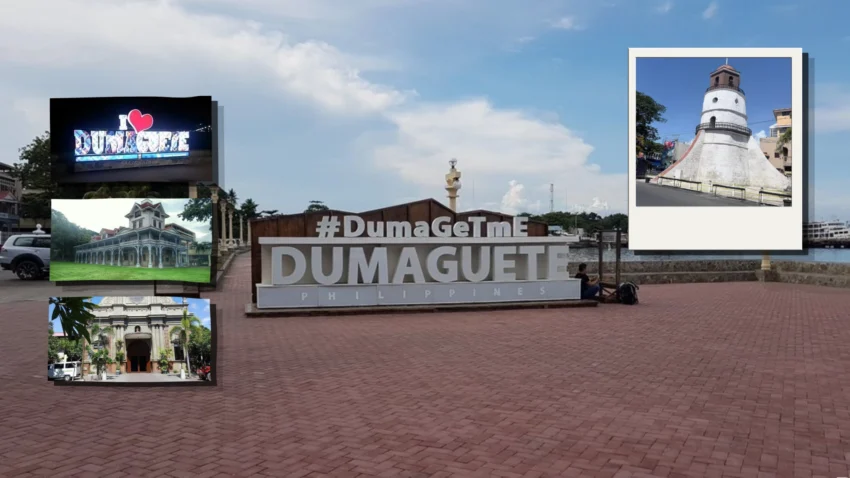
Dumaguete City is the kind of place that wins you over between the attractions.
It happens while walking beneath the old acacia trees of Silliman University. It happens over a cup of thick sikwate at the public market. It happens when the afternoon heat begins to fade and Rizal Boulevard fills with students, families, joggers, food vendors, and travelers watching the sea.
There is no huge theme park here. There is no long white-sand beach in the city center. Most of the waterfalls, dive sites, mountain lakes, and marine sanctuaries commonly advertised as Dumaguete attractions are actually found in neighboring towns.
But Dumaguete does not need to pretend to be a beach resort.
It is a university city, a food city, a port city, and one of the easiest bases for exploring Negros Oriental. You can spend one day walking through museums and heritage streets, another snorkeling near Apo Island, and the next cooling off beside waterfalls in Valencia.
The city gained a stronger cultural identity in 2025 when UNESCO welcomed Dumaguete into its Creative Cities Network under Literature. It became the first Philippine city to receive the UNESCO Creative City of Literature designation.
Dumaguete has always been full of stories. The rest of the world is only starting to notice.
Understand Dumaguete City
Dumaguete is the capital of Negros Oriental and one of the two regional centers of the Negros Island Region. It faces the Bohol Sea on the southeastern side of Negros Island.
Sibulan lies immediately north, Valencia rises toward the mountains in the west, and Bacong begins south of the city. These neighboring towns are so close that travelers often move between them without realizing they have already left Dumaguete.
That explains why travel lists frequently place Pulangbato Falls, Casaroro Falls, Balinsasayao Twin Lakes, Dauin, and Apo Island under “Dumaguete tourist spots.” They are not inside the city, but Dumaguete is the most practical base for reaching them.
The city is best known for:
- Rizal Boulevard
- Silliman University
- Dumaguete Belfry
- St. Catherine of Alexandria Cathedral
- National Museum of the Philippines Dumaguete
- The Painitan at Dumaguete Public Market
- Silvanas and sans rival
- A growing café and restaurant scene
- Ferry connections to Siquijor and Bohol
- Easy access to Valencia, Dauin, Apo Island, and Twin Lakes
- Its UNESCO Creative City of Literature designation
Best for: food travelers, solo travelers, couples, students, heritage lovers, writers, divers, backpackers, digital nomads, families, and travelers exploring Negros Oriental.
Skip it if: you want an all-inclusive beach resort, a white-sand beach beside your hotel, large-scale nightlife, or a destination where every outdoor attraction is within walking distance.
Best Time to Visit Dumaguete
February to May is generally the most convenient period for city walks, diving, snorkeling, waterfalls, and mountain trips.
PAGASA’s long-term climate data for Dumaguete shows that April has the lowest average monthly rainfall, followed by March and February. April and May can also be extremely hot, especially around midday.
December to February brings slightly cooler conditions and is comfortable for walking around the city. Rain is still possible, so a December trip is not automatically dry.
June to November tends to have more rain. October records the highest average monthly rainfall in Dumaguete’s 1991 to 2020 climatological normals, although rainfall can occur at any time of year.
December to February
Best for comfortable city walks, food trips, heritage tours, and travelers who dislike intense heat.
This is also a busy travel period because of Christmas, New Year, school holidays, and visitors escaping colder countries.
March to May
Best for Apo Island, Dauin, Twin Lakes, waterfalls, boat trips, and travelers planning outdoor-heavy itineraries.
April has the lowest average rainfall in Dumaguete’s official climate data, but it is also one of the hotter months. Schedule walking tours before 10:00 AM or after 3:30 PM.
June to November
Best for lower accommodation demand, flexible travelers, and people who do not mind adjusting plans around rain.
Boat trips, waterfalls, mountain roads, and ferry schedules can be affected by bad weather. Build at least one flexible day into your itinerary when traveling during wetter months.
Festivals and Busy Travel Periods
Sandurot Festival celebrates Dumaguete’s hospitality, cultural diversity, and history. The city has moved festival activities between different months over the years, so confirm the current Sandurot Festival schedule before booking flights.
Buglasan Festival, the major provincial festival of Negros Oriental, is also held in Dumaguete. It brings performances, booths, competitions, food, and delegations from municipalities across the province.
Hotels can fill quickly during festivals, Silliman University Founders Day, graduation season, long weekends, and major sports events.
Dumaguete Traveler Essential Information
Province: Negros Oriental
Region: Negros Island Region
Nearest airport: Dumaguete Airport in Sibulan
Main seaport: Port of Dumaguete
Travel time from Manila: around 1 hour and 30 minutes by direct flight
Travel time from Cebu City: around 5 to 6 hours by bus and ferry, depending on traffic and connections
Travel time from Bacolod: around 6 hours by bus through Mabinay
Travel time from Siquijor: around 50 minutes by fast ferry
Main language: Cebuano, with Filipino and English widely understood
Currency: Philippine Peso
Ideal stay: 3 days and 2 nights
Better stay for day trips: 4 days and 3 nights
Best trip style: food trip, heritage visit, city break, diving gateway, countryside tour, slow travel, and multi-destination Visayas itinerary
Bring cash. Cards and digital payments are accepted at many hotels, cafés, malls, and established restaurants, but market vendors, street-food stalls, tricycle drivers, boat operators, and small countryside businesses may still require cash.
Dumaguete as a UNESCO Creative City of Literature
Dumaguete joined the UNESCO Creative Cities Network under Literature in 2025, becoming the first Philippine city to receive that designation.
The recognition did not appear from nowhere.
Dumaguete has a long relationship with writers, teachers, students, publishers, workshops, readings, and literary organizations. Silliman University has hosted generations of writers through its national writers workshop, while the wider city has supported independent artists, educators, bookstores, publications, and cultural events.
UNESCO describes Dumaguete as a City of Stories, a name that fits both its literary life and its position as a meeting place for people from Negros, Cebu, Siquijor, Bohol, Mindanao, and other parts of the country.
For travelers, the designation adds another layer to the city. Dumaguete is not only a gateway to waterfalls and marine sanctuaries. It is a place where literature, education, food, migration, and local history have shaped everyday life.
Look for current schedules of readings, book launches, art exhibitions, performances, workshops, and cultural events. Many are temporary, so they will not appear on a permanent tourist map.
How to Get to Dumaguete
Manila to Dumaguete
Direct flights connect Manila with Dumaguete Airport, officially located in the neighboring municipality of Sibulan.
Flight time is usually around 1 hour and 30 minutes.
Philippine Airlines and Cebu Pacific serve the route, but daily frequencies, departure terminals, and fares change throughout the year.
The airport is only a few kilometers from central Dumaguete. Travel time to most downtown hotels is around 10 to 20 minutes, depending on traffic and the exact location.
Best for: first-time visitors, weekend trips, families, and travelers with limited time
Tip: Leave extra time between your flight and a Siquijor ferry. A delayed flight can easily cause you to miss the final departure.
Cebu to Dumaguete by Air
Direct flights between Cebu and Dumaguete may be available depending on the current airline schedule.
This is the fastest option when the timing works, but flight frequencies are usually more limited than the Manila route.
Best for: business travelers, short holidays, and passengers connecting through Mactan-Cebu International Airport
Tip: Check the latest Dumaguete flight schedule before building your itinerary around a direct Cebu connection.
Cebu to Dumaguete by Bus and Ferry
The overland route from Cebu City is one of the most common ways to reach Dumaguete.
Ceres buses leave Cebu South Bus Terminal and travel through southern Cebu. Depending on the service, the bus may board a vessel or passengers may transfer near the port for the crossing between southern Cebu and Sibulan.
Travel time: around 5 to 6 hours
Sample combined fare: around ₱350 or more, depending on the service and ferry charges
Best for: backpackers, students, budget travelers, and visitors already exploring southern Cebu
Tip: Leave Cebu early. Traffic, terminal queues, ferry loading, weather, and road stops can make the trip longer than expected.
Cebu to Dumaguete by Ferry
Overnight and conventional ferry services operate between Cebu and Dumaguete on selected days.
Cokaliong Shipping Lines serves the route, but it does not necessarily operate every day. Sailing time is usually around 6 to 7 hours, depending on the vessel and schedule.
Best for: travelers carrying more luggage, passengers who prefer overnight travel, and people who want to avoid the overland route
Tip: Confirm the current Cebu to Dumaguete ferry schedule directly with the shipping company before paying for accommodation.
Siquijor to Dumaguete
Fast ferries connect Siquijor with Dumaguete. The crossing can take around 50 minutes in good conditions.
OceanJet is one of the main operators serving the route. Other vessels may also operate, depending on the season.
Best for: travelers combining Dumaguete with Siquijor
Tip: Arrive at the port early and keep your schedule flexible. Weather and operational changes can cause delays or cancellations.
Bohol to Dumaguete
Ferry routes can connect Tagbilaran with Dumaguete, sometimes through Siquijor.
Travel times and routing depend on the operator and current schedule.
Best for: travelers building a Bohol, Siquijor, and Negros itinerary
Tip: Check whether the trip is direct or includes a stop and possible vessel change.
Bacolod to Dumaguete
Ceres buses operate between Bacolod and Dumaguete through Mabinay.
Travel time: around 6 hours
Sample fare: around ₱410 to ₱510, depending on passenger type and bus category
Best for: travelers crossing Negros Island, backpackers, and people combining Bacolod with Negros Oriental
Tip: Bring snacks and water, but avoid drinking too much immediately before long road sections with limited restroom access.
Dapitan to Dumaguete
Passenger vessels connect Dapitan with Dumaguete.
Travel time is commonly around 3 to 4 hours, although schedules, vessel types, and fares vary.
Best for: travelers coming from Zamboanga del Norte and other parts of Mindanao
Tip: Confirm whether your vessel arrives directly at Dumaguete Port and check the baggage policy before departure.
How to Get Around Dumaguete
Dumaguete is easy to explore once you understand the difference between shared tricycle rides and special trips.
Tricycle or Pedicab
Motorized tricycles, commonly called pedicabs in Dumaguete, are the city’s main form of public transportation.
The reported minimum shared fare remained ₱15 in early 2026. Longer trips, luggage, late-night rides, and private or special trips cost more.
A shared ride may pick up other passengers going in the same direction. A special trip means you are hiring the entire tricycle to take you directly to your destination.
Ask before boarding:
- Is the fare per person or for the whole tricycle?
- Is this a shared or special trip?
- Does the price include luggage?
- Will the driver wait and bring you back?
Walking
Downtown Dumaguete is highly walkable.
Rizal Boulevard, Pantawan People’s Park, Quezon Park, the cathedral, the belfry, the National Museum, the public market, and parts of Silliman University can be combined into one walking route.
The main challenge is the heat. Walk early in the morning or late in the afternoon and bring water.
Jeepneys and Multicabs
Jeepneys and multicabs connect the city center with outer barangays, terminals, Sibulan, Valencia, Bacong, and other nearby areas.
They are cheaper than hiring a private tricycle, but routes are not always obvious to first-time visitors.
Ask the driver or a local passenger whether the vehicle passes your destination before boarding.
Motorcycle Rental
A motorcycle gives you more freedom when visiting Valencia, Dauin, Sibulan, or coastal areas south of Dumaguete.
Only rent one if you are experienced, licensed, comfortable with Philippine traffic, and prepared for rain or changing road conditions.
Wear a proper helmet and avoid riding unfamiliar mountain roads after dark.
Private Driver or Organized Tour
A private car or organized tour is the easiest option for Casaroro Falls, Pulangbato Falls, Balinsasayao Twin Lakes, Dauin, and multi-stop countryside itineraries.
Confirm whether the quotation includes:
- Fuel
- Parking
- Entrance fees
- Driver’s meals
- Waiting time
- Boat transfers
- Hotel pickup and return
Where to Stay in Dumaguete
Dumaguete has boutique hotels, business hotels, hostels, pension houses, serviced apartments, and small resorts.
Prices below are sample nightly rates before taxes and fees. Hotel rates and guest scores change according to travel dates, room type, booking platform, and current reviews.
Luxury and Boutique Stays
The Henry Resort Dumaguete
Best for couples, design-focused travelers, families, staycations, and special occasions.
The property has landscaped grounds, a pool, restaurants, and a quieter resort atmosphere along the northern side of the city.
Sample rate: from around ₱5,499, although average rates can exceed ₱10,000 on some dates
Rating: around 8.9 to 9.0, depending on the platform
UNWND Boutique Hotel Dumaguete
Best for couples, pet owners, younger travelers, and guests who want a tropical boutique style with a pool, gym, and social spaces.
The hotel is closer to Sibulan and the airport than the downtown heritage area.
Sample rate: around ₱4,000 to ₱5,000 per night
Rating: around 8.9 to 9.3
Hotel Dumaguete
Best for travelers who want modern interiors, a pool, food options, and access to the restaurants around Piapi and E.J. Blanco Drive.
Sample rate: around ₱3,500 to ₱4,000 per night
Rating: around 8.5
The Bricks Hotel
Best for first-time visitors who want to stay directly on Rizal Boulevard.
The location is the main advantage. The port, restaurants, Silliman University, downtown landmarks, and waterfront are easy to reach.
Sample rate: around ₱3,100 to ₱3,700 per night
Rating: around 8.0 to 8.1
Comfortable Mid-Range Hotels
Hotel Essencia
Best for practical city stays, business travel, families, and visitors who want a central location.
The hotel is close to shops, restaurants, government offices, and downtown transport.
Sample rate: around ₱1,700 to ₱2,700 per night
Rating: around 7.9 to 8.5, depending on the platform
M.Y. Hotel
Best for travelers who want a modern city hotel with good access to central Dumaguete.
Sample rate: around ₱2,900 per night
Rating: around 8.5 to 8.6
Henia Hotel
Best for heritage sightseeing and travelers who want to stay close to Quezon Park, the cathedral, the belfry, and downtown shops.
Sample rate: around ₱2,000 per night
Rating: around 8.2 to 8.8, depending on the platform
DCCCO Hotel
Best for business travelers, families, and visitors who want a full-service hotel in the city.
Rating: around 8.2
Sierra Hotel
Best for groups, events, and travelers who want to stay near the northern restaurant and café district.
Rating: around 7.6 to 8.5, depending on the platform
Budget Hotels and Inns
Go Hotels Dumaguete
Best for travelers who want a familiar budget hotel beside Robinsons Place Dumaguete.
The location is useful for shopping, buses, groceries, and travelers arriving from southern Negros.
Sample rate: around ₱1,400 to ₱1,700 per night
Rating: around 8.0
Obdulia’s Business Inn
Best for basic overnight stays and travelers who want to remain near central Dumaguete.
Sample rate: around ₱1,150 per night
Rating: around 8.0
Sulit Budget Hotel
Best for backpackers, students, and travelers prioritizing low rates.
Published room rates have started at around ₱1,200 for a single room, with double and twin rooms costing slightly more.
Charos Dormitel
Best for longer stays and travelers who prefer quieter accommodations outside the busiest downtown streets.
Rating: around 8.4
3BU Hostel
Best for solo travelers, backpackers, and guests looking for a social hostel environment.
It is well placed for reaching cafés, restaurants, and the northern side of the city.
Quick Hotel Picks
For a special stay: The Henry Resort Dumaguete
For boutique style: UNWND Boutique Hotel Dumaguete
For the boulevard: The Bricks Hotel
For modern comfort: Hotel Dumaguete
For downtown convenience: Hotel Essencia or Henia Hotel
For mall and bus access: Go Hotels Dumaguete
For a tighter budget: Obdulia’s Business Inn or Sulit Budget Hotel
For backpackers: 3BU Hostel
Booking Tip
Choose your location based on how you plan to spend your evenings.
Stay near Rizal Boulevard if you want to walk to heritage sites, restaurants, the port, and the waterfront.
Stay around Piapi or E.J. Blanco Drive for cafés, seafood restaurants, boutique hotels, and a quieter coastal atmosphere.
Stay near Robinsons Place Dumaguete if you need shopping, groceries, and easy access to the bus terminal.
Stay in Dauin instead of Dumaguete when diving and Apo Island are the main purpose of your trip.
Where to Eat in Dumaguete
Dumaguete’s food scene is one of the strongest reasons to stay in the city instead of treating it as a transfer point.
You will find public-market breakfasts, old bakeries, seafood restaurants, neighbourhood cafés, international kitchens, street food, and newer dining spaces around Piapi and E.J. Blanco Drive.
The price estimates below are typical spending ranges per person. Your bill will depend on drinks, group size, seafood weight, and the dishes ordered.
Local Food and Filipino Restaurants
Buglas Isla Cafe
Best for modern Filipino food, all-day brunch, coffee, pastries, and travelers who want a comfortable introduction to Negros Oriental flavors.
Rating: around 4.8
Typical spend: ₱300 to ₱700 per person
Adamo
Best for creative Filipino dishes, date nights, small groups, and travelers who want a more intimate dining experience.
Rating: around 4.7
Typical spend: ₱350 to ₱800 per person
Lantaw
Best for Filipino comfort food, group dinners, seafood, and casual meals near the northern restaurant district.
Rating: around 4.0
Typical spend: ₱250 to ₱600 per person
Gabby’s Bistro
Best for families and groups who want generous portions and a broad menu.
Typical spend: ₱250 to ₱600 per person
Seafood and Waterfront Dining
Lab-as Seafood Restaurant
Best for seafood, Filipino dishes, and groups who want to order several plates for sharing.
Rating: around 3.7
Typical spend: ₱350 to ₱800 per person
Hayahay Treehouse Bar and View Deck
Best for evening drinks, live music on selected nights, seafood, and a casual seaside atmosphere.
Rating: around 3.8
Typical spend: ₱300 to ₱700 per person
Casablanca Restaurant
Best for international food, steaks, seafood, and travelers who want a long-established restaurant near the boulevard.
Rating: around 4.1
Typical spend: ₱500 to ₱1,200 per person
Cafés, Brunch, and Casual Dining
Piapi Deli
Best for sandwiches, comfort food, breakfast, and casual meals in the Piapi area.
Rating: around 4.9
Typical spend: ₱250 to ₱600 per person
The Pawnshop
Best for cocktails, evening meals, small groups, and travelers exploring Dumaguete’s newer dining scene.
Rating: around 4.9
Typical spend: ₱400 to ₱900 per person
La Mensa Italian Chophouse
Best for steaks, pasta, seafood, celebrations, and special dinners.
Rating: around 4.8
Typical spend: ₱700 to ₱1,500 per person
Why Not
Best for a broad international menu, bakery items, breakfast, and late-night boulevard dining.
Rating: around 3.5
Typical spend: ₱300 to ₱800 per person
Desserts and Pasalubong
Sans Rival Cakes and Pastries
Best for silvanas, sans rival, cakes, coffee, and pasalubong.
Rating: around 4.3
Typical spend: ₱100 to ₱500 per person
Keep silvanas frozen or properly chilled. Ask the staff how long your box can remain outside a freezer before taking it on a bus, ferry, or flight.
Dumaguete Public Market Painitan
Best for budbud kabog, puto maya, sikwate, local breakfast, and a less polished but more grounded Dumaguete food experience.
Typical spend: ₱50 to ₱150 per person
Visit early in the morning when the market is active and the food is fresh.
Boulevard Street Food
Best for tempura, fish balls, kikiam, balut, and inexpensive evening snacks.
Typical spend: ₱50 to ₱200 per person
Dumaguete-style tempura usually refers to a local street-food product served with dipping sauce. It is not the same as Japanese seafood tempura.
Quick Food Picks
For modern Filipino food: Buglas Isla Cafe or Adamo
For seafood: Lab-as Seafood Restaurant or Hayahay
For a special dinner: La Mensa Italian Chophouse
For cocktails and evening food: The Pawnshop
For brunch: Piapi Deli or Buglas Isla Cafe
For dessert: Sans Rival Cakes and Pastries
For local breakfast: Dumaguete Public Market Painitan
For street food: Rizal Boulevard and Pantawan People’s Park
Dining Tip
Group your meals by area.
Eat around the boulevard when exploring downtown. Choose Piapi and E.J. Blanco Drive when visiting northern Dumaguete. Eat at the Painitan during your market morning.
Traffic and heat can turn a supposedly short restaurant trip into more effort than expected.
Things to Do in Dumaguete
1. Walk Along Rizal Boulevard
Rizal Boulevard is the city’s front porch.
It is where people walk, exercise, meet friends, eat, sit beside the sea, and watch ferries moving between islands. The boulevard feels different at every hour.
Early morning is quiet and cool. Late afternoon brings families and joggers. Evening is livelier, with restaurants, vendors, lights, and groups gathering beside the water.
Best for: first-time visitors, couples, families, solo travelers, and photographers
Tip: Walk the boulevard twice, once in the morning and again after sunset.
2. Explore Silliman University
Silliman University is one of the places that gives Dumaguete its personality.
The campus has old buildings, large acacia trees, open lawns, museums, a church, cultural spaces, and a strong connection with the city’s academic and literary life.
Do not treat it as a backdrop for quick photos. Walk slowly, respect classes and campus rules, and ask about current visitor access at the information booth.
Best for: architecture, history, campus walks, literature, and photography
Tip: Begin early before the midday heat becomes uncomfortable.
3. Visit the Silliman University Anthropology Museum
The Anthropology Museum contains archaeological and ethnographic collections connected with Negros, Siquijor, and other parts of the Philippines.
Regular published hours are Monday to Friday, from 8:30 AM to 11:30 AM and 2:00 PM to 4:30 PM.
Visits may require prior arrangements. The museum can restrict access during examinations, university events, maintenance, holidays, and weekends.
Best for: history, archaeology, indigenous culture, and educational visits
Tip: Contact the Silliman University Anthropology Museum before building a fixed itinerary around it.
4. Visit the National Museum of the Philippines Dumaguete
The National Museum Dumaguete adds a stronger museum experience to the city’s heritage district.
Its exhibitions explore the natural heritage, archaeology, built heritage, flora, and fauna of Negros.
It is a good choice when the weather is too hot or rainy for a long outdoor tour.
Best for: families, history lovers, students, and rainy-day sightseeing
Tip: Confirm the latest opening days and visitor policies through the National Museum Dumaguete page.
5. See the Dumaguete Belfry and Cathedral
The Campanario de Dumaguete stands beside St. Catherine of Alexandria Cathedral and Quezon Park.
The stone watchtower was built during the Spanish colonial period and became one of the city’s most recognizable landmarks. Its location once helped residents watch for approaching raiders.
The belfry remains part of an active religious area. Dress respectfully and avoid blocking worshippers while taking photographs.
Best for: heritage walks, architecture, and first-time visitors
Tip: Combine the belfry with the cathedral, Quezon Park, National Museum, public market, and boulevard.
6. Rest at Quezon Park
Quezon Park is not a major attraction that requires a separate journey. Its value comes from its position in the middle of the heritage district.
Sit under the trees, observe city life, and use the park as a break between the cathedral, belfry, museum, market, and downtown shops.
Best for: short rests, families, and people-watching
Tip: Visit in the morning or late afternoon.
7. Eat Breakfast at the Painitan
The Painitan at Dumaguete Public Market is one of the city’s most distinctive food experiences.
Order budbud kabog, puto maya, or another rice delicacy with a cup of hot sikwate. Budbud kabog is made with millet rather than the glutinous rice used in many other forms of suman.
The surroundings are simple and busy. That is part of the experience.
Best for: food travelers, budget travelers, and early risers
Tip: Arrive before the morning market begins to slow down.
8. Try Silvanas and Sans Rival
Silvanas are frozen cookies made with cashew-meringue wafers, buttercream, and crumbs. Sans rival uses similar flavors in a layered cake.
Both have become closely associated with Dumaguete.
Buy a few pieces to eat in the city before deciding how many boxes to bring home. These desserts are rich, sweet, and best kept chilled.
Best for: dessert lovers and pasalubong shopping
Tip: Carry an insulated bag for long trips.
9. Spend an Evening at Pantawan People’s Park
Pantawan People’s Park extends the waterfront experience beyond the older part of Rizal Boulevard.
It is popular for walking, exercising, street food, social gatherings, and watching the city settle into the evening.
Best for: sunset walks, street food, families, and budget travelers
Tip: Keep small cash ready for food stalls.
10. Follow Dumaguete’s Literary Trail
Dumaguete’s UNESCO designation gives travelers a reason to look beyond its physical landmarks.
Check the schedules of Silliman University, local arts organizations, libraries, cultural centers, bookstores, galleries, and creative spaces.
You may find a reading, workshop, book launch, exhibition, theatre performance, or public discussion during your stay.
Best for: writers, readers, students, artists, and cultural travelers
Tip: Search for Dumaguete literary events shortly before your trip. Many activities are announced only a few days or weeks in advance.
11. Take a Food Crawl Around Piapi and E.J. Blanco Drive
Northern Dumaguete has developed into one of the city’s strongest dining areas.
You can move between cafés, seafood restaurants, cocktail bars, boutique hotels, and newer Filipino or international restaurants without returning downtown after every meal.
Best for: couples, groups, café lovers, and weekend visitors
Tip: Use a tricycle between stops when the heat is intense.
12. Use Dumaguete as a Base for Nature Trips
Dumaguete becomes more rewarding when you combine it with one or two destinations outside the city.
Choose Valencia for waterfalls and hot springs, Dauin for diving, Apo Island for snorkeling, Twin Lakes for forest and lake scenery, or Bais for dolphins and Manjuyod Sandbar.
Do not try to fit all of them into two days.
Best Day Trips From Dumaguete
Valencia
Valencia is the easiest countryside trip from Dumaguete.
Popular stops include Pulangbato Falls, Red Rock Hot Spring, Casaroro Falls, Forest Camp, mountain viewpoints, and geothermal landscapes.
Travel time: around 20 to 40 minutes to central Valencia, with longer travel required for individual attractions
Best for: waterfalls, hot springs, mountain scenery, families, and first-time visitors
Dauin
Dauin is one of the Philippines’ best-known areas for shore diving, muck diving, marine sanctuaries, and underwater photography.
Travel time: around 30 to 45 minutes
Best for: divers, snorkelers, beach-resort stays, and marine-life enthusiasts
Stay in Dauin instead of Dumaguete when diving is the main purpose of your trip.
Apo Island
Apo Island is known for coral reefs, marine biodiversity, diving, and snorkeling.
Most trips include road transportation from Dumaguete to a southern departure point followed by a boat crossing. The complete journey takes longer than the map suggests because of check-in, loading, weather, and boat arrangements.
Best for: snorkeling, diving, marine life, and full-day trips
Tip: Book Apo Island snorkeling through an operator that provides safety equipment and explains sanctuary rules.
Balinsasayao Twin Lakes Natural Park
Lake Balinsasayao and Lake Danao sit in a forested mountain area northwest of Dumaguete.
The journey includes steep and winding roads. Once there, travelers can enjoy lake views, paddling, short walks, birdwatching, and cooler mountain air.
Travel time: around 1 to 1.5 hours, depending on road and weather conditions
Best for: nature lovers, photographers, couples, and travelers seeking a quiet day
Bais and Manjuyod Sandbar
Bais is the main departure area for dolphin-watching trips and visits to Manjuyod Sandbar.
Trips usually begin early because dolphin sightings depend on sea conditions, weather, and wildlife movement.
Travel time to Bais: around 1.5 to 2 hours
Best for: boat trips, families, groups, and wildlife experiences
Tip: Dolphin sightings are never guaranteed.
Siquijor
Siquijor can be reached by fast ferry from Dumaguete.
A day trip is possible, but an overnight stay is much better. Siquijor’s waterfalls, beaches, heritage sites, and inland roads are spread across the island.
Best for: multi-destination trips, beaches, waterfalls, and scooter travel
Tip: Do not book a flight immediately after returning from Siquijor.
Dumaguete Tourist Spot Map
Pin these places before your trip:
- Dumaguete Airport
- Port of Dumaguete
- Ceres Bus Terminal
- Rizal Boulevard
- Pantawan People’s Park
- Silliman University
- Silliman University Anthropology Museum
- National Museum of the Philippines Dumaguete
- Campanario de Dumaguete
- St. Catherine of Alexandria Cathedral
- Quezon Park
- Dumaguete Public Market
- Painitan
- Sans Rival Cakes and Pastries
- Buglas Isla Cafe
- Piapi Deli
- The Henry Resort Dumaguete
- Robinsons Place Dumaguete
- Pulangbato Falls
- Casaroro Falls
- Red Rock Hot Spring
- Dauin
- Malatapay
- Apo Island
- Balinsasayao Twin Lakes
- Bais City
Dumaguete City Map
Dumaguete Travel Budget
The estimates below exclude airfare and long-distance transportation to Dumaguete.
Budget Traveler
Accommodation: ₱1,000 to ₱1,800 per night
Food: ₱500 to ₱900 per day
Local transport: ₱300 to ₱700 per day
City attractions: ₱0 to ₱500
DIY countryside or marine trip: ₱1,000 to ₱2,500
Estimated total for 3 days: ₱5,000 to ₱9,000 per person
Comfortable Traveler
Accommodation: ₱2,500 to ₱5,000 per night
Food: ₱1,000 to ₱2,000 per day
Private or shared tours: ₱2,000 to ₱5,000
Local transport: ₱800 to ₱2,000
Estimated total for 3 days: ₱10,000 to ₱20,000 per person
Luxury Traveler
Boutique or resort accommodation: ₱5,500 to ₱12,000 or more per night
Private vehicle and tours: ₱4,000 to ₱10,000 or more
Food and drinks: ₱2,000 or more per day
Diving, spa treatments, private boats, and special activities: varies
Estimated total for 3 days: ₱20,000 or more per person
Budget Notes
- Diving is not included in the basic budget.
- Private Apo Island trips can cost considerably more than joining a group.
- Hotel prices rise during festivals, holidays, graduation season, and long weekends.
- A special tricycle ride costs more than a shared public ride.
- Restaurants around boutique hotels and tourist districts generally cost more than market meals.
- Keep cash for boat fees, tricycles, markets, and rural attractions.
Nearby Side Trips From Dumaguete
Bacong
Bacong is immediately south of Dumaguete and is known for heritage sites, coastal areas, and quieter local communities.
It can be combined with Dauin or Valencia depending on your route.
Dauin
Dauin is the best addition for diving, marine sanctuaries, beach resorts, and Apo Island access.
Valencia
Valencia is the easiest mountain escape from Dumaguete and works well even when you only have half a day.
Sibulan
Sibulan is home to Dumaguete Airport and provides access to Twin Lakes, northern Negros Oriental, and the ferry crossing to southern Cebu.
Siquijor
Siquijor is the most natural island pairing with Dumaguete because of the short ferry connection.
Stay at least one night when possible.
Bais and Manjuyod
Travel north for dolphin watching, Manjuyod Sandbar, mangroves, and a different view of Negros Oriental’s coastline.
Bayawan
Bayawan is a practical continuation for travelers heading toward southern Negros Oriental, Basay, Hinoba-an, or Sipalay.
Sipalay
Sipalay can be reached by crossing southern Negros. It works best as a separate three-day beach trip rather than a quick side excursion.
Is Dumaguete Worth Visiting?
Yes, Dumaguete is worth visiting when you enjoy places that feel lived in rather than built entirely for tourists.
The city is small enough to understand quickly but interesting enough to reward a slower stay. You can walk through a historic university in the morning, eat at a crowded public market, visit a museum after lunch, and end the day beside the sea.
Its greatest strength is not one attraction.
It is the combination of food, education, heritage, literature, transportation, and access to the rest of Negros Oriental.
Dumaguete is less suitable for travelers who want a white-sand resort directly in the city. Stay in Dauin or continue to Siquijor when the beach is your main priority.
For most travelers, the best plan is three days: one day in the city, one day in the mountains, and one day in or beside the sea.
Final Dumaguete Travel Tips
Stay at least 3 days and 2 nights if you want to include a day trip.
- Do not call every nearby attraction a Dumaguete tourist spot. Check the actual municipality so you can estimate travel time properly.
- Visit the Painitan early in the morning.
- Walk around downtown before the midday heat.
- Confirm museum access before your visit.
- Keep silvanas frozen or chilled.
- Ask whether a tricycle fare is shared or special before boarding.
- Leave enough time between flights and ferries.
- Avoid scheduling Apo Island immediately before your departure flight.
- Wear shoes with good grip for waterfalls and mountain trails.
- Bring reef-safe sun protection for marine trips.
- Do not touch coral, chase turtles, or stand on reef areas.
- Carry cash outside the city center.
- Check sea and weather conditions before booking a boat.
- Spend at least one evening on Rizal Boulevard without trying to rush to another attraction.
Frequently Asked Questions
What is Dumaguete City famous for?
Dumaguete is famous for Rizal Boulevard, Silliman University, silvanas, sans rival, its relaxed university-town atmosphere, and its location near Apo Island, Dauin, Valencia, and Siquijor. It is also the Philippines’ first UNESCO Creative City of Literature.
How many days do you need in Dumaguete?
Three days and two nights is enough for one city day and two nearby day trips. Stay four days if you want to visit Apo Island, Valencia, Twin Lakes, or Siquijor without rushing.
Does Dumaguete City have beaches?
Dumaguete has a waterfront, but it does not have a broad white-sand swimming beach in the city center. For better beach experiences, travel south to Dauin, visit Apo Island, or take a ferry to Siquijor.
Can Apo Island be visited as a day trip from Dumaguete?
Yes. Apo Island is commonly visited on a full-day trip from Dumaguete. Most tours include road transportation to a coastal departure point, a boat crossing, snorkeling or diving, and an afternoon return.
Can Siquijor be visited as a day trip from Dumaguete?
Yes, but the trip can feel rushed because you must follow the first and last ferry schedules. Staying at least one night gives you more time to explore Siquijor’s beaches, waterfalls, heritage sites, and inland attractions.
Is Dumaguete easy to explore on foot?
Yes. Rizal Boulevard, Quezon Park, Dumaguete Belfry, the cathedral, public market, National Museum, and parts of Silliman University are close enough to combine in a walking tour. Use a tricycle for longer trips or during the hottest part of the day.
What is the best time to visit Dumaguete?
February to May is generally best for outdoor activities, boat trips, diving, and waterfalls. December to February is cooler and more comfortable for walking, while June to November usually brings a greater chance of rain.
Sources Used
- Department of Tourism: Dumaguete City
- Official Philippine Tourism Portal: Dumaguete City
- Dumaguete City Government: Culture and Lifestyle
- Dumaguete City Government: Departments and Offices
- UNESCO Creative Cities Network: Dumaguete City
- Silliman University Anthropology Museum
- Silliman University Contact Directory
- National Museum of the Philippines: Dumaguete
- PAGASA: Dumaguete Climatological Normals, 1991 to 2020
- OceanJet Official Website
- OceanJet News, Schedules, and Travel Advisories
- OceanJet Dumaguete Office and Contact Information
- Cokaliong Shipping Lines Official Website
- Cokaliong Shipping Lines Current Schedule