
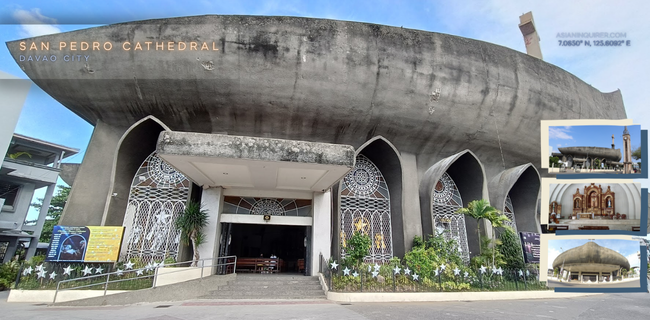
You might walk past the busy corner of San Pedro Street and Claro M. Recto Avenue every day without realizing that you are standing at the spiritual ground zero of a great city.
This intersection is where the modern hustle of Davao meets a history that is nearly two centuries old. It is a place where the noise of the traffic is regularly interrupted by the deep ringing of bells from the oldest church in the region.
I remember the first time I saw the strange, curved roofline of the San Pedro Cathedral against the backdrop of the Mindanao sky.
It does not look like the heavy, stone-walled cathedrals you often find in the northern provinces of the Philippines. The architecture is a deliberate and poetic tribute to the sea and the people who navigated it long before the colonial era. You can almost imagine the building itself setting sail into the heart of the city during a heavy afternoon downpour.
This landmark was originally established in 1847 by Spanish settlers who used humble materials like adobe and nipa to create a gathering place. Over time, it evolved into the sturdy and iconic structure that stands as a symbol of the Crown Jewel of the South today.
You feel the weight of countless personal prayers the moment you step onto its historic grounds.
The Architecture of a Mindanaoan Legend
Most colonial churches in the country follow the Earthquake Baroque style with their thick walls and low profiles. San Pedro Cathedral is a significant departure from that tradition because it incorporates the soul of Mindanao into its very structure.
The sweeping, horizontal lines of the roof were designed to resemble the traditional vinta boat.
This boat represents the sea-faring heritage of the Muslim-Mindanaoan people who have lived in the region for generations. It is a rare and beautiful example of cultural fusion where the Christian faith and local indigenous identity share a single roof.
When you look at the cathedral from across the street, the concrete seems almost fluid and alive. It softens the hard edges of the nearby office buildings and the gray government halls. I found myself admiring the way the white facade catches the golden light of a late Davao afternoon as the sun dips toward the horizon.
It serves as a visual bridge between the colonial history of the past and the vibrant traditions of the South.
The exterior invites you to come closer and discover the peace that lives within its stone walls.
A Quiet Sanctuary in the Urban Hub
Stepping inside the cathedral provides an immediate relief from the humid heat and the constant hum of the city center. The air inside is noticeably cooler and carries the nostalgic scent of burning wax and old wood.
I noticed that the interior keeps a modest but dignified atmosphere that encourages deep reflection for every visitor.
The modern altar sits at the front, offering a clean space for devotees to gather under the high ceiling. It is a place where you can see Davaoeños from all walks of life whispering their personal stories to the heavens above.
I sat at the back of the church to watch the dust motes dancing in the shafts of light coming through the high windows.
There is a sense of continuity here that makes you feel connected to the generations who prayed here before you.
Outside, the bell tower stands as a sentinel that has seen the city rise from a small settlement to a booming metropolis. Those bells have rung through times of war and times of great celebration for nearly two hundred years. Their sound is the heartbeat of a community that refuses to forget its origins while moving toward the future.
The church remains a steady anchor for everyone who calls this city home.
Practical Travel Tips for the DIY Traveler
Getting to San Pedro Cathedral is incredibly easy because it is located in the very heart of downtown Davao. You can take almost any jeepney with a San Pedro or City Hall sign displayed on the side.
The fare is quite affordable and the ride gives you a great look at the daily life of the locals. You should try to sit near the entrance of the jeepney so you can easily spot the curved roof when you arrive.
You should plan your visit during the late afternoon to avoid the midday sun and catch the best lighting for photos.
The church grounds are open to the public but remember to maintain silence out of respect for those who are currently praying. I recommend checking the mass schedule if you want to witness a local service. Most of the people here are very welcoming but they value the solemnity of their sacred space.
Modest attire is highly recommended since this is an active place of worship.
Once you are done exploring the cathedral, you can walk just a few steps to the Davao City Hall right across the street. You will also find the Sanggunian Panlungsod and Osmeña Park nearby, making this a perfect walking tour for a single afternoon. It is a great way to see the different layers of Davao’s government and history without needing a tour guide.
If you are hungry after your walk, there are many local eateries and street food vendors near San Pedro Street. You should try the local fruits like durian or mangosteen if they are in season at the nearby market stalls.
Do not forget to visit the Kilometer Zero marker just outside the church to officially mark your arrival in the south.
I always suggest bringing a reusable water bottle because the Davao heat can be quite intense during the dry season. You can easily find shade under the trees in Osmeña Park while you plan your next move in the city.
The cathedral is a great starting point for anyone who wants to understand the true character of the city.
You will find that the people here are very helpful and will gladly point you in the right direction if you get lost. Just a simple greeting like Maayong hapon goes a long way in starting a friendly conversation with a local vendor.
There is also a small museum nearby if you want to dive deeper into the historical artifacts of the region. Most of these sites are within walking distance of each other so you do not need to spend much on transportation. Just follow the flow of the locals and you will find your way around the downtown area easily.
The spirit of Davao is most visible in these crowded but peaceful corners of the city.
Every stone and bell has a story to tell to those who are willing to listen.
Discovering the Surroundings of San Pedro Street
San Pedro Street is the oldest street in the city and it serves as a bustling commercial hub during the day. You will see a mix of modern retail stores and traditional shops that have been there for decades.
I enjoyed walking through the side streets where the vendors sell everything from religious candles to local handicrafts.
You can also visit the nearby Quezon Park which is a popular spot for community gatherings and local events. It sits directly in front of the City Hall and offers a wide open space for children to play.
The park provides a great vantage point to see the cathedral’s boat-like roof standing tall above the green trees.
It is a scene that perfectly captures the balance between the natural world and the urban growth of Mindanao.
I recommend visiting the San Pedro Cathedral during one of the major religious festivals to see it at its most vibrant. The area becomes a sea of colors and music as the community gathers to celebrate their patron saint. It is a powerful display of the Davao spirit that you should not miss if you are in town.
You will leave the area with a deeper appreciation for the cultural fusion that defines the south.
Some landmarks teach us about the past but others invite us to be a part of their future. San Pedro Cathedral is a living witness that continues to welcome every traveler who seeks the heart of Davao.
The Cultural Significance of San Pedro
The intersection of faith and culture is where Davao truly finds its identity.
This cathedral is a constant reminder that we can honor our indigenous roots while embracing our colonial history. It is a message of unity that resonates in every corner of the city.
I saw how the young and the old both treat the church with the same level of profound reverence.
Even the vendors outside seem to be a part of the cathedral’s living history. They offer roses and candles to the visitors while sharing stories of the city’s past with anyone who cares to ask. Their presence adds a layer of humanity to the monumental stone and concrete structure.
You can spend an entire afternoon just sitting on the steps and observing the life that flows through this sacred coordinate. It is a slow and beautiful experience that makes you feel like a local rather than a tourist.
I found myself reflecting on how a simple boat design can carry the weight of an entire community’s hope.
The church has survived the changing tides of politics and the rapid development of Mindanao’s primary hub. It remains a silent anchor that keeps the spirit of Davao grounded in its gentle and resilient origins.
Traveling here is not just about seeing a building but about feeling the pulse of a people.
You notice it in the way the light reflects off the altar and the way the bells signal the end of a long day. It is a sensory experience that stays with you long after you have moved on to your next destination.
I believe that every traveler needs a place where they can stop and realize that they are part of a much larger story. The vinta-shaped roof is a vessel that carries the memories of the past into the bright possibilities of tomorrow. It reminds us that no matter how far we travel, we are all just trying to navigate our way toward a sense of home and peace.
The city continues to grow around it but the cathedral remains unchanged in its mission to provide a sanctuary for the weary.
We find our strength not in the height of our buildings but in the depth of our roots. This sacred space is a reminder that even in a world of constant change, there are some things that are worth holding onto with both hands. It is a beautiful coordinate to find yourself in when you need to remember who you are and where you came from.
May your journey through Davao lead you to the quiet moments that matter the most.
As you walk away from the bells of San Pedro, take a piece of that silence with you into the noise of the world. The road ahead is always easier when you have spent a moment in the presence of something truly timeless.